
Table of Contents
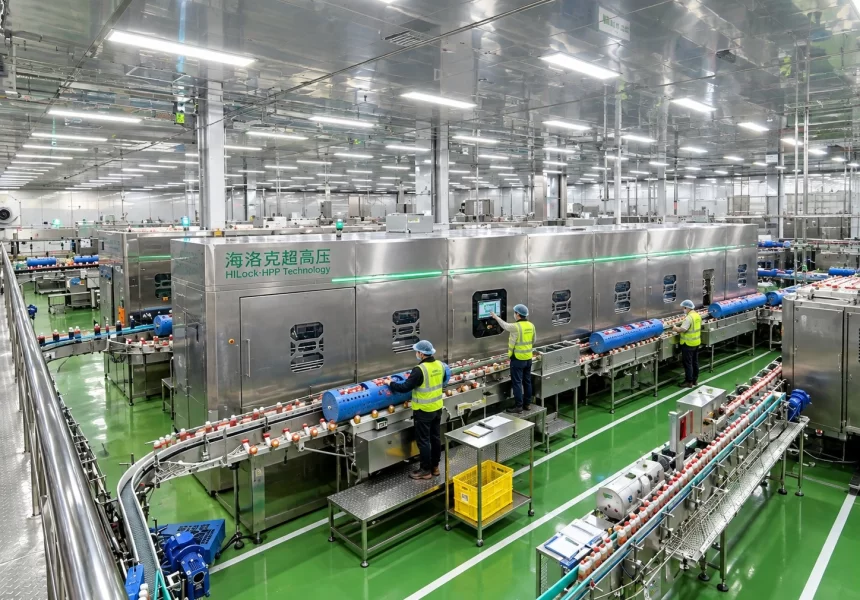
Bridging the Gap Between HPP Research and Commercial Applications
The food industry is constantly evolving as manufacturers seek safer products, longer shelf lives, cleaner labels, and more efficient production processes. At the same time, consumers are increasingly demanding fresh-tasting foods with fewer preservatives and minimal processing. These changing expectations are driving food manufacturers to explore innovative preservation technologies that can deliver both product quality and commercial value.
High Pressure Processing (HPP) has emerged as an important non-thermal food preservation technology with significant potential across the global food industry. By applying high levels of hydrostatic pressure to packaged products, HPP can help reduce harmful microorganisms while maintaining many of the original sensory and nutritional characteristics of food. Its applications span a wide range of categories, including fruit juices, ready-to-eat meals, meat products, seafood, dairy products, and plant-based foods.
However, scientific research alone does not guarantee commercial success. A promising result obtained in a laboratory must be translated into a repeatable, reliable, and economically viable manufacturing process before it can create value for food producers.
This is where the transition from research to industrial application becomes essential. Through systematic testing, process development, equipment selection, and production-scale validation, HPP food processing can move beyond experimental studies and become a practical solution for commercial food manufacturing.
Understanding this transition helps food companies identify new product opportunities, improve production capabilities, and make informed investments in HPP technology.
Understanding the Scientific Foundation of HPP Food Processing
HPP is a non-thermal preservation technology that uses high hydrostatic pressure, typically within a processing range of approximately 300–600 MPa depending on the product and application.
Unlike conventional thermal processing, which relies primarily on elevated temperatures to control microorganisms, HPP uses pressure transmitted uniformly through a liquid medium, usually water. The packaged food is placed inside a high-pressure vessel, where pressure is applied in a controlled environment.
The technology is based on established physical principles, particularly Pascal’s principle and the Le Chatelier principle.
Pascal’s principle explains how pressure applied to a confined fluid is transmitted throughout the fluid. This allows hydrostatic pressure to act uniformly on packaged products, regardless of their shape or size.
The Le Chatelier principle helps explain how pressure influences biological and chemical systems. Microorganisms and certain biological structures can be affected by pressure-induced changes, including alterations in cell membranes, protein structures, and enzyme activity.
These effects provide the scientific foundation for HPP applications in food preservation.
One of the major advantages of HPP is its ability to control many vegetative microorganisms without relying on conventional high-temperature treatment. Because the process can be performed at relatively low temperatures, it can help preserve desirable product characteristics such as flavor, color, texture, and heat-sensitive nutrients.
However, HPP does not produce identical results across all food categories. Microbial resistance, product acidity, water activity, formulation, packaging materials, and processing conditions can all influence the final outcome.
Therefore, successful HPP food processing requires product-specific research and process validation rather than simply applying the same pressure parameters to every product.
From Laboratory Research to Practical Food Applications
The first stage in commercializing HPP technology is understanding how research findings can be applied to real food products.
Laboratory studies often investigate specific questions, such as:
- How does pressure affect the survival of target microorganisms?
- How do different pressure levels influence product quality?
- Can HPP extend the refrigerated shelf life of a particular food?
- How do packaging materials perform under high-pressure conditions?
- Which processing parameters provide the best balance between microbial safety and product quality?
These questions are essential, but laboratory results must be translated into practical processing conditions.
The Role of a Laboratory HPP Machine
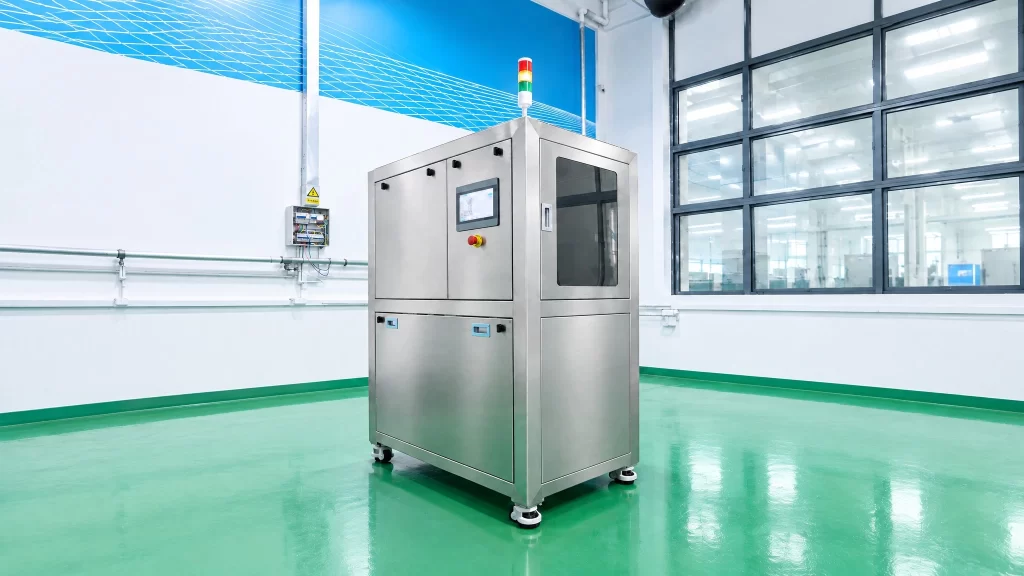
A laboratory HPP machine provides a controlled environment for testing different pressure levels, holding times, and processing conditions on small product samples.
For food manufacturers, research institutions, and product development teams, a laboratory HPP machine can support several important activities:
Product feasibility testing: Researchers can evaluate whether a particular food product is suitable for HPP treatment before investing in commercial production equipment.
Parameter optimization: Different pressure levels and holding times can be investigated to identify suitable processing conditions for specific formulations.
Microbial validation: Testing can help evaluate the effectiveness of HPP against relevant target microorganisms under defined experimental conditions.
Quality assessment: Changes in color, flavor, texture, nutritional composition, and other product characteristics can be monitored before and after treatment.
Packaging compatibility: Flexible packaging, sealed pouches, and other suitable packaging formats can be evaluated to determine their performance during high-pressure treatment.
For example, a beverage manufacturer developing a new cold-pressed juice product may want to determine whether HPP can improve microbial stability while maintaining its fresh flavor and color.
Using a laboratory HPP machine, the manufacturer can test different processing conditions, conduct microbial analyses, and monitor product quality during refrigerated storage.
The resulting data can provide a scientific basis for deciding whether the product is commercially suitable for HPP treatment.
Importantly, laboratory testing should be viewed as the starting point of commercialization, not the final proof of industrial readiness.
Translating Research Findings into Commercial HPP Applications
Once laboratory testing demonstrates promising results, the next step is to evaluate whether the process can be transferred to commercial production.
This stage involves more than increasing the size of the equipment. Manufacturers must consider processing consistency, production capacity, operational efficiency, packaging requirements, and the economic feasibility of the proposed solution.
Moving from Laboratory Testing to Pilot Validation
Pilot-scale testing helps bridge the gap between laboratory research and full-scale production.
At this stage, manufacturers can evaluate larger product batches and investigate how processing conditions perform under more representative production conditions.
Important considerations include:
- Reproducibility of processing results.
- Consistency of microbial reduction.
- Product quality after processing and storage.
- Packaging performance under pressure.
- Batch handling and production workflow.
- Compatibility with existing manufacturing operations.
Pilot validation helps identify potential technical limitations before a company commits to a large-scale equipment investment.
It also provides more practical information for estimating production capacity, processing costs, and equipment requirements.
How to Choose the Right Commercial HPP Machine
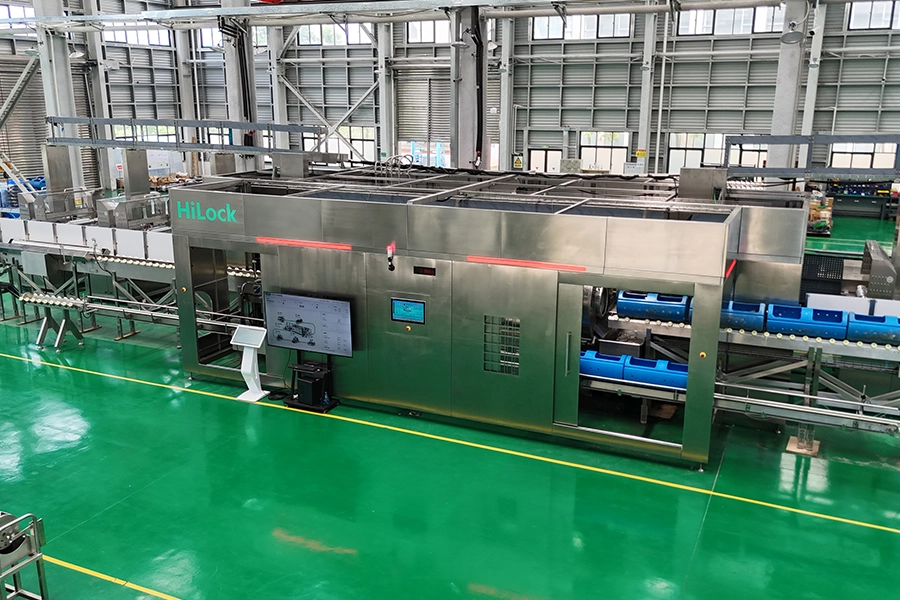
Choosing the right commercial HPP machine involves more than comparing processing capacity, pressure ratings, or equipment specifications. Food manufacturers need a reliable partner that can support product development, equipment integration, production expansion, and long-term operation. Several key factors should be considered when evaluating an HPP solution.
1. In-House R&D and Manufacturing Capabilities
A manufacturer’s in-house R&D and manufacturing capabilities have a direct impact on equipment quality, production consistency, and delivery efficiency. From core component development to equipment assembly and quality control, integrated manufacturing helps maintain better control over critical processes. It also enables manufacturers to respond more efficiently to customized requirements and specific production needs.
2. Laboratory Support for Process Validation
Before investing in a commercial HPP machine, manufacturers should understand how high-pressure processing performs with their specific products. Dedicated laboratories can support sample testing, process evaluation, and parameter optimization, helping businesses assess product quality and processing feasibility before moving to industrial production. This reduces development uncertainty and helps inform equipment selection.
3. Scalable Solutions from R&D to Mass Production
The right HPP solution should match a company’s current production requirements while allowing room for future growth. Laboratory-scale equipment supports early-stage research and process development, while pilot and commercial systems help validate and scale up production. A manufacturer with solutions covering different processing capacities can help businesses transition from product trials to stable industrial operations.
4. One-Stop, Full-Lifecycle Technical Services
Commercial HPP equipment requires more than installation. Equipment customization, commissioning, operator training, technical support, and ongoing maintenance all contribute to long-term operational reliability. Choosing a supplier that provides full-lifecycle services helps manufacturers manage equipment throughout its service life and maintain more consistent production operations.
For food manufacturers planning to commercialize HPP products, the best equipment choice is not simply the machine with the largest capacity. It is a solution backed by strong manufacturing capabilities, laboratory support, scalable equipment options, and dependable technical services.
How HPP Research Creates New Commercial Opportunities
The commercial value of HPP extends beyond microbial control. Research findings can help food manufacturers develop new products, enter new market segments, and strengthen their competitive positioning.
Several application areas demonstrate this potential.
Premium Juice and Beverage Production
Fresh juices, cold-pressed beverages, and functional drinks are among the most promising applications of HPP.
Traditional thermal processing can affect the flavor, color, and heat-sensitive components of certain beverages. HPP provides an alternative preservation approach that can help maintain fresh-like product characteristics while improving microbial safety.
Research into pressure effects, formulation compatibility, and refrigerated shelf life can help beverage manufacturers develop products with fewer conventional preservatives.
Commercial opportunities include:
- Cold-pressed fruit and vegetable juices.
- Coconut water and fruit-based beverages.
- Ready-to-drink functional beverages.
- Cold brew coffee.
- Fresh beverage blends.
For manufacturers targeting premium beverage markets, HPP can support product differentiation and help create additional value through quality-focused positioning.
Meat and Ready-to-Eat Food Processing
Ready-to-eat meat products and prepared foods require effective microbial control throughout their production and distribution processes.
HPP research can help manufacturers evaluate the reduction of relevant foodborne pathogens and spoilage microorganisms in products such as cooked ham, sliced meats, sausages, and ready-to-eat meals.
The technology can also help extend refrigerated shelf life under appropriately validated conditions.
For food producers, these advantages may support improved inventory management, reduced product waste, and broader distribution opportunities.
However, each product requires specific validation because meat composition, fat content, formulation, packaging, and target microorganisms can influence processing effectiveness.
Seafood Processing and Export Markets
Seafood products are particularly sensitive to microbial quality, freshness, and handling conditions.
HPP has attracted attention in seafood applications, including shellfish processing, ready-to-eat seafood, and value-added seafood products.
Research can help determine suitable pressure conditions for improving product safety and supporting specific processing objectives.
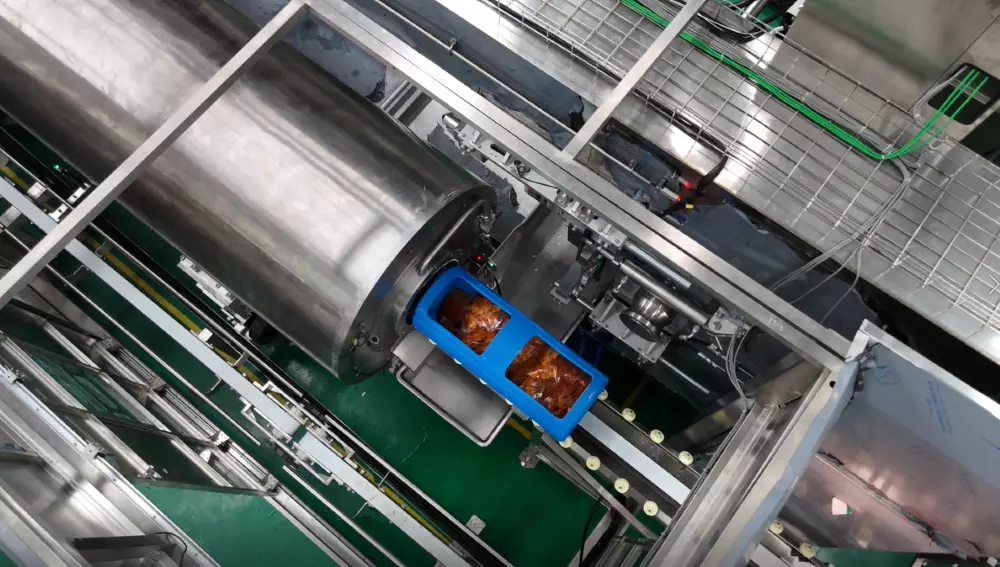
For example, HPP can facilitate shellfish meat extraction by loosening the attachment between the meat and shell. It can also be investigated as part of a broader microbial control strategy for selected seafood products.
These applications may create opportunities for seafood processors seeking to improve processing efficiency, develop premium products, and serve international markets.
Plant-Based and Innovative Food Products
The growing demand for plant-based foods is creating new opportunities for non-thermal processing technologies.
Products such as plant-based dips, avocado preparations, hummus, sauces, and vegetable-based spreads can present challenges related to microbial stability, oxidation, texture, and color.
HPP research helps manufacturers understand how pressure interacts with different ingredients and product structures.
By evaluating formulation compatibility and processing conditions, food developers can explore new products that combine convenient formats with fresh-like characteristics.
This creates opportunities for product innovation in both retail and foodservice markets.
Building a Complete Pathway from HPP Research to Industrial Production
Turning scientific research into commercial success requires cooperation between food scientists, equipment manufacturers, process engineers, packaging specialists, and food producers.
A structured development pathway can make this transition more efficient.
Step 1: Identify the Product and Market Opportunity
Begin by defining the product category, target consumers, existing preservation challenges, desired shelf life, and commercial objectives.
Step 2: Conduct Laboratory Testing
Use a laboratory HPP machine to investigate pressure conditions, holding times, microbial responses, packaging performance, and product quality.
Step 3: Develop and Optimize the Processing Parameters
Analyze the test results and identify suitable processing conditions. Conduct additional experiments when necessary to establish a reliable process.
Step 4: Validate the Process at a Larger Scale
Move to pilot or representative production trials to evaluate reproducibility, batch handling, packaging integrity, and production performance.
Step 5: Select and Customize Commercial Equipment
Determine the appropriate vessel capacity, pressure system, automation configuration, and production throughput. Equipment customization may be necessary when standard configurations do not fully meet specific operational requirements.
Step 6: Install, Commission, and Train
Complete equipment installation, commissioning, operator training, and process documentation to support a smooth transition into production.
Step 7: Monitor Performance and Optimize Operations
After commercialization, continuous monitoring, preventive maintenance, technical support, and periodic process reviews help maintain equipment performance and production reliability.
This systematic approach allows food manufacturers to reduce uncertainty during technology adoption and make more informed investment decisions.
More Than an HPP Equipment Supplier, HiLock Is Your Business Partner
Unlike traditional HPP equipment suppliers, HiLock differentiates itself through collaborative R&D and end-to-end services. We build a competitive advantage by providing integrated solutions that support every stage of HPP technology adoption, making us a trusted partner for businesses seeking to turn HPP innovation into practical results.
In-House R&D and Manufacturing: Greater Control, Faster Delivery
Backed by our parent company’s more than 20 years of precision manufacturing experience, HiLock maintains an integrated manufacturing process covering precision component machining, complete equipment assembly, and factory acceptance testing. With in-house production and supply of key components, we maintain greater control over our supply chain, helping customers avoid component shortages, long delivery lead times, and high maintenance costs.
Two Dedicated Laboratories: Reduce R&D Risks and Trial Costs
Our dedicated ultra-high-pressure food laboratory and new materials R&D laboratory provide comprehensive testing and development support. We offer complimentary sample testing and customized process development to help businesses verify process feasibility before investing in equipment, significantly reducing R&D uncertainty and the risks associated with commercial-scale production.
From R&D to Mass Production: Scalable Solutions for Every Stage
HiLock’s HPP equipment portfolio supports applications ranging from laboratory research and product development to large-scale industrial production. Our modular equipment lineup covers capacities from 2L to 525L, with flexible configurations designed to integrate into existing production lines and support capacity expansion as business needs evolve.
One-Stop, Full-Lifecycle Services: Supporting Every Stage of Your Operation
Pre-Sales: Process validation, equipment selection, and production line planning.
During Sales: Equipment installation and commissioning, as well as operator training.
After-Sales: Remote technical support, scheduled maintenance, and spare parts supply.
From initial technology adoption to ongoing process improvements and production capacity expansion, HiLock remains by your side throughout the entire equipment lifecycle.
Conclusion: Turning HPP Innovation into Sustainable Business Value
The future of HPP food processing depends on the successful integration of scientific research, engineering development, and commercial manufacturing.
Laboratory studies provide the foundation for understanding pressure effects on microorganisms, food quality, and packaging materials. Pilot testing helps verify whether these findings can be reproduced under more representative conditions. Industrial equipment then enables manufacturers to translate validated processes into reliable commercial production.
For food companies, this journey can create opportunities to develop differentiated products, improve food safety strategies, explore new market segments, and strengthen long-term competitiveness.
However, commercial success requires more than adopting a new technology. It requires product-specific validation, appropriate equipment selection, reliable manufacturing systems, and continuous technical support.
At HiLock, we believe that the true value of HPP technology lies in turning scientific potential into practical solutions for industry.
Whether you are conducting initial product research, evaluating a laboratory HPP machine, or planning to invest in a commercial HPP machine, our team can support your journey from process development to industrial production.