
Table of Contents
In today’s competitive food and beverage industry, food safety is no longer the only factor determining processing technology. Consumers are paying closer attention to ingredient lists, nutritional value, freshness, taste, and product quality. At the same time, food manufacturers face increasing pressure to extend shelf life, reduce food waste, improve production efficiency, and differentiate their products in crowded markets.
Against this background, two processing technologies frequently enter the discussion: High Pressure Processing (HPP) and Ultra-High Temperature (UHT) processing.
Both technologies help control microorganisms and extend food shelf life, but they achieve these objectives through fundamentally different mechanisms. More importantly, they support different product positioning and distribution strategies.
UHT is designed to achieve commercial sterility and enable long-term ambient storage through high-temperature treatment and aseptic packaging. HPP, on the other hand, uses extremely high hydrostatic pressure to inactivate many harmful and spoilage microorganisms while minimizing thermal impact on food quality.
So, which technology should food manufacturers choose?
The answer depends on more than processing performance. It depends on the product you want to develop, the consumers you want to reach, the distribution channels you plan to enter, and the value you want your brand to deliver.
For manufacturers targeting premium beverages, fresh-like ready-to-eat foods, clean-label products, and refrigerated distribution channels, HPP deserves particular attention.
HPP vs. UHT: Understanding the Fundamental Differences
Before comparing their commercial advantages, it is important to understand how these two technologies work.
What Is HPP (High Pressure Processing)?
High Pressure Processing (HPP), also known as high hydrostatic pressure processing, is a non-thermal or low-temperature food preservation technology that uses extremely high pressure to inactivate microorganisms.
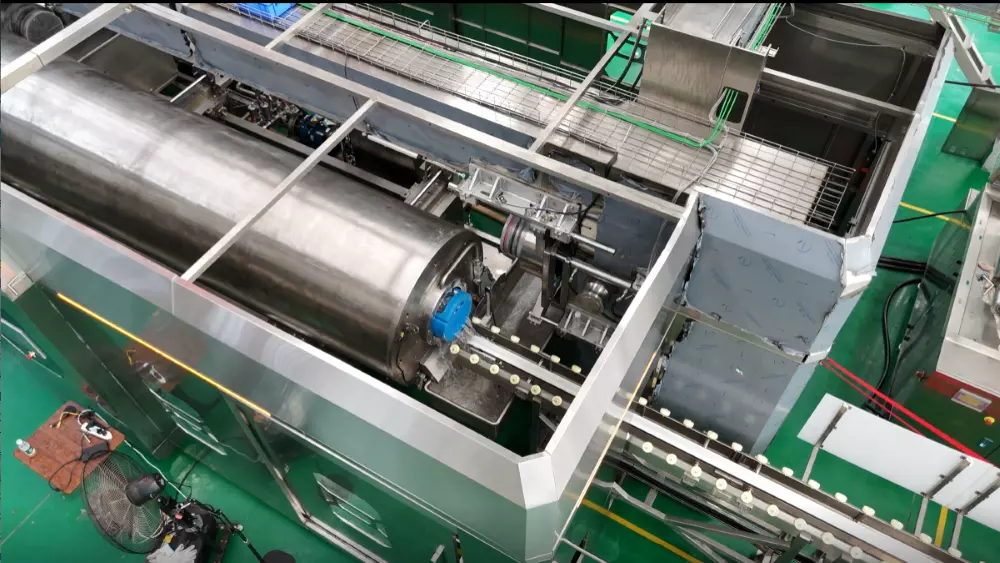
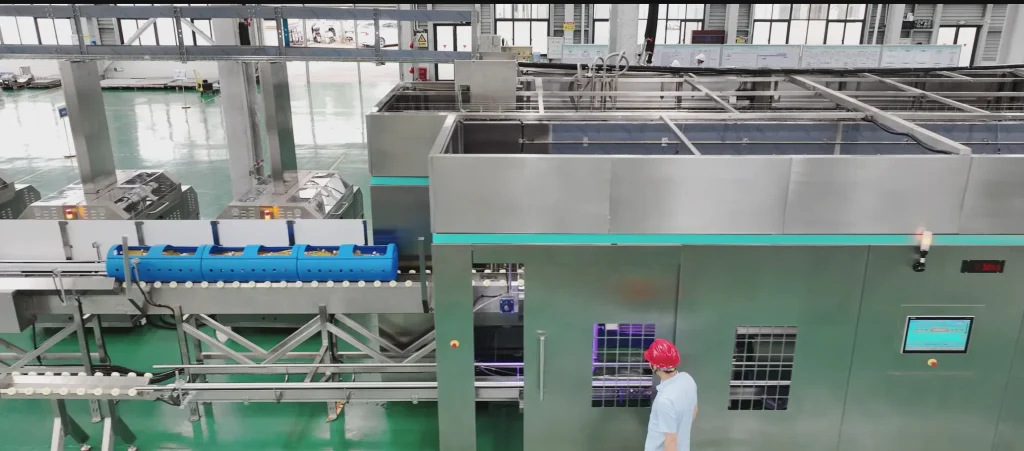
In a typical industrial HPP process, packaged food products are placed inside a specially designed pressure vessel filled with water. The system then applies uniform pressure, generally within the range of 300–600 MPa, depending on the product and processing requirements.
Unlike conventional thermal processing, HPP does not rely primarily on high temperatures to achieve microbial inactivation.
Instead, pressure affects microbial cell membranes, proteins, and other biological structures, disrupting essential cellular functions and reducing the number of viable microorganisms.
One of the most important characteristics of HPP is the isostatic principle: pressure is transmitted uniformly throughout the product, regardless of its shape or size.
This means that the product receives consistent pressure treatment throughout the pressure vessel.
Typical HPP processing parameters include:
- Pressure: Generally 300–600 MPa.
- Holding time: Commonly 1–5 minutes, although actual requirements vary by product.
- Processing medium: Water.
- Processing temperature: Typically refrigerated or mild temperatures, depending on the application and equipment configuration.
- Packaging: Usually flexible, water-resistant packaging that can withstand compression.
HPP is widely used for fruit juices, smoothies, sauces, dips, seafood, meat products, and ready-to-eat meals.
Because treatment can take place after packaging, HPP also helps reduce the risk of contamination during subsequent handling and packaging operations.
What Is UHT (Ultra-High Temperature Processing)?
UHT processing is a thermal preservation technology that uses extremely high temperatures for a short period to achieve commercial sterility.
Typical UHT conditions involve heating food to approximately 135–150°C for several seconds, followed by cooling and aseptic packaging.
The combination of high-temperature treatment and aseptic filling allows manufacturers to produce commercially sterile products that can remain stable at room temperature under appropriate storage conditions.
UHT is widely used in:
- Long-life milk and dairy beverages.
- Plant-based milk alternatives.
- Liquid cream and coffee beverages.
- Shelf-stable juices.
- Soups and liquid food products.
Its biggest advantage is the ability to support ambient distribution without continuous refrigeration, provided the product and packaging system are properly designed.
However, exposure to high temperatures can change certain sensory and nutritional characteristics of food. Depending on the product formulation and processing conditions, manufacturers may observe cooked flavors, color changes, or reductions in heat-sensitive nutrients.
The key distinction is that HPP and UHT are designed to address different preservation and market requirements.
HPP is particularly attractive when maintaining fresh-like product characteristics is a priority. UHT is often the more practical option when ambient shelf stability and large-scale distribution are the primary objectives.
Why HPP Is Becoming an Important Technology for Premium Food Brands
As consumer preferences evolve, product quality is becoming an increasingly important competitive factor.
Consumers do not simply want food that is safe to eat. They also want products that taste fresh, contain recognizable ingredients, and retain their original characteristics.
This creates opportunities for HPP technology.
Better Retention of Fresh Taste and Nutritional Quality
One of the most significant advantages of HPP is its ability to reduce microbial contamination while minimizing the thermal effects associated with conventional heat processing.
Many food components, including certain vitamins, natural pigments, flavor compounds, and bioactive substances, are sensitive to heat.
When exposed to high temperatures, these components may undergo degradation or chemical changes.
HPP works differently. High pressure primarily affects non-covalent interactions in biological systems, while many small molecules associated with flavor and nutritional quality are comparatively less affected.
As a result, HPP-treated products can retain more of their original sensory and nutritional characteristics than some conventionally heat-treated alternatives.
For example:
- Orange juice: HPP can help preserve fresh citrus flavor and heat-sensitive vitamin C.
- Cold-pressed juice: HPP can reduce microbial loads while maintaining a fresh-like taste profile.
- Smoothies: HPP can help retain the natural color and flavor of fruit-based formulations.
- Ready-to-eat meals: HPP can provide an additional microbial control step while minimizing further thermal exposure.
However, the actual results depend on the food matrix, initial microbial load, pressure, holding time, and storage conditions.
For premium brands, the ability to maintain a closer-to-fresh product experience can become an important selling point.
Supporting Clean-Label Product Development
Clean label is an important trend in modern food development.
Consumers increasingly prefer products with shorter ingredient lists and fewer artificial preservatives or additives.
For manufacturers, reducing reliance on certain chemical preservatives can create opportunities to develop products that better match these expectations.
HPP provides an alternative microbial control approach without requiring conventional heat treatment as the primary preservation mechanism.
For example, manufacturers may use HPP to develop:
- Fresh-style fruit and vegetable juices.
- Preservative-free refrigerated dips and sauces.
- Premium guacamole.
- Fresh-tasting smoothies.
- Ready-to-eat meat and seafood products.
Importantly, HPP does not automatically make a product preservative-free or guarantee that all additives can be removed.
Product formulation, pH, microbial risks, processing validation, and refrigerated storage must all be considered.
Nevertheless, HPP gives manufacturers another tool for developing clean-label products without compromising their food safety strategy.
Extending Refrigerated Shelf Life and Reducing Food Waste
Short shelf life is a major challenge for fresh and minimally processed food products.
It can limit distribution distances, increase inventory pressure, and create substantial losses throughout the supply chain.
HPP can significantly reduce many spoilage microorganisms, helping extend the refrigerated shelf life of suitable products.
For example, fruit juices that traditionally have relatively short refrigerated shelf lives may achieve substantially longer storage periods following validated HPP treatment.
The same principle applies to selected meat products, seafood, sauces, and ready-to-eat meals.
The exact shelf-life improvement varies considerably by product and cannot be determined by pressure alone.
Manufacturers must evaluate the initial microbial condition, product composition, packaging, storage temperature, and target shelf-life requirements.
For businesses, the commercial benefits can include:
- A wider distribution radius.
- More flexible inventory management.
- Reduced product returns and waste.
- Improved production and distribution planning.
- More opportunities to enter new retail channels.
In this way, HPP is not simply a preservation technology. It can also become part of a broader strategy for improving supply chain performance.
HPP or UHT? The Technology You Choose Shapes Your Market
The real difference between HPP and UHT becomes clearer when we look at how products are sold.
Processing technology influences more than shelf life. It can affect product positioning, packaging choices, storage requirements, transportation costs, and consumer perception.
Scenario 1: You Want to Enter the Premium Fresh Juice Market
Recommended technology: HPP
For premium juice manufacturers, flavor, color, and freshness are essential product attributes.
Consumers purchasing cold-pressed juice or premium fruit beverages often expect a taste closer to freshly prepared juice.
Traditional thermal processing can change certain flavor compounds and heat-sensitive nutrients.
HPP provides an alternative by applying high pressure rather than relying on intensive heat treatment.
This makes HPP particularly suitable for products such as:
- Cold-pressed orange juice.
- Apple and mixed fruit juices.
- Vegetable juices.
- Functional fruit beverages.
- Fresh smoothies.
With appropriate process validation and refrigerated distribution, manufacturers can offer products that combine microbial control with fresh-like quality.
From a commercial perspective, this creates opportunities to differentiate products from conventional shelf-stable beverages.
Scenario 2: You Want to Build a Long-Life Beverage Brand for Mass Distribution
Recommended technology: UHT
If your main objective is to distribute beverages across large geographic markets without relying on refrigerated transportation, UHT offers a significant advantage.
Its combination of commercial sterilization and aseptic packaging supports ambient storage and distribution.
This makes it particularly suitable for:
- Long-life milk.
- Large-volume plant-based beverages.
- Shelf-stable dairy drinks.
- Mass-market liquid food products.
For manufacturers operating large-scale distribution networks, reducing dependence on refrigerated logistics can be an important economic consideration.
In this scenario, UHT may offer a more suitable production and distribution model than conventional HPP.
Scenario 3: You Want to Develop Premium Ready-to-Eat Foods
Recommended technology: HPP
Ready-to-eat foods face particular food safety challenges because products may undergo multiple handling steps after cooking.
For example, cooked meat products may be sliced, portioned, and packaged before entering distribution.
These operations create opportunities for post-processing contamination.
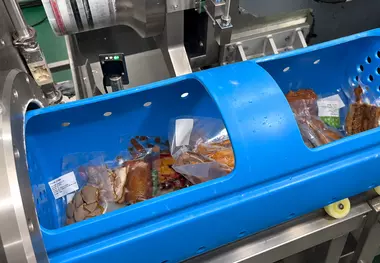
HPP can be applied after packaging as a post-lethality treatment to reduce relevant vegetative pathogens, including Listeria monocytogenes, under validated processing conditions.
Potential applications include:
- Cooked sliced meat.
- Deli meat.
- Ready-to-eat seafood.
- Refrigerated meal kits.
- Sauces and dips.
- Selected prepared meals.
This approach can help manufacturers improve food safety management while maintaining the desired refrigerated product characteristics.
Scenario 4: You Want to Build a Clean-Label Premium Brand
Recommended technology: HPP
If your brand emphasizes natural ingredients, minimal processing, fresh taste, and premium product quality, HPP may provide a stronger technological foundation.
Rather than competing entirely on price, manufacturers can differentiate products through:
- Fresh-like sensory characteristics.
- Reduced dependence on certain chemical preservatives.
- Refrigerated freshness positioning.
- Improved product quality consistency.
- Innovative food formulations.
These attributes can support premium positioning in selected retail, foodservice, and direct-to-consumer channels.
The important point is that HPP does not create a premium brand by itself. Product formulation, packaging, marketing, distribution, and consumer experience must work together.
Does HPP Really Offer Better Profitability?
A common mistake when evaluating processing technologies is to compare equipment prices or processing costs alone.
For food manufacturers, the more meaningful question is:
How does the processing technology affect the total business model?
UHT and HPP generate value through different economic mechanisms.
The UHT Business Model: Efficiency and Distribution Scale
UHT is particularly attractive to manufacturers seeking:
- Long-term ambient storage.
- Large-scale continuous production.
- Broad geographic distribution.
- Reduced cold-chain dependence.
- Standardized mass-market products.
Its economic advantage often comes from production scale and distribution efficiency.
However, manufacturers must also consider the cost of aseptic processing systems, packaging, sterilization, and quality assurance.
The HPP Business Model: Quality Differentiation and Market Value
HPP creates opportunities to compete through product quality and differentiation.
Consider a premium juice manufacturer.
A conventional thermal process may provide sufficient microbial control, but the resulting product may have a different flavor profile from freshly extracted juice.
With HPP, the manufacturer can develop a refrigerated product that retains more of its fresh-like characteristics.
This can support:
- Premium product positioning.
- Higher perceived product value.
- Differentiation from conventional beverages.
- Entry into specialized retail channels.
- Stronger brand identity.
HPP may also help reduce food waste by extending the usable refrigerated shelf life of suitable products.
However, manufacturers must account for HPP equipment investment, processing capacity, packaging costs, refrigeration, and production utilization.
The economic case should be evaluated through total cost of ownership rather than assuming that HPP automatically produces higher profit margins.
A Practical Business Comparison
| Business Consideration | HPP Strategy | UHT Strategy |
|---|---|---|
| Product differentiation | Strong fresh-like positioning | Convenience and long-life positioning |
| Target consumers | Premium and quality-focused consumers | Convenience and mass-market consumers |
| Distribution | Refrigerated retail and foodservice | Ambient retail and wider distribution |
| Brand strategy | Freshness and clean-label appeal | Accessibility and convenience |
| Shelf-life strategy | Extended refrigerated shelf life | Extended ambient shelf life |
| Main economic opportunity | Product value differentiation | Distribution and production scale |
The right choice depends on your target market, product category, pricing strategy, and distribution infrastructure.
For some manufacturers, combining technologies at different stages of production may also be worth evaluating.
HPP or UHT: Which Technology Should You Choose?
There is no universally superior processing technology. The right choice depends on the product you want to manufacture and the market you want to serve.
If your business focuses on long-life beverages, ambient distribution, and large-scale production, UHT may be the more suitable option.
If your goal is to develop premium beverages, fresh-like foods, clean-label products, or refrigerated ready-to-eat meals, HPP offers significant opportunities.
More importantly, HPP gives manufacturers another way to compete beyond price: through product quality, freshness, and differentiation.
The food industry is moving toward more diversified consumer demands. Some consumers prioritize convenience and affordability, while others are willing to pay more for products that better retain their original taste and quality.
Manufacturers need processing technologies that align with these changing expectations.
The decision between HPP and UHT is not simply about how to preserve food. It is about deciding what kind of product you want to create, which market you want to enter, and what value your brand wants to deliver.
If you are exploring HPP technology for your next food or beverage product, HiLock can help you evaluate processing requirements, select suitable HPP machine, and develop an integrated production solution.