

Table of Contents
The global craft beer market is expanding steadily. According to Grand View Research, the global craft beer market was valued at approximately USD 94.2 billion in 2025 and is projected to reach USD 170.6 billion by 2033, representing a 7.9% CAGR from 2026 to 2033. As craft beer brands expand distribution and consumers continue to seek distinctive, high-quality beverages, maintaining flavor, freshness, and microbial stability throughout the supply chain is becoming increasingly important.[Source: Grand View Research]
Craft beer is valued for its distinctive flavor, aroma, freshness, and carefully developed sensory profile. However, maintaining these characteristics throughout distribution and storage can be challenging. Traditional thermal processing can provide microbial control, but heat may affect the flavor, aroma, color, and other quality characteristics that differentiate craft beer.
High-pressure sterilization technology provides an alternative approach based on high-pressure processing (HPP). Instead of relying primarily on heat, HPP uses very high hydrostatic pressure transmitted through water to help control microorganisms while minimizing thermal exposure.
For craft breweries looking to develop products with extended refrigerated shelf life while maintaining their original sensory characteristics, high-pressure processing solutions can provide a potential non-thermal processing route.
Why Is Craft Beer Challenging to Preserve?
Craft beer presents several preservation challenges because its commercial value is closely connected to its sensory characteristics.
Brewers invest significant effort in controlling:
- Aroma and hop character
- Bitterness
- Color
- Carbonation
- Flavor balance
- Yeast and fermentation characteristics
- Freshness
- Overall sensory consistency
Once beer leaves the brewery, exposure to microorganisms, oxygen, temperature fluctuations, and storage conditions can influence product quality.
For refrigerated craft beer, microbial stability is particularly important. Certain microorganisms can survive and grow under suitable conditions, potentially causing changes in flavor, aroma, acidity, turbidity, or other product characteristics.
At the same time, applying excessive heat to achieve microbial control may not be desirable for products positioned around fresh, distinctive, or highly aromatic characteristics.
This creates an important processing challenge:
How can breweries improve microbial stability without unnecessarily compromising the sensory characteristics of the beer?
This is where high-pressure processing becomes relevant.
Limitations of Thermal Pasteurization in Craft Beer
Thermal pasteurization is a widely used method for microbial control in the beer industry. It uses heat to bring beer to a specific temperature for a defined period of time, helping reduce targeted microorganisms and improve product stability. For beer products that require a high level of microbial control, thermal pasteurization has an established history of industrial application.
However, for craft beer, where freshness, aroma, and distinctive flavor are important product characteristics, thermal processing also presents several considerations.
1. Heat Exposure May Affect Flavor and Aroma
The quality of craft beer often depends on hop aroma, volatile flavor compounds, and overall flavor balance. Elevated processing temperatures may affect certain heat-sensitive flavor and aroma components.
For hop-forward products such as IPA and Hazy IPA, maintaining the desired aroma profile while achieving effective microbial control can therefore be an important process-development consideration.
2. Potential Impact on Freshness
Many craft beers are positioned around a fresh and distinctive sensory experience. While thermal treatment can help reduce microorganisms, heat exposure may also influence certain sensory characteristics of the finished product.
Breweries therefore need to balance microbial stability with sensory quality when selecting a preservation method.
3. Thermal Processing May Not Fit Every Product Strategy
For craft beers designed around distinctive flavors and premium sensory characteristics, traditional thermal processing is not necessarily the only processing approach worth evaluating.
This can be particularly relevant when breweries want to extend refrigerated distribution while minimizing unnecessary thermal exposure.
4. Processing Parameters Must Be Optimized
Thermal pasteurization does not rely on one universal temperature or processing time for every beer. The required conditions can vary according to product formulation, packaging, target microorganisms, and the desired level of microbial control.
Like HPP, thermal pasteurization should therefore be developed and validated according to the characteristics and processing objectives of the specific product.
For craft beer producers seeking to reduce thermal exposure, high-pressure sterilization technology provides another processing route worth evaluating. HPP primarily uses high hydrostatic pressure for microbial control rather than relying on conventional high-temperature treatment, allowing breweries to explore a different approach to balancing microbial stability, sensory quality, and shelf-life requirements.

How Can High-Pressure Processing Help Preserve Craft Beer?
One of the main reasons breweries investigate HPP is its potential to provide microbial control with substantially less thermal exposure than conventional heat-based processing.
Flavor and Aroma Preservation
Craft beer often depends on delicate hop aromas and volatile flavor compounds.
A thermal process can alter certain sensory characteristics depending on temperature and exposure time. HPP operates primarily through pressure rather than high-temperature treatment, making it an attractive technology for products where maintaining the original sensory profile is a priority.
For hop-forward beers, specialty beers, and other products where aroma differentiation is commercially important, minimizing unnecessary thermal exposure can be particularly valuable.
Extended Refrigerated Shelf Life
Microbial activity is one factor that can limit the storage stability of beer.
By reducing targeted microorganisms, a validated HPP process may help breweries extend refrigerated shelf life compared with untreated products.
The achievable shelf life, however, is product-specific. It depends on the beer formulation, pH, microbial population, packaging, storage temperature, processing parameters, and post-processing handling.
Therefore, breweries should establish shelf-life performance through controlled microbiological and sensory studies rather than relying on a fixed shelf-life number.
Non-Thermal Processing
HPP is commonly described as a non-thermal or cold-processing technology because pressure is the primary processing mechanism.
This provides an alternative for breweries that want to investigate microbial control while limiting exposure to conventional thermal treatment.
For premium craft beer, this can support a processing strategy centered on preserving product identity rather than simply maximizing processing intensity.
Packaging-Based Processing
Another important feature of HPP is that products can be processed after packaging when the package is appropriately designed for the pressure cycle.
This can reduce the need to expose beer to a separate post-fill thermal treatment.
However, not every package is suitable for HPP. Material flexibility, sealing performance, headspace, geometry, and package deformation behavior all need to be evaluated during process development.
HPP vs. Traditional Heat Treatment for Craft Beer
HPP and thermal processing use different physical mechanisms to achieve microbial control.
| Factor | HPP | Traditional Thermal Processing |
|---|---|---|
| Primary mechanism | High hydrostatic pressure | Heat |
| Thermal exposure | Relatively low | Higher |
| Product temperature | Process-dependent | Elevated during treatment |
| Flavor preservation objective | Well suited to minimizing thermal impact | May require careful thermal optimization |
| Packaging | Requires pressure-compatible packaging | Depends on thermal process |
| Microbial control | Pressure-sensitive microorganisms can be reduced | Heat-sensitive microorganisms can be reduced |
| Process validation | Product- and microorganism-specific | Product- and microorganism-specific |
| Typical positioning | Non-thermal processing | Thermal processing |
Neither technology should be treated as universally superior for every beer.
The appropriate processing method depends on the brewery’s product, target microorganisms, packaging, distribution model, required shelf life, production scale, and quality objectives.
For craft breweries specifically focused on maintaining fresh sensory characteristics, HPP can be investigated as an alternative processing technology.
High-Pressure Processing Solutions for Craft Breweries
For breweries considering HPP, purchasing a pressure vessel alone is not enough.
A practical high-pressure processing solution should connect equipment design, process development, validation, packaging compatibility, production capacity, and long-term technical support.
A complete HPP project may include:
Process Development
Determine appropriate pressure, holding time, temperature, loading configuration, and processing objectives.
Pilot Testing
Use laboratory or pilot-scale equipment to evaluate the response of a specific beer formulation before moving toward industrial production.
Equipment Selection
Select chamber volume, pressure capacity, automation level, loading configuration, and production throughput according to the brewery’s requirements.
Packaging Evaluation
Verify whether bottles, pouches, cups, or other packaging formats are compatible with the pressure cycle.
Process Validation
Conduct microbiological and quality testing to establish the relationship between processing parameters and product performance.
Installation and Commissioning
Integrate the HPP system into the brewery’s production workflow and complete installation, commissioning, and operator training.
Lifecycle Maintenance
Long-term performance depends on preventive maintenance, inspection, spare parts, technical support, and process monitoring.
HiLock High-Pressure Processing Solutions
HiLock specializes in the R&D, design, and manufacturing of ultra-high-pressure equipment and integrated application solutions.
Our capabilities cover precision machining, stable supply-chain management, customized non-standard equipment, process development, installation, commissioning, and lifecycle maintenance.
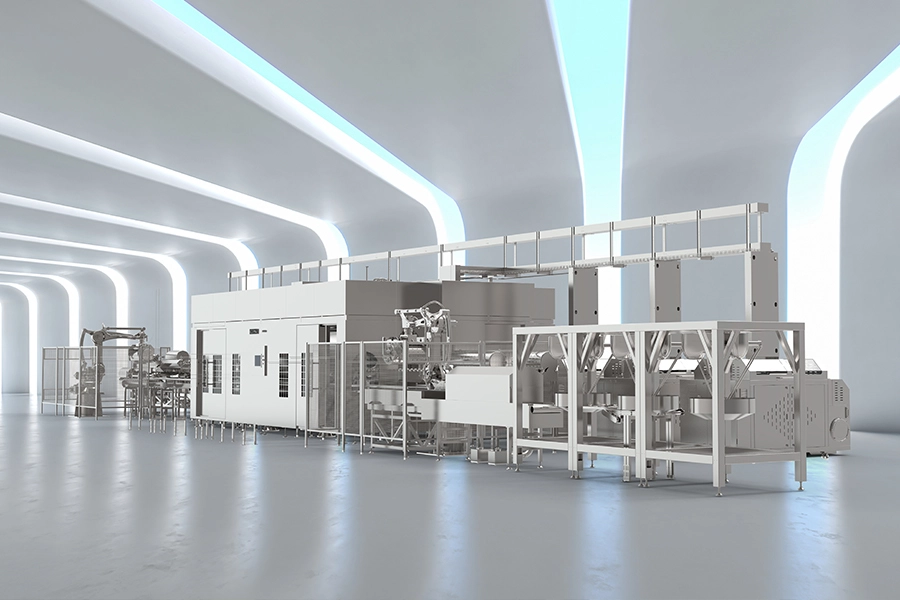
HiLock HPP systems cover laboratory, pilot, and industrial applications, with equipment configurations designed around different chamber capacities, pressure requirements, production volumes, and automation needs.
For beverage applications such as craft beer, the development process can be adapted to the product’s formulation, packaging format, target microorganisms, processing objectives, and production requirements.
Our multidisciplinary R&D team operates with modern production lines, standardized quality-control systems, a dedicated ultra-high-pressure laboratory, and comprehensive testing systems.
This integrated approach allows equipment development and application development to be considered together rather than treating the HPP machine as an isolated piece of equipment.
The Future of HPP in Craft Beer
As craft breweries expand beyond local markets, maintaining product quality throughout longer distribution chains becomes increasingly important.
Consumers also continue to value distinctive flavors, recognizable ingredients, and product freshness. These trends create opportunities for processing technologies that can support microbial stability while minimizing unnecessary thermal exposure.
High-pressure sterilization technology is therefore attracting attention as one potential tool for modern beverage processing.
The technology does not eliminate the need for process validation, refrigeration, appropriate packaging, or good manufacturing practices. Instead, it provides another processing platform that breweries can evaluate as part of a broader preservation strategy.
For craft beer producers seeking to expand distribution while protecting product characteristics, HPP can be considered from three interconnected perspectives:
Microbial Control + Quality Preservation + Shelf-Life Development
When these factors are addressed through product-specific testing and appropriately engineered equipment, HPP can become part of a scalable processing strategy for craft beer.
Conclusion
High-pressure sterilization technology provides craft breweries with an alternative approach to microbial control based primarily on high hydrostatic pressure rather than conventional high-temperature treatment.
Its potential advantages include reduced thermal exposure, support for flavor and aroma preservation, post-packaging processing, and opportunities for extending refrigerated shelf life when the process is appropriately validated.
However, HPP performance depends on the beer formulation, target microorganisms, pressure, holding time, temperature, packaging, and storage conditions. There is no single HPP recipe suitable for every craft beer.
For breweries considering commercialization, working with an experienced HPP equipment manufacturer can help connect process development, equipment engineering, packaging evaluation, validation, installation, and lifecycle support into one integrated solution.
HiLock provides high-pressure processing solutions for food and beverage applications, combining ultra-high-pressure equipment manufacturing with process development and customized engineering support.