
Table of Contents
High Pressure Processing (HPP) has become an increasingly important technology for food, beverage, cosmetics, and biopharmaceutical applications. By applying extremely high hydrostatic pressure to products, HPP can help control microorganisms while minimizing the thermal impact associated with conventional heat-based processing.
For manufacturers, universities, research institutes, and product development teams, laboratory-scale HPP equipment provides an important bridge between scientific research and industrial production. A well-designed laboratory high pressure processing machine allows researchers to evaluate pressure levels, processing times, temperature conditions, packaging formats, and product stability before moving toward pilot-scale or commercial production.
However, choosing laboratory HPP equipment is not simply a matter of selecting the machine with the highest pressure rating. The right system needs to match the research objective, product characteristics, process requirements, testing frequency, future scale-up plans, safety expectations, and technical support capabilities of the equipment supplier.
What Is a Laboratory High Pressure Processing Machine?
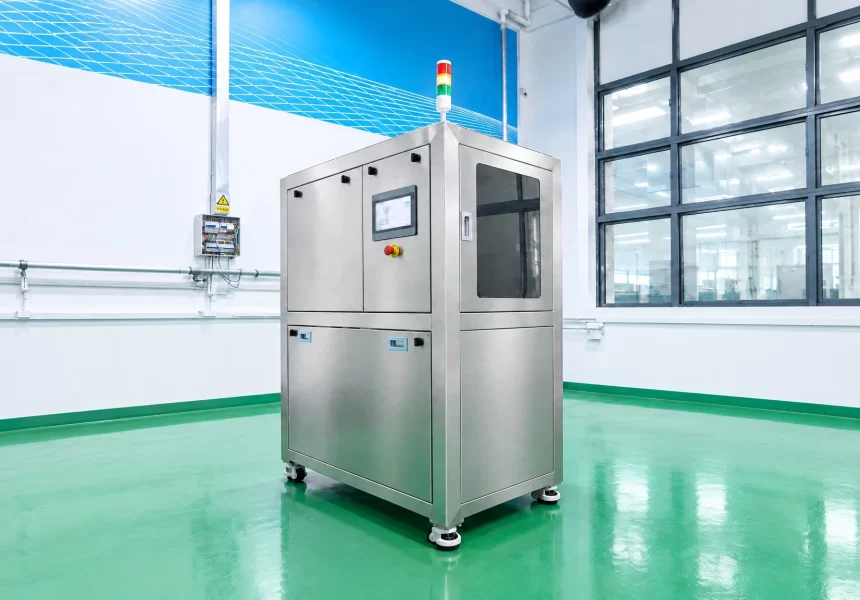
A laboratory high pressure processing machine is a compact HPP system designed for research, process development, sample testing, formulation validation, and small-batch experiments. Compared with industrial HPP systems designed for high-volume production, laboratory equipment generally places greater emphasis on experimental flexibility, precise parameter control, repeatability, convenient sample handling, and data collection.
A laboratory HPP system typically consists of a high-pressure vessel, pressure generation system, pressure control components, temperature management system, control interface, and safety protection system. Depending on the equipment design, it may support different pressure ranges, chamber volumes, temperature conditions, and automation levels.
For research teams, the most suitable machine is therefore not necessarily the one with the highest pressure capacity. It is the system that provides the right combination of pressure capability, process flexibility, repeatability, safety, and technical support.
Start With Your Application and Research Objectives
Before comparing different machines, it is important to clearly define what you want to achieve through HPP testing. The requirements of a food manufacturer developing a new juice product can be very different from those of a university studying protein behavior or a cosmetics company evaluating formulation stability.
In food and beverage research, laboratory high pressure processing machine may be used to investigate microbial inactivation, shelf-life extension, texture, color, nutritional quality, packaging compatibility, and process optimization. For cosmetics and biopharmaceutical applications, researchers may place greater emphasis on temperature control, material compatibility, contamination control, and precise process conditions.
Understanding the application first makes it much easier to determine the appropriate pressure range, chamber volume, temperature control system, automation level, and sample configuration. Instead of asking only, “Which machine should we buy?”, the more useful question is, “What process do we need the machine to develop and validate?”
Evaluate the Pressure Range and Control Accuracy
Pressure capacity is one of the most important specifications when selecting a laboratory high pressure processing machine, but maximum pressure should not be the only consideration.
Different research programs may require different pressure levels to investigate microbial inactivation, enzyme activity, protein modification, food texture, emulsion stability, or other material and biological effects. A laboratory system should therefore provide sufficient pressure capacity while also allowing researchers to adjust and reproduce different experimental conditions.
For research applications, pressure control and repeatability are particularly important. If the pressure profile varies significantly between experiments, it becomes difficult to compare results or establish reliable processing parameters. When evaluating equipment, ask the supplier about the rated working pressure, adjustable operating range, pressure stability during the holding stage, pressure measurement accuracy, and the ability to record pressure-time profiles.
A flexible system that can accurately reproduce different pressure conditions may provide greater research value than a machine selected simply because it has a higher maximum pressure.
Select a Chamber Size That Matches Your Testing Needs
The size of the high-pressure chamber should also be determined by your actual experimental requirements. A larger chamber can accommodate more samples per cycle, while a smaller chamber can reduce water consumption, equipment footprint, and sample requirements.
For a university laboratory conducting small-scale experiments, flexibility and compact design may be more important than processing large sample volumes. A product development center may have different requirements, particularly when testing multiple packaging formats or conducting repeated experiments.
Packaging dimensions should also be considered. Because HPP is generally performed on packaged products, the chamber should accommodate the formats you expect to test. Evaluating sample size, number of samples per experiment, packaging configuration, laboratory space, and potential future requirements will help determine the appropriate chamber capacity.
Consider Temperature Control as Carefully as Pressure
Although HPP is widely recognized as a non-thermal processing technology, temperature remains an important process variable. Pressure and temperature can interact with microbial inactivation and product characteristics, making reliable temperature monitoring and control valuable during process development.
A laboratory high pressure processing machine should provide accurate temperature measurement and, depending on the intended application, appropriate heating, cooling, or water-temperature conditioning capabilities. Researchers should be able to understand the temperature conditions experienced by the product throughout the pressure cycle.
This becomes particularly important in HPP food processing, where product composition, pressure, temperature, and processing time can all influence microbial results and quality attributes. Accurate process control helps researchers distinguish the effects of different parameters and establish reproducible processing conditions.
Look at the Entire Pressure Generation System
The pressure generation system is at the heart of a laboratory high pressure processing machine. Reaching the target pressure is only one part of its performance. The equipment must also generate pressure reliably, maintain stable pressure during the holding period, and repeat the same process over multiple cycles.
For laboratory research, this consistency directly affects experimental reliability. Pressure ramping behavior, holding stability, cycle repeatability, component durability, and maintenance requirements should therefore be considered during equipment evaluation.
It is also useful to understand how the supplier designs and manufactures critical high-pressure components. A manufacturer with strong internal engineering and precision machining capabilities may be better positioned to customize pressure-generation systems and respond to application-specific requirements.
Pay Attention to the Control System and Process Data
Modern laboratory high pressure processing machine should make experimental parameters easy to configure, monitor, and reproduce. Researchers may need to compare multiple combinations of pressure, holding time, and temperature, so the control system should support consistent operation across repeated experiments.
Depending on the equipment configuration, useful functions can include recipe management, real-time pressure and temperature monitoring, automatic process sequencing, alarm management, and process-data recording.
Data traceability is especially valuable for research and development. When HPP parameters need to be correlated with microbial results, texture, color, nutritional quality, particle characteristics, or product stability, reliable process records can make experimental analysis much more efficient.
A well-designed control system turns the HPP machine from a simple pressure-processing device into an important part of the research workflow.
Safety Should Be a Fundamental Requirement
Ultra-high-pressure equipment operates under extremely high mechanical loads, making safety a fundamental consideration during equipment selection. The safety architecture should be evaluated as a complete system rather than by looking at individual components in isolation.
The high-pressure vessel, pressure monitoring system, pressure relief mechanisms, door or lid interlocks, emergency shutdown functions, and overpressure protection should all be appropriately designed for the intended operating conditions.
A professional supplier should also be able to explain its equipment safety design and provide relevant operating, maintenance, inspection, and training support. For universities and companies where multiple researchers or operators may use the same equipment, straightforward operation and clearly defined safety procedures are particularly important.
Evaluate Manufacturing Quality and Customization Capability
The performance of laboratory high pressure processing machine depends heavily on the quality of its high-pressure components and manufacturing processes. Pressure vessels, valves, seals, piping, fittings, and other critical components must withstand repeated high-pressure cycles while maintaining reliable performance.
Precision machining and manufacturing consistency are therefore important factors when evaluating an HPP supplier. Material selection is also relevant, particularly for food, beverage, cosmetic, and biopharmaceutical applications where cleanability, corrosion resistance, and material compatibility may be important.
Customization capability should also be considered. Not every research project can be served by a standard machine. Special chamber configurations, sample holders, pressure ranges, temperature conditions, automation requirements, or data interfaces may be necessary depending on the application.
For this reason, a supplier’s engineering capability can be just as important as its standard product catalog.
Think About Scale-Up Before Buying Laboratory Equipment
Laboratory research is often the first stage of a much longer product-development process. If the ultimate goal is commercial production, scale-up should be considered when selecting the laboratory system.
A laboratory machine should ideally provide a practical pathway toward pilot-scale testing and industrial HPP production. Consistency in pressure-generation technology, process control, measurement methods, and equipment design can make it easier to transfer laboratory findings to larger systems.
This is particularly important for manufacturers developing new high-pressure processing solutions. A process that works successfully in a laboratory needs to be further validated before commercial production, and the equipment supplier can play an important role in this transition.
Working with a manufacturer capable of providing laboratory, pilot, and industrial systems can simplify equipment selection and technical communication throughout the development process.
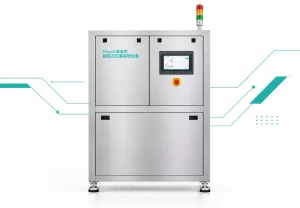
HiLock offers a complete HPP equipment range, from 2L laboratory systems and 55L pilot-scale systems to 100L–525L industrial production systems, with adjustable pressure from 300–600 MPa.
Equipment can be customized to fit your facility’s ceiling height and production line layout, including horizontal or vertical configurations, automatic loading/unloading modules, and multi-chamber parallel systems. For specific applications such as juice, dairy products, ready-to-eat meals, meat, seafood, pet food, and baby food, sealing materials and hygiene levels can be adapted to meet food GMP requirements, enabling installation and production without major facility modifications.
Evaluate Total Cost of Ownership
The purchase price of a laboratory high pressure processing machine is only one part of the overall investment. Installation, training, maintenance, replacement components, energy and water consumption, technical support, and potential customization can all affect the long-term cost of ownership.
Equipment reliability is also important. For research institutions and product-development teams, unexpected downtime can interrupt experiments and delay development schedules. The availability of spare parts and technical service should therefore be considered before purchasing.
A comprehensive evaluation of total cost of ownership provides a more realistic basis for comparing different equipment configurations and suppliers.
Why an Integrated HPP Supplier Matters
The development of an HPP process often involves much more than purchasing a pressure vessel. It can require application testing, process optimization, equipment engineering, manufacturing, installation, and long-term technical support.
HiLock focuses on the research, design, and manufacturing of ultra-high-pressure equipment while providing integrated application solutions for customers in the food, beverage, cosmetics, and biopharmaceutical industries.
Our capabilities combine precision manufacturing, stable supply-chain management, standardized quality control, a dedicated ultra-high-pressure laboratory, comprehensive testing systems, and a multidisciplinary R&D team. This enables us to support customers from early-stage research and process validation through equipment customization and industrial implementation.
Our approach covers the complete development cycle, including process development, equipment design, non-standard customization, manufacturing, installation, commissioning, and lifecycle maintenance.
HiLock has provided equipment and technical services to Fortune 500 companies and more than ten universities, with products and solutions delivered to customers across more than ten countries and five continents.
Conclusion
Choosing the right laboratory high pressure processing machine requires more than comparing pressure ratings or equipment prices. Pressure control, chamber capacity, temperature management, safety, repeatability, customization, and scale-up capabilities all play an important role in successful HPP research and development. By selecting a reliable laboratory high pressure processing machine manufacturer with strong engineering, testing, and technical support capabilities, companies and research institutions can build a more reliable path from laboratory testing to pilot validation and industrial production.
Choosing HiLock means more than choosing a piece of equipment—it means choosing a path toward higher-quality products, premium market value, and sustainable growth in food processing.