
Table of Contents
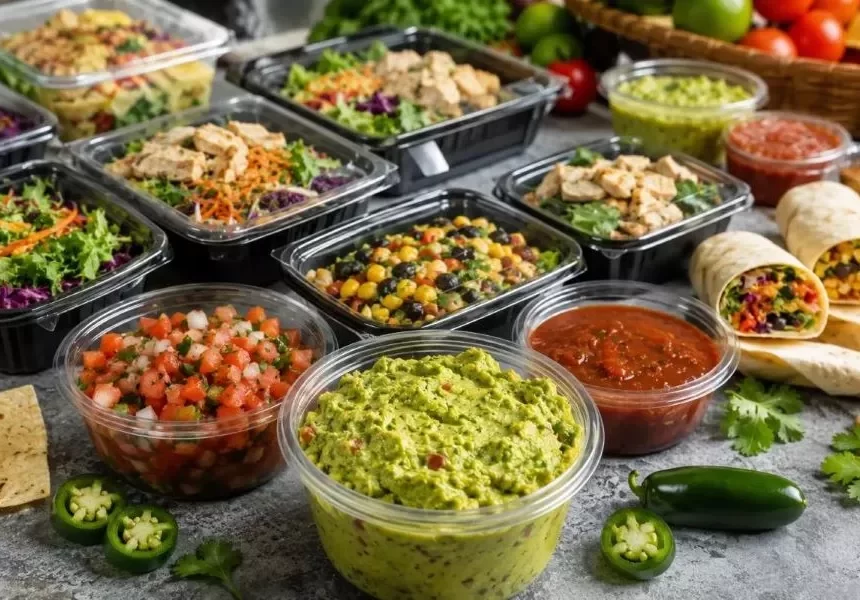
Fresh prepared salads and dips have become popular choices for consumers seeking convenient, flavorful, and minimally processed foods. From leafy green salads and pasta salads to hummus, guacamole, and vegetable dips, these products offer freshness and convenience. However, maintaining food safety while preserving their original taste, texture, and nutritional quality remains a significant challenge for food manufacturers.
Many ready-to-eat products contain ingredients that can support microbial growth, particularly when moisture, pH, and refrigerated storage conditions are favorable. Traditional preservation methods may also affect the fresh characteristics that consumers value.
This is where HPP technology, or High Pressure Processing, offers a potential solution. By applying ultra-high hydrostatic pressure to food in suitable sealed packaging, HPP can reduce many vegetative foodborne pathogens without relying on conventional high-temperature processing.
For manufacturers developing fresh prepared salads and dips, understanding how HPP works, which products are suitable, and how processing parameters affect the final product is essential to achieving consistent quality and food safety.
Why Food Safety Is a Challenge for Fresh Prepared Salads and Dips
Fresh prepared salads and dips often combine multiple ingredients, each with its own microbiological characteristics. Washing, cutting, mixing, and packaging can introduce additional contamination risks if hygiene controls are inadequate.
Several factors make food safety management particularly important.
1. Microbial Contamination in Ready-to-Eat Foods
Ready-to-eat (RTE) foods are typically consumed without further cooking by the consumer. Consequently, effective microbial controls must be established during production and maintained throughout distribution.
Potential hazards include Listeria monocytogenes, Salmonella, and pathogenic Escherichia coli. The specific hazards depend on the ingredients, processing environment, and product formulation.
For example, leafy greens may be associated with contamination risks, while prepared salads containing cooked meat, seafood, eggs, or dairy ingredients may require additional controls. Refrigerated dips can also support pathogen growth under certain conditions.
The U.S. Food and Drug Administration identifies certain vegetables, salad greens, and some deli-style salads among foods that may support the growth of L. monocytogenes, depending on their characteristics and processing conditions.
Therefore, food manufacturers need a validated food safety strategy that addresses both initial contamination and the potential for microbial growth during storage.
2. Refrigeration Does Not Eliminate Food Safety Risks
Refrigeration is essential for many fresh prepared foods, but it does not necessarily prevent all pathogens from growing.
Some microorganisms, including L. monocytogenes, can grow at refrigeration temperatures. As a result, maintaining the cold chain alone cannot replace effective sanitation, hygienic packaging, and validated pathogen control measures.
Manufacturers must consider the entire product lifecycle, from ingredient preparation and processing to packaging, transportation, and retail storage.
3. Balancing Preservation and Fresh Quality
Consumers increasingly expect prepared salads and dips to retain their natural color, flavor, and texture while containing fewer unnecessary additives.
Conventional heat treatment can be effective for many food products, but its suitability depends on the formulation and the desired sensory characteristics. Excessive heat may alter delicate flavors, soften vegetables, or change the texture of certain dips.
Manufacturers therefore need preservation technologies that can reduce microbial hazards while minimizing undesirable changes in product quality.
What Is HPP Technology and How Does It Work?
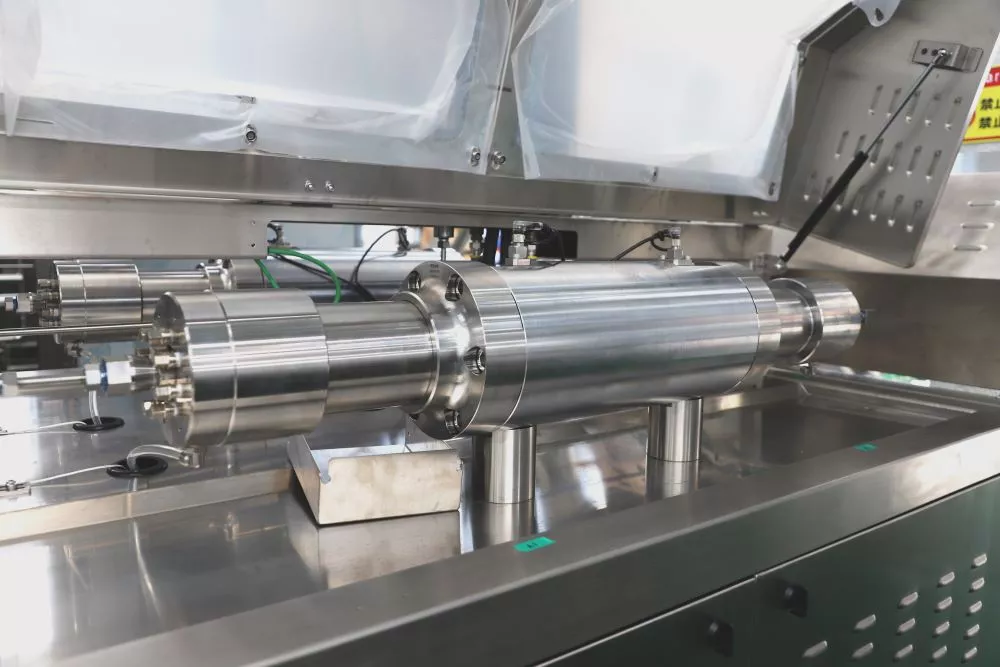
HPP technology is a non-thermal food processing method that uses ultra-high hydrostatic pressure to reduce microorganisms in suitable foods.
Commercial HPP systems commonly operate within a pressure range of approximately 400–600 MPa, although the appropriate operating conditions depend on the product and the validated process.
Unlike conventional thermal pasteurization, HPP primarily relies on pressure rather than high processing temperatures to inactivate susceptible microorganisms.
How the HPP Process Works
A typical post-packaging HPP process involves four main steps:
Step 1: Prepare and package the product
Prepared salads, dips, or sauces are formulated, filled, and sealed in suitable pressure-resistant packaging. The packaging must be compatible with the processing conditions and the intended product.
Step 2: Load the HPP vessel
The sealed packages are placed inside the pressure vessel of an HPP machine. Water is commonly used as the pressure-transmitting medium.
Step 3: Apply ultra-high hydrostatic pressure
The vessel is filled with water and pressurized to the validated processing level. Hydrostatic pressure is transmitted throughout the product, helping inactivate susceptible microorganisms without requiring conventional high-temperature treatment.
Step 4: Depressurize and release the product
After the specified holding period, the pressure is released and the processed packages are removed. Products are then handled and stored according to their validated food safety and refrigeration requirements.
One important advantage of post-packaging HPP is that it can reduce the risk of recontamination from subsequent handling after treatment, provided the package remains intact and upstream hygiene controls are effective.
However, HPP technology is not a substitute for good manufacturing practices, sanitation, or a comprehensive food safety management system.
Key Benefits of HPP Technology for Prepared Salads and Dips
When the product formulation and processing conditions are suitable, HPP technology can support several important objectives for food manufacturers.
1. Improved Microbial Safety
HPP technology can inactivate many vegetative foodborne pathogens, including susceptible strains of Listeria monocytogenes, Salmonella, and pathogenic E. coli.
The effectiveness of treatment depends on pressure, holding time, temperature, initial microbial load, product composition, and the resistance of the target microorganism.
Research published in the Journal of Food Protection investigated HPP treatment of refrigerated dips, including hummus, guacamole, baba ghanoush, tahini, and pesto. The results demonstrated that pressure treatment reduced L. monocytogenes in some formulations but did not produce significant reductions in others under the tested conditions.
(Sourece: Salazar, J. K., et al. (2019). “Fate of Listeria monocytogenes in Ready-to-Eat Refrigerated Dips Treated with High Pressure Processing” Journal of Food Protection, 82(8), 1320–1325. DOI: 10.4315/0362-028X.JFP-18-550.)
This finding highlights an important principle: HPP performance must be validated for each product formulation rather than assumed from pressure settings alone.
2. Potentially Extended Refrigerated Shelf Life
Microbial spoilage is one of the factors that limits the shelf life of fresh prepared foods. By reducing susceptible microorganisms, HPP technology may help slow microbial deterioration and extend the refrigerated shelf life of suitable products.
For manufacturers, this can support more flexible distribution planning, reduce the frequency of product replacement, and potentially reduce food waste.
However, the achievable shelf life varies considerably by product. Ingredients, acidity, water activity, packaging integrity, initial microbial quality, storage temperature, and post-processing handling all influence the outcome.
Shelf-life claims should therefore be supported by appropriate microbiological testing and storage studies rather than relying on a universal extension factor.
3. Better Retention of Fresh Flavor and Product Characteristics
HPP technology can reduce microorganisms without relying on the high temperatures used in conventional thermal processing. This makes it attractive for selected products in which fresh flavor and minimally processed characteristics are important.
Potential applications include guacamole, hummus, selected vegetable dips, and compatible prepared sauces.
Nevertheless, HPP technology does not preserve every quality attribute unchanged. Pressure can affect plant cell structures, vegetable crispness, color, emulsion stability, and other formulation-dependent characteristics.
For mixed salads containing delicate leafy vegetables, the effect on texture may be a significant limitation. Product trials are essential before selecting a commercial process.
4. Support for Clean-Label Product Development
Many consumers look for products with recognizable ingredients and fewer added preservatives.
For suitable formulations, HPP technology may help manufacturers develop products that meet these preferences by providing an additional microbial control step without relying exclusively on conventional preservative systems.
However, HPP technology does not automatically eliminate the need for preservatives. Their necessity depends on the product’s pH, water activity, formulation, target organisms, intended storage conditions, and regulatory requirements.
Any clean-label positioning should accurately reflect the actual ingredient list and validated preservation strategy.
Which Prepared Salads and Dips Are Suitable for HPP Technology?
The suitability of HPP technology depends on both microbial safety objectives and the physical properties of the food.
Hummus and Chickpea-Based Dips
Hummus is a promising application to investigate because it is commonly sold as a refrigerated ready-to-eat product.
HPP technology may help reduce susceptible vegetative pathogens while supporting fresh-product positioning. However, chickpea composition, acidity, water activity, and other ingredients can influence microbial inactivation.
Manufacturers should evaluate the complete formulation rather than testing only the primary ingredient.
Guacamole and Avocado-Based Dips
Guacamole is sensitive to quality changes, particularly color deterioration and texture changes. HPP technology can be considered as part of a preservation strategy for suitable packaged formulations.
Testing should examine microbial reduction alongside color, flavor, texture, and storage stability. The results will depend on avocado maturity, acidity, added ingredients, packaging, and process parameters.
Vegetable Dips and Prepared Sauces
Vegetable-based dips and selected sauces may also be candidates for HPP technology, provided their formulation and packaging are compatible with the process.
However, published research shows that results cannot be generalized across all dips. In one study, hummus, guacamole, and baba ghanoush responded differently from tahini and pesto under the conditions tested.
This illustrates why process development should include product-specific microbial challenge studies where appropriate.
Fresh Mixed Salads
Fresh mixed salads require a more selective approach.
Post-packaging HPP may be considered for certain formulated salad products, including some deli-style salads. However, whole leafy greens and delicate raw vegetables may experience undesirable structural or textural changes under high pressure.
For products containing multiple components, manufacturers should determine whether the entire packaged salad can tolerate HPP or whether a different processing and assembly strategy would be more suitable.
Ingredient-specific validation is especially important when a product contains both delicate vegetables and higher-risk ingredients such as cooked meat or seafood.
Critical Factors When Applying HPP to Salads and Dips
Selecting an appropriate HPP process requires more than choosing a pressure level. Several interacting factors determine both microbial effectiveness and final product quality.
1. Pressure and Holding Time
Higher pressure or longer holding times may increase microbial inactivation, but the relationship is not identical for every organism or food matrix.
A process designed for one dip cannot automatically be transferred to another formulation. Parameters must be established using relevant scientific evidence and product-specific validation.
2. Product pH and Water Activity
Acidity and water activity can influence microbial survival, growth, and resistance to pressure.
For example, an acidic dip may respond differently from a low-acid, high-moisture formulation. The same processing conditions may not deliver equivalent microbial reductions in both products.
These properties should be measured and incorporated into the product’s food safety assessment.
3. Packaging Compatibility
HPP is commonly applied to products sealed in flexible or otherwise pressure-compatible packaging.
Packaging materials must withstand compression and decompression without leaking, delaminating, or compromising seal integrity. Headspace, package geometry, and product distribution should also be assessed during process development.
Suitable packaging is particularly important for maintaining protection against post-process contamination.
4. Refrigerated Storage and Shelf-Life Validation
HPP-treated refrigerated products generally require continued temperature control unless a different storage condition has been specifically validated and is legally appropriate.
Shelf-life studies should assess microbiological stability and relevant quality attributes throughout the proposed storage period. Where necessary, challenge studies should evaluate the behavior of target pathogens under defined conditions.
Importantly, conventional HPP conditions do not reliably eliminate bacterial spores. Low-acid products therefore require particular attention to spore-forming hazards and appropriate refrigeration or other validated control measures.
5. Product Quality and Commercial Throughput
The best process is not necessarily the one that uses the highest pressure or the longest holding time.
Manufacturers should balance microbial reduction, sensory quality, cycle time, vessel capacity, packaging format, and production targets.
Pilot-scale testing can help determine whether a promising laboratory process can be transferred successfully to commercial production.
Conclusion
Fresh prepared salads and dips present distinct challenges for manufacturers seeking to maintain microbial safety, fresh quality, and refrigerated shelf life. HPP technology offers a valuable processing option for suitable products by reducing many vegetative foodborne pathogens while avoiding conventional high-temperature treatment.
However, successful implementation depends on product formulation, pressure and holding-time selection, packaging compatibility, refrigeration, and validated food safety controls.
For manufacturers evaluating HPP for prepared salads and dips, working with experienced high-pressure processing equipment manufacturers can help bridge the gap between laboratory testing and reliable commercial production.
With integrated equipment engineering, application development, and lifecycle support, HiLock helps food manufacturers evaluate and implement HPP solutions aligned with their product and production requirements.