
Table of Contents
The dairy industry faces a persistent challenge: how can manufacturers improve microbial safety and extend product shelf life without compromising the taste, texture, and nutritional quality consumers expect?
Traditional thermal processing remains essential for many dairy products, but heat can alter certain milk proteins and other quality attributes. Meanwhile, manufacturers of fresh and refrigerated dairy products must manage spoilage, post-processing contamination, cold-chain requirements, and growing demand for clean-label products.
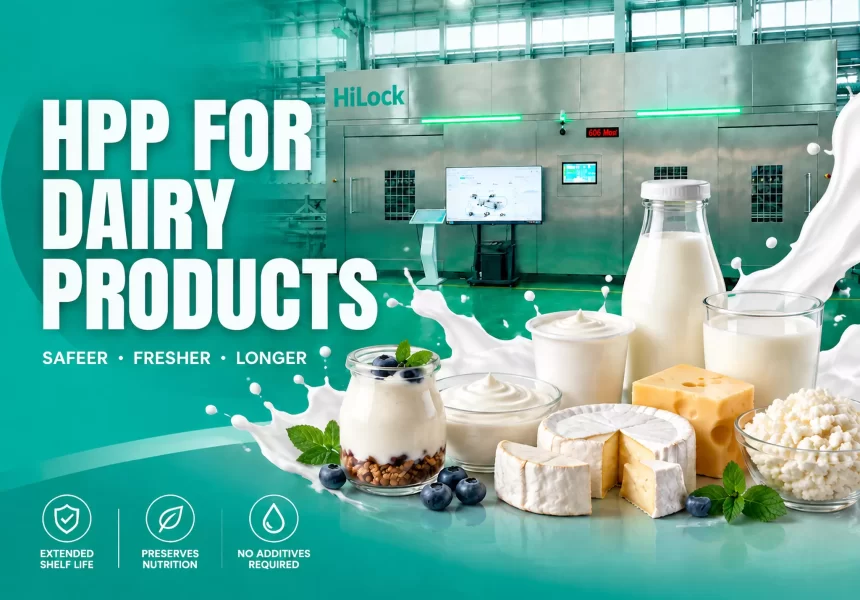
High-pressure sterilization, more precisely referred to as high-pressure processing (HPP) in many food applications, offers an alternative preservation approach. By applying intense hydrostatic pressure to packaged products, HPP can reduce many vegetative microorganisms while helping preserve selected sensory and nutritional characteristics.
For dairy manufacturers exploring advanced preservation technologies, high-pressure processing solutions offer opportunities to improve product quality, strengthen food safety strategies, and develop new value-added products. Understanding the technology, its applications, and its limitations is essential before integrating it into a commercial dairy processing line.
Why Dairy Manufacturers Are Exploring High-Pressure Sterilization Solution
Extending Refrigerated Shelf Life
Shelf life is a major commercial consideration in dairy processing. Microbial growth, enzyme activity, packaging integrity, and storage temperature can all influence how long a product maintains acceptable quality.
HPP can reduce susceptible microorganisms responsible for spoilage, potentially slowing quality deterioration during refrigerated storage. Depending on the product and validated process, this may support a longer distribution window and reduce losses associated with premature spoilage.
The results are not universal. A pressure treatment that works well for one cheese or milk formulation may deliver different results in another. Manufacturers should establish shelf life through product-specific microbial testing, quality assessments, and storage trials rather than relying on a general extension factor.
Preserving Fresh-Like Sensory Characteristics
Consumers increasingly seek dairy products with familiar flavors, appealing textures, and minimal unnecessary processing.
Because HPP can achieve microbial reductions with limited heat input, it may help preserve selected fresh-like characteristics compared with more intensive thermal treatments. This can be particularly valuable for premium refrigerated products.
Nevertheless, HPP is not completely without effects on food structure. Pressure can change milk proteins, casein micelles, fat globules, viscosity, and gel formation. The direction and magnitude of these changes depend on pressure, temperature, holding time, pH, and formulation.
Consequently, dairy manufacturers should assess not only microbial performance but also flavor, color, texture, separation, and stability after treatment.
Supporting Clean-Label Product Development
Clean-label positioning has encouraged manufacturers to investigate preservation technologies that can help reduce reliance on certain formulation-based preservation strategies.
HPP may support this objective by reducing susceptible microorganisms without necessarily requiring additional chemical preservatives. However, HPP does not automatically make a product preservative-free or guarantee a clean label. Formulation requirements, regulatory standards, product safety, and storage conditions still apply.
The strongest application is one in which validated processing, hygienic manufacturing, suitable packaging, and an effective cold chain work together.
Applications of High-Pressure Sterilization Solutions in Dairy
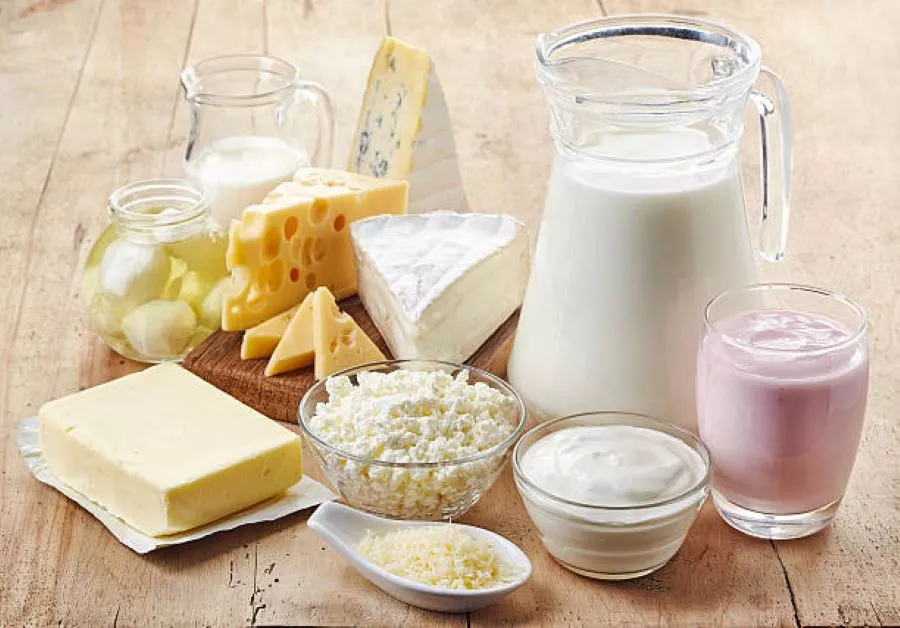
Different dairy products have different compositions, microbial risks, and quality requirements. HPP should therefore be evaluated according to the characteristics of each product.
Milk and Milk-Based Beverages
Milk is a complex system containing proteins, fats, minerals, and other components that may respond differently to pressure.
Research has investigated HPP as a method for reducing vegetative microorganisms in bovine and goat milk. Some studies have reported promising microbial shelf-life outcomes under specific processing and refrigerated storage conditions. However, conventional thermal pasteurization remains the established approach in many markets, and the regulatory status of HPP-treated milk varies by jurisdiction.
For manufacturers developing milk-based beverages, feasibility studies should examine:
- Microbial reduction under the intended process conditions
- Protein stability and potential aggregation
- Fat separation and physical stability
- Flavor, color, and viscosity
- Packaging compatibility and refrigerated shelf life
These evaluations help determine whether HPP is technically and commercially appropriate for a particular beverage.
Yogurt and Fermented Dairy Products
Fermented dairy products such as yogurt face quality challenges associated with post-processing contamination, unwanted microbial growth, and changes in texture during storage.
Depending on the manufacturing sequence, HPP may be evaluated for controlling selected microorganisms, modifying functional properties, or improving the stability of certain fermented products.
The treatment stage is important. Applying pressure to milk before fermentation can influence protein functionality and the characteristics of the resulting gel. Treating a finished fermented product may produce different effects on texture, acidity, and microbial populations.
Manufacturers should therefore determine whether HPP is intended to treat the milk base, the fermented product, or another intermediate, then validate the process against the desired quality and safety outcomes.
Cheese and Fresh Cheese Products
Cheese is another promising area for HPP research and commercial development.
Pressure treatment may reduce selected pathogens and spoilage organisms in certain cheese varieties. It can also influence proteolysis, texture, moisture distribution, and ripening behavior.
These effects may be beneficial or undesirable depending on the cheese type. For example, fresh cheese, soft cheese, and ripened cheese have different moisture levels, structures, and microbial characteristics.
Before introducing HPP into cheese production, manufacturers should assess the following:
- Target pathogen and spoilage-organism reduction
- Texture, firmness, and moisture retention
- Changes in ripening and flavor development
- Package deformation or leakage
- Shelf-life performance under realistic distribution conditions
A carefully designed validation program helps manufacturers identify suitable processing conditions while protecting the distinctive characteristics of the final product.
Specialized Dairy and Human Milk Applications
HPP has also been investigated for specialized applications involving human donor milk. Research suggests that certain pressure treatments may reduce selected vegetative pathogens while preserving some bioactive components better than conventional Holder pasteurization.
However, the results depend on the pressure and holding time, the initial microbial load, the specific milk sample, and the bioactive component being measured. Bacterial spores may survive pressure treatments that substantially reduce vegetative bacteria.
Human milk processing is a specialized application that requires dedicated safety validation, appropriate clinical and regulatory oversight, and protocols established for the intended use. Findings from human milk research should not be generalized to ordinary dairy manufacturing or treated as a substitute for established milk-bank procedures.
Key Factors for Extending Dairy Shelf Life with High-Pressure Sterilization
Installing HPP equipment is only one part of developing a reliable preservation process. Successful implementation requires coordinated control of several variables.
Pressure, Holding Time, and Temperature
Pressure intensity and holding time influence microbial inactivation, while temperature can affect both microbial resistance and product quality.
A pressure range of 300–600 MPa may be relevant to HPP equipment and process development, but not every setting within that range is suitable for every dairy product. Some applications require conditions outside a standard operating window or additional preservation measures.
The final process should be established through laboratory trials, challenge studies where appropriate, and validation by qualified food safety professionals.
Product Composition
Fat content, protein structure, pH, salt concentration, and other formulation characteristics can influence pressure resistance and product quality.
For example, pressure-induced changes in casein micelles and whey proteins may affect viscosity, coagulation, or texture. A process designed for one milk formulation may not deliver equivalent results in a high-protein beverage or a soft cheese.
Packaging Compatibility
HPP is commonly applied to products sealed in flexible, water-resistant packaging that can withstand compression and return to an acceptable shape after pressure release.
Packaging selection should consider material flexibility, seal strength, headspace, product geometry, and compatibility with the pressure vessel. Package integrity should be evaluated throughout processing and subsequent storage.
Cold-Chain Management and Hygiene
HPP does not eliminate the need for hygienic manufacturing or proper storage. Surviving microorganisms may grow during storage if temperature control is inadequate, and contamination can occur during subsequent handling if the process is not designed appropriately.
An effective shelf-life strategy therefore combines validated HPP conditions with sanitary filling and handling, suitable packaging, refrigerated distribution where required, and routine quality monitoring.
HiLock High-Pressure Sterilization Solutions for Industrial Dairy Applications
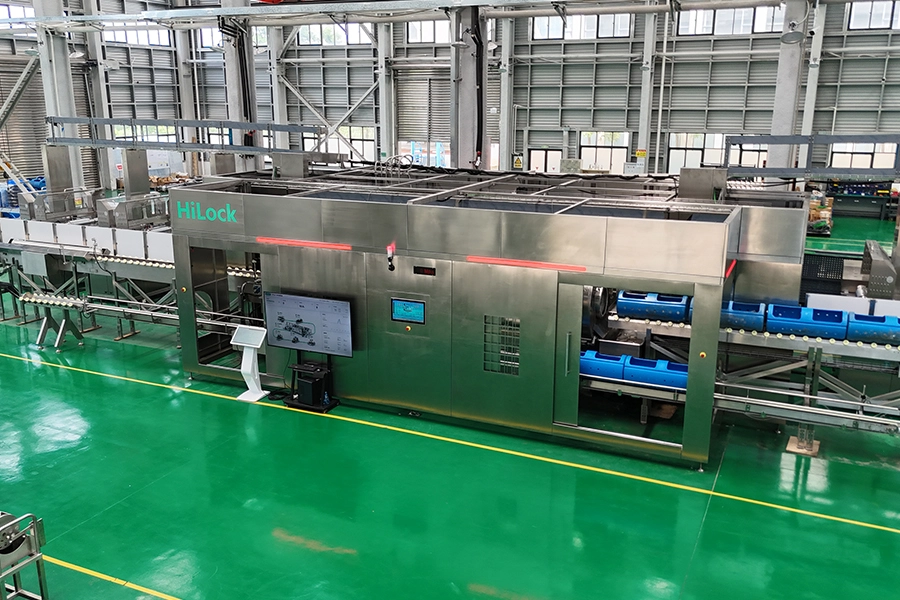
To address key challenges in the dairy industry, including the risk of post-pasteurization contamination and the need for additional preservatives, HiLock provides high-pressure sterilization industrial solutions based on high-pressure processing (HPP), a non-thermal preservation technology.
Our HPP solutions support a range of dairy applications, including yogurt, cheese, and human milk, helping manufacturers improve microbial control while maintaining product quality.
Core Technological Advantages
| Key Advantage | Performance and Benefits |
|---|---|
| Extended Shelf Life of Fermented Dairy Products | Reduces yeasts, molds, and bacteriophages under validated processing conditions while helping preserve casein micelle structure and whey protein functionality to minimize whey separation. |
| Specialized Applications for Human Milk Banks | Supports low-temperature inactivation of cytomegalovirus (CMV) and bacteria while helping retain immunoglobulins (IgA and IgG) and lipase activity. |
| Clean-Label Processing | Uses physical pressure-based preservation without requiring chemical preservatives for the HPP treatment itself. |
Technical Parameters: Processing temperatures of 5–25°C and ultra-high pressures of 300–600 MPa. Under validated conditions, HPP can achieve microbial reductions of 99% or more against selected target pathogens, including E. coli, Salmonella, and Listeria monocytogenes. Retention of heat-sensitive nutrients, such as vitamin C and proteins, can exceed 90% in suitable products, depending on the formulation and processing conditions.
Comparison with Traditional Processing
| Comparison Factor | Traditional Pasteurization | HiLock HPP |
|---|---|---|
| Risk of Post-Processing Contamination | Products may be recontaminated during subsequent filling and handling if hygiene controls are inadequate. | Post-packaging treatment helps reduce the risk of recontamination after processing, provided package integrity is maintained. |
| Production Line Integration | Integration depends on the existing processing and packaging configuration. | Modular system design facilitates integration into existing production lines. |
| Premium Product Development | Premium positioning depends on product formulation and processing methods. | Supports premium product development through pressure-based preservation and product-specific process optimization. |
Industrial-Grade Equipment Solutions
- Complete Equipment Range: Models from 2 L to 525 L to accommodate different production capacities and application requirements.
- Modular Design: Critical modules are designed for functional independence and simplified integration, helping reduce replacement costs for individual components and facilitating maintenance.
- High-Pressure Vessel: Manufactured from aerospace-grade 15-5 stainless steel forgings, with a design life of up to 200,000 cycles, subject to specified operating conditions and maintenance requirements.
- Control System: Fully automated PLC monitoring of pressure, temperature, and holding time, with process data recording and batch traceability.
- Safety and Certifications: Designed to meet applicable CE and ASME requirements, with multiple overpressure protection mechanisms and safety interlocks.
- Energy Efficiency: Potential energy savings of approximately one-third to one-half compared with conventional thermal processing, depending on the process, equipment configuration, and operating conditions.
End-to-End Service and Support
| Service Stage | Service Scope |
|---|---|
| Pre-Sales | Complimentary sample testing and process feasibility evaluation; a process database covering more than 1,000 food ingredients; customized production line layouts and equipment solutions. |
| Implementation | Standardized installation and commissioning, pressure-holding tests, role-based operator training, and on-site support during initial production runs. |
| After-Sales | Direct supply of self-developed core components, a 24-hour response commitment, intelligent monitoring, predictive maintenance, and scheduled inspections. |
| Value-Added Services | Specialized ultra-high-pressure testing at 300–600 MPa, traceable test data, and formal reports to support the transition from laboratory-scale trials to industrial production. |
The Future of High-Pressure Sterilization in Dairy
As dairy manufacturers seek improved product quality, more flexible production strategies, and differentiated refrigerated products, HPP is likely to remain an important area of preservation research and industrial development.
Opportunities include optimizing pressure conditions for individual formulations, improving the consistency of large-scale operations, combining HPP with complementary preservation methods, and developing better tools for process monitoring and quality verification.
At the same time, adoption depends on regulatory acceptance, equipment investment, operating economics, and the ability to demonstrate that a process achieves its intended safety and quality objectives.
The most effective strategy is not simply to apply the highest available pressure. It is to develop a validated process that balances microbial control, product quality, production efficiency, packaging compatibility, and total cost of ownership.
Conclusion
High-pressure sterilization is a widely searched term for pressure-based food preservation, but high-pressure processing (HPP) is the more precise description for many dairy applications.
When appropriately designed and validated, HPP can reduce selected microorganisms and help extend the refrigerated shelf life of certain dairy products while retaining desirable fresh-like characteristics. Its suitability depends on product composition, pressure and time settings, packaging, storage conditions, and the target microbial hazards.
For dairy manufacturers exploring this technology, the next step is to evaluate the product, verify the process, and select equipment that supports consistent commercial operation.