
Table of Contents
In high-end industrial applications such as high-pressure sterilization equipment, equipment stability, pressure accuracy, service life, and production scalability directly affect processing quality and return on investment.
High pressure equipment is far more than a system designed to generate extreme pressure. Its core performance depends heavily on two critical components: the high-pressure vessel and the intelligent control system. These components determine pressure resistance, operational stability, process repeatability, safety, and production adaptability.
As a manufacturer focused on the in-house development of ultra-high-pressure technology, HiLock leverages more than two decades of precision manufacturing experience to develop, manufacture, and quality-control key components internally. Its solutions are designed for R&D and large-scale production across food and beverage, biopharmaceutical, cosmetics, advanced materials, and other industries.
This article explores the working principles, engineering advantages, and industrial value of these two core components in modern high pressure processing equipment.
High-Pressure Vessel: The Structural Core of High Pressure Equipment
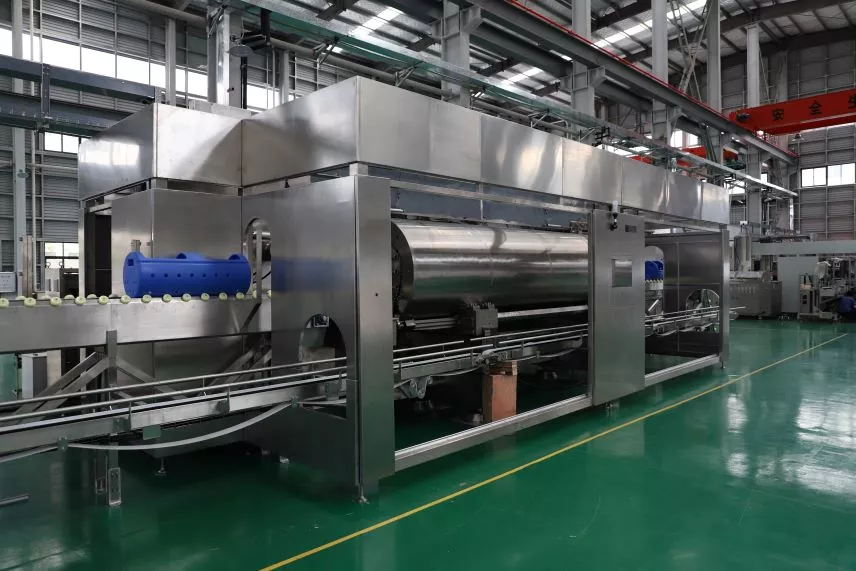
The high-pressure vessel is the primary pressure-bearing component of high pressure equipment. It provides the working chamber where materials undergo high-pressure treatment, whether for food preservation, microbial inactivation, material densification, or other ultra-high-pressure processes.
During operation, the vessel must withstand hundreds of megapascals while repeatedly completing pressurization, holding, and depressurization cycles. Material selection, structural engineering, manufacturing precision, and fatigue resistance therefore directly influence the equipment’s pressure capacity, operational stability, service life, and safety.
Engineering Principles and In-House Manufacturing
Conventional pressure vessels may rely on relatively simple structural configurations. Under repeated high-pressure cycles, inappropriate material selection or stress concentration can contribute to deformation, fatigue damage, or sealing problems.
HiLock’s high-pressure vessel technology combines prestressed wire-winding reinforcement with specially selected high-strength alloy steel. Through optimized mechanical design, the structure distributes tensile stresses generated under extreme pressure and improves fatigue resistance.
This design supports demanding industrial applications in the 400–600 MPa pressure range, depending on the equipment configuration and process requirements.
The vessel is also manufactured using precision grinding and machining processes. Critical dimensional parameters, including inner-wall finish and roundness, are tightly controlled to support reliable sealing and stable pressure operation.
Rather than relying entirely on externally sourced pressure vessels, HiLock controls key manufacturing stages internally, from material selection and precision machining to heat treatment and pressure testing. This integrated approach helps improve quality consistency, supply reliability, and long-term maintenance support.
Industrial Value for HPP Processing
In food applications, stable and uniform pressure distribution is essential for consistent HPP processing. Because pressure is transmitted through water, products can be subjected to high pressure uniformly from multiple directions.
For suitable refrigerated foods and validated processes, HPP can help control microorganisms while maintaining many of the sensory characteristics associated with fresh products. This makes high-pressure processing an important technology for manufacturers developing clean-label and minimally processed foods.
For high-pressure sterilization equipment, pressure-vessel performance is particularly important because repeated pressure cycles place substantial mechanical demands on the system.
A robust vessel design can also support long-term operation and reduce the potential costs associated with premature component replacement, unplanned maintenance, and production downtime.
Intelligent Control System: The Control Center of High Pressure Processing Equipment
If the high-pressure vessel provides the structural foundation, the intelligent control system functions as the control center of high pressure processing equipment.
It manages critical process parameters such as pressure, temperature, holding time, pressurization rate, and depressurization rate. In industrial HPP applications, achieving a high pressure value alone is not sufficient. The ability to precisely control, repeat, record, and optimize process parameters is equally important.
HiLock’s intelligent control architecture uses closed-loop control to support automated and configurable processing. This helps bridge the gap between laboratory process development, pilot-scale validation, and commercial production.
High-Precision Closed-Loop Pressure Control
The control system continuously monitors pressure data and adjusts operating parameters according to the programmed process profile. Dynamic control of pressurization, pressure holding, and depressurization helps maintain stable processing conditions and improve batch-to-batch repeatability.
For industrial production, process repeatability is particularly important because consistent pressure profiles can contribute to more consistent processing outcomes.
Flexible Process Parameter Configuration
Different materials require different processing conditions. The system can support customized pressure, temperature, and holding-time parameters according to the characteristics of products such as juices, ready-to-eat foods, beverages, and other processed materials.
For research and development applications, programmable process profiles also make it easier to test different parameter combinations and transfer validated processes toward pilot and industrial production.
Multi-Level Safety Protection
Industrial high pressure equipment requires comprehensive safety management. HiLock systems can incorporate safety mechanisms covering conditions such as overpressure, abnormal temperature, leakage, and equipment overload.
When abnormal operating conditions are detected, the system can trigger alarms and appropriate protective actions according to the equipment’s safety architecture.
Remote monitoring and maintenance functions can also help technical teams review operating information and support troubleshooting, potentially reducing the time required to identify equipment issues.
Visualized Operation and Data Management
A human-machine interface provides operators with access to equipment status, process parameters, and production information.
Process data and batch records can be stored for production management and traceability. This type of digital process management is particularly useful for industries where standardized operating procedures, process documentation, and batch traceability are important.
In-House Development of Core High Pressure Equipment Components
Many high pressure equipment manufacturers rely on external suppliers for some critical components. This can create challenges related to procurement, lead times, spare parts availability, maintenance, and equipment customization.
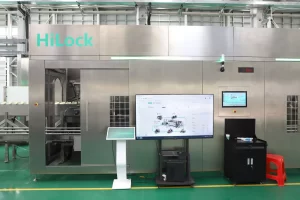
HiLock combines more than two decades of precision manufacturing experience with extensive development in ultra-high-pressure technology. The company develops and manufactures key components including high-pressure vessels, intelligent control systems, and ultra-high-pressure boosters.
This vertically integrated manufacturing model provides several practical advantages.
Consistent Quality Control
Core components can undergo standardized inspection, performance testing, and high-pressure validation before being integrated into complete systems. This helps maintain consistency across critical equipment components.
Greater Supply Chain Control
In-house manufacturing reduces dependence on external suppliers for key components. It can also provide greater flexibility in production planning, spare-part supply, and equipment delivery.
Lifecycle Cost Management
Internal control of critical components can support more predictable maintenance and spare-part management. For customers operating industrial high pressure processing equipment, this can be important for controlling long-term operating and maintenance costs.
Deeper Process Customization
Different industries and products have different processing requirements. With direct control over key components and equipment architecture, HiLock can adjust equipment configurations and process parameters according to customer requirements.
This enables closer integration between process validation, equipment selection, line design, installation, commissioning, operator training, and lifecycle support.
From Core Components to Complete High Pressure Processing Solutions
The performance of a high-pressure system is determined not by a single specification, but by the coordinated performance of its pressure vessel, booster system, control architecture, sealing system, safety mechanisms, and other critical components.
The pressure vessel provides the structural foundation for extreme-pressure operation, while the intelligent control system determines how accurately and consistently the process is executed.
Together, these technologies form the foundation of reliable high pressure processing equipment.
HiLock combines core-component development with complete engineering services, supporting customers from process testing and equipment selection to customized system design, installation, commissioning, training, and lifecycle maintenance.
For food and beverage manufacturers, this approach can support HPP applications involving juices, beverages, ready-to-eat foods, meat, seafood, dairy products, and other products where preservation and fresh-product quality are important.
Beyond food processing, high-pressure technology can also be adapted to applications in biopharmaceuticals, cosmetics, advanced materials, and other emerging industrial fields.
Conclusion: Engineering the Core of Reliable High Pressure Equipment
The high-pressure vessel determines the structural foundation and pressure-bearing capability of the system, while the intelligent control system provides precise process management and repeatability. Together, they represent two of the most important technology areas in modern high pressure equipment.
For manufacturers evaluating HPP and other ultra-high-pressure technologies, attention should extend beyond maximum pressure. Vessel design, fatigue resistance, sealing performance, control accuracy, process flexibility, safety architecture, data management, and after-sales support all contribute to the long-term value of the equipment.
With in-house development of key components and integrated engineering capabilities, HiLock aims to provide reliable high pressure processing equipment for laboratory, pilot, and industrial applications.
By continuously improving core technologies and process capabilities, HiLock supports customers in developing more stable, repeatable, and scalable ultra-high-pressure production solutions.