
Table of Contents
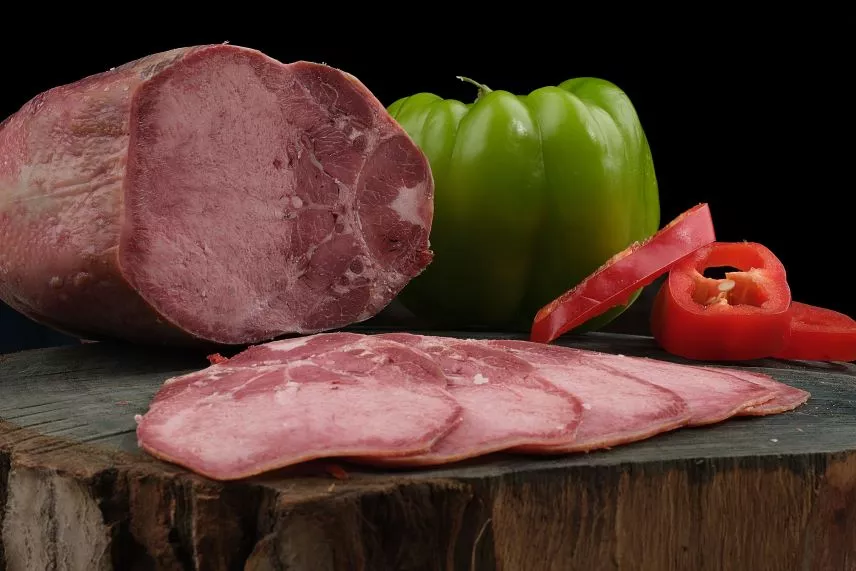
Ready-to-eat (RTE meat) products are designed to be consumed with little or no additional cooking, making food safety a critical consideration throughout processing, packaging, storage, and distribution.
Traditional thermal processing remains an important food-safety intervention, but it can also affect the color, texture, flavor, and overall sensory characteristics of meat products. As consumers and food manufacturers increasingly seek minimally processed and clean-label products, high pressure processing (HPP) has emerged as an important non-thermal processing technology for RTE meat and other foods.
HPP is already used commercially for post-packaging decontamination and shelf-life extension of processed and RTE meat products. Research has also demonstrated that high pressure can inactivate or reduce the infectivity of several foodborne viruses, although the effectiveness depends strongly on the virus, food matrix, pressure, temperature, and holding time.
For manufacturers evaluating HPP for RTE meat, the key question is therefore not simply whether pressure can inactivate microorganisms, but how to develop a validated pressure process that achieves the required food-safety objective while maintaining product quality and supporting commercial production.
Why Virus Control Matters in RTE Meat
RTE meat products occupy a unique position in the food-safety chain.
Unlike raw meat products that are normally subjected to a final cooking step by consumers, RTE products may be eaten directly after opening. Any contamination introduced after the primary cooking or processing stage can therefore become a significant food-safety concern.
Foodborne viruses such as norovirus, hepatitis A virus (HAV), and hepatitis E virus (HEV) have received considerable research attention. In particular, HEV is relevant to pork and pork-derived products because zoonotic HEV genotypes can be transmitted through consumption of infected or undercooked pork products.
Recent research has further demonstrated that HAV and norovirus can be detected and investigated in different meat products, highlighting the importance of reliable analytical methods when evaluating viral contamination and intervention technologies.
For RTE meat manufacturers, virus control should therefore be considered as part of a broader food-safety strategy that includes:
- Raw-material control
- Hygienic processing
- Cross-contamination prevention
- Validated lethality or decontamination steps
- Hygienic packaging
- Temperature-controlled storage
- Environmental monitoring
- Post-process handling controls
HPP does not replace these controls. Instead, it can serve as an additional validated intervention within an integrated food-safety system.
What Is High Pressure Processing?
High pressure processing, also known as high hydrostatic pressure processing, uses water as the pressure-transmitting medium to subject packaged food to intense, uniform pressure.
Unlike conventional thermal processing, HPP does not rely primarily on high product temperature to achieve microbial inactivation.
A typical HPP cycle includes:
Loading → Pressurization → Holding → Depressurization → Unloading
During the process, packaged RTE meat is placed inside a high-pressure vessel filled with water. A high pressure processing machine then increases the pressure inside the vessel.
Commercial meat applications commonly operate in the range of approximately 400–600 MPa, with treatment times often measured in minutes. Published reviews describe HPP treatments in this range as widely used for processed and RTE meat products.
Because pressure is transmitted through the water medium, the food experiences pressure from essentially all directions.
This makes HPP fundamentally different from conventional mechanical pressing, where force is predominantly applied from a specific direction.
The food package is therefore compressed during the pressure cycle but returns toward its original dimensions after decompression, provided the packaging is appropriately designed for HPP.
How High Pressure Processing Helps Control Viruses
The mechanisms of viral inactivation under HPP are different from conventional thermal destruction.
Research indicates that pressure can alter the structural properties of viral particles, including capsid proteins. These structural changes can interfere with the virus’s ability to attach to and infect host cells.
However, viruses do not all respond to pressure in the same way.
Published research has investigated the pressure sensitivity of viruses including:
- Human norovirus
- Norovirus surrogates
- Hepatitis A virus
- Hepatitis E virus
- Other foodborne viruses
Studies have demonstrated that HPP can reduce the infectivity of several viruses, but the required process conditions vary significantly according to virus type and food matrix.
This is an important point for industrial applications:
There is no single HPP pressure-time combination that can automatically be considered effective against every foodborne virus in every RTE meat product.
A validated process must be developed for the specific product and food-safety objective.
HPP and Hepatitis E Virus in Pork Products
HEV provides an especially relevant example for the application of HPP to pork products.
A 2025 study investigated HPP treatment of artificially contaminated pork liver using pressures of 500 and 600 MPa at different holding times. The researchers evaluated residual infectious HEV using a HepaRG cell-culture model.
The study reported that treatment at 600 MPa for 1 minute at approximately 8°C resulted in no detectable residual infectious HEV in the tested pork liver samples under the study’s detection conditions. The treated pork liver was subsequently used to produce liver sausage for technological and sensory evaluation.
Importantly, the same study also demonstrated why HPP validation must be product-specific.
The researchers observed that HPP did not eliminate detectable HEV RNA by RT-qPCR, even when infectious virus was no longer detected by the cell-culture method. This illustrates an important distinction:
Detecting viral genetic material does not necessarily mean that infectious virus remains.
For food-safety validation, the appropriate analytical method and endpoint therefore matter.
The study also reported measurable changes in certain technological properties of the treated pork liver, while sensory testing of the resulting liver sausage found no major differences in taste or color under the tested conditions.
These results are promising, but they should not be interpreted as a universal commercial process for all pork or RTE meat products. Food matrix, formulation, packaging, pressure, temperature, holding time, and microbiological target all need to be evaluated independently.
Why Food Matrix Matters in RTE Meat HPP
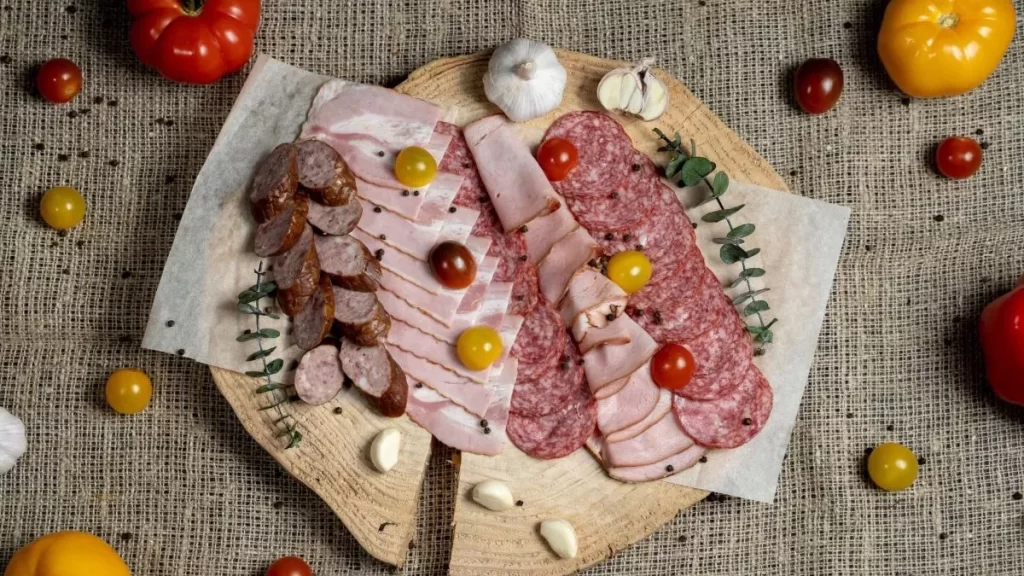
One of the most important considerations when designing an HPP process is the food matrix.
A pressure treatment that works effectively in a laboratory buffer may perform differently when applied to an actual meat product.
Meat contains proteins, fats, salts, water, carbohydrates, and other components that can influence microbial and viral pressure resistance.
Research has shown that the same HPP treatment can produce different viral inactivation outcomes in different food matrices. For example, studies have reported differences between pork liver and ham when evaluating pressure inactivation of norovirus surrogates.
The implication for RTE meat manufacturers is straightforward:
Process parameters should be validated using the actual commercial product or an appropriately justified surrogate matrix.
Important product variables can include:
pH
pH can influence microbial and viral stability and therefore affect the response to pressure.
Water Activity
Water activity can influence pressure resistance and microbial behavior.
Salt and Formulation
Salt, curing ingredients, preservatives, and other formulation components may change the response of microorganisms to HPP.
Fat Content
High-fat environments can influence microbial protection and may affect pressure inactivation behavior.
Product Geometry
The physical size and configuration of the packaged product can influence processing efficiency, loading density, and production throughput.
Packaging
Because HPP is commonly applied after packaging, package materials must be capable of withstanding the pressure cycle without compromising seal integrity or product protection.
HPP Is Not Only About Pressure: Pressure, Time, and Temperature
When selecting a high pressure processing machine, it is important to look beyond the maximum pressure rating.
HPP process performance depends on multiple interacting parameters.
The three most important process variables are generally:
Pressure × Holding Time × Temperature
For viral inactivation, studies have demonstrated that increasing pressure and/or extending the holding time can increase inactivation, while temperature can also influence the response of particular viruses.
For example, research on HEV found that pressure and treatment time strongly influenced infectivity reduction, with higher pressure and longer treatment producing greater reductions under the experimental conditions.
At the same time, temperature cannot simply be increased without considering product quality.
Meat proteins and pigments can respond to pressure and temperature, potentially affecting:
- Color
- Texture
- Water-holding capacity
- Firmness
- Oxidation
- Appearance
Research on HPP-treated meat shows that processing conditions can influence these quality characteristics, which is one reason HPP applications have been particularly associated with processed and RTE meat products rather than all fresh-meat applications.
The objective is therefore to establish an optimized processing window that balances:
Microbial Safety + Viral Control + Product Quality + Process Efficiency
Why HPP Is Particularly Suitable for RTE Meat
HPP has several characteristics that make it attractive for RTE meat processing.
Post-Packaging Processing
One major advantage is the ability to process products after packaging.
This can help reduce the risk of contamination introduced between the final preparation stage and packaging, provided the overall hygienic process is properly designed.
HPP has therefore become an established commercial intervention for processed and RTE meat products.
Non-Thermal Processing
HPP can achieve microbial inactivation without relying on conventional high-temperature processing.
This can support the development of products where maintaining sensory characteristics is important.
Shelf-Life Extension
HPP is widely investigated and commercially applied for controlling spoilage microorganisms and extending the refrigerated shelf life of meat products.
Clean-Label Product Development
Because HPP relies primarily on physical pressure rather than chemical preservatives, it can support product-development strategies focused on simpler formulations and clean-label positioning.
However, whether preservatives can be reduced or eliminated depends entirely on the product formulation, regulatory requirements, microbiological validation, and intended shelf life.
HPP Should Be Part of an Integrated Food-Safety Strategy
HPP is a powerful processing technology, but it should not be viewed as a substitute for good manufacturing practices or validated food-safety systems.
An effective RTE meat safety strategy should integrate raw material control, hygienic processing, thermal or other validated interventions, HPP treatment where applicable, hygienic packaging, cold chain management, and ongoing shelf-life and microbiological verification. By combining these measures, manufacturers can establish a more comprehensive and controlled food safety system throughout the entire production and distribution process.
This integrated approach is particularly important because HPP does not provide the same level of control for every microorganism.
For example, bacterial spores are generally much more pressure resistant than vegetative bacteria, and HPP may have limited effectiveness against spores unless combined with other hurdles such as heat or acidity.
Similarly, virus control requires product-specific validation rather than relying solely on a generic pressure specification.
Conclusion: Building a More Controlled HPP Process for RTE Meat
The application of high pressure processing to RTE meat represents an important intersection between food safety, non-thermal processing, product quality, and modern manufacturing.
Research has demonstrated that HPP can inactivate or reduce the infectivity of several foodborne viruses under appropriate conditions. Studies involving HAV, norovirus surrogates, and HEV provide evidence of pressure-dependent viral inactivation, while recent research on pork liver has demonstrated the potential of HPP to reduce infectious HEV in a specific meat matrix.
At the same time, these studies also highlight an essential principle:
HPP is not a one-size-fits-all treatment.
The appropriate pressure, holding time, temperature, packaging configuration, and product formulation must be evaluated and validated for the specific application.
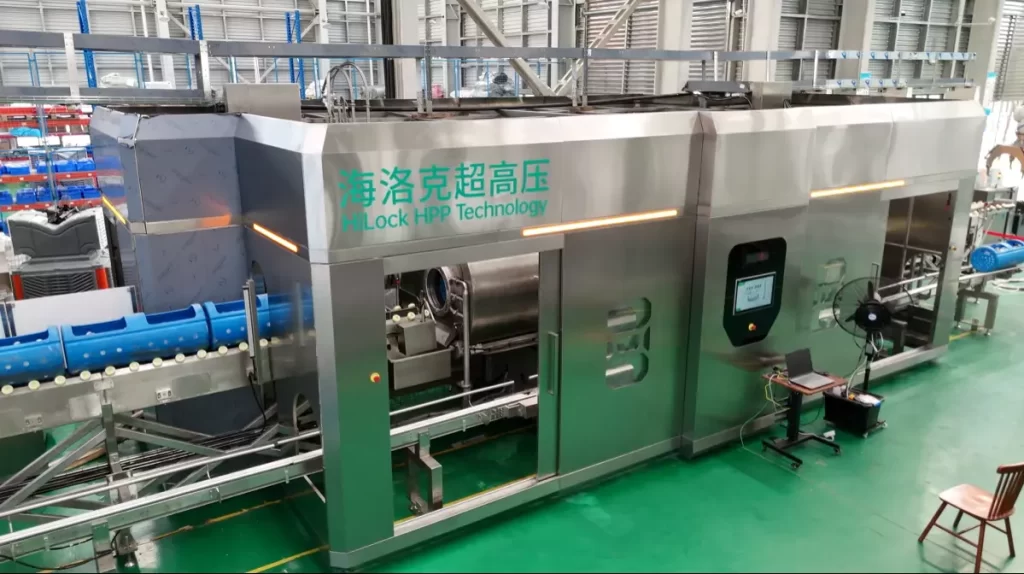
For RTE meat manufacturers, the right high pressure processing machine should therefore be more than a high-pressure vessel. It should be part of an integrated solution that combines precise pressure control, temperature management, reliable process monitoring, production capacity, product testing, and technical support.
With experience in the R&D, design, and manufacturing of ultra-high-pressure equipment, our team provides integrated HPP solutions for food, beverage, cosmetics, and biopharmaceutical applications. Our capabilities cover precision manufacturing, stable supply-chain management, customized non-standard equipment, dedicated ultra-high-pressure laboratories, standardized quality control, and comprehensive testing systems.
From process development and equipment customization to installation and lifecycle maintenance, the goal is to help manufacturers translate HPP technology from laboratory validation into reliable industrial production.
For RTE meat producers exploring high pressure processing, the most important starting point is not simply choosing the highest-pressure machine. It is defining the right product-specific process window and building an equipment system capable of reproducing that process consistently at production scale.
Research References
1. Govaris, A., & Pexara, A. (2021)
Inactivation of Foodborne Viruses by High-Pressure Processing (HPP).
Foods, 10(2), 215.
DOI: 10.3390/foods10020215.
PubMed – Inactivation of Foodborne Viruses by HPP
2. Kingsley, D. H. (2006)
Inactivation of Hepatitis A Virus by High-Pressure Processing: The Role of Temperature and Pressure Oscillation.
Journal of Food Protection, 69(10), 2454–2459.
DOI: 10.4315/0362-028X-69.10.2454.
PubMed – HAV and HPP Temperature Study
3. Nasheri, N., Doctor, T., Chen, A., Harlow, J., & Gill, A. (2020)
Evaluation of High-Pressure Processing in Inactivation of the Hepatitis E Virus.
Frontiers in Microbiology, 11, 461.
DOI: 10.3389/fmicb.2020.00461.
Full Research Article – Frontiers in Microbiology
4. Pellerin, M., Martin, J.-L., Harlet, L., Doceul, V., Pavio, N., & Feurer, C. (2025/2026)
High-pressure processing of pork liver reduces the infectivity of the hepatitis E virus.
Applied and Environmental Microbiology, 92(1), e01054-25.
DOI: 10.1128/aem.01054-25.