
Table of Contents
In recent years, consumer expectations for food products have changed significantly. Today’s consumers want food that retains its original freshness, taste, and color. They also prefer clean-label formulations with no unnecessary additives, extended shelf life, and reliable food safety.
Traditional thermal pasteurization often struggles to balance these requirements. In contrast, High Pressure Processing (HPP), a non-thermal food preservation technology, uses extremely high pressure to inactivate foodborne pathogens and spoilage microorganisms while preserving much of the food’s original flavor, color, and nutritional value. As a result, HPP technology is moving beyond laboratory applications and becoming increasingly important in large-scale food production.
At the same time, the HPP industry is evolving rapidly. Industrial equipment is moving toward larger vessel capacities, improved pressure stability, lower energy consumption, and intelligent operation and maintenance. Production-scale HPP machines now cover vessel capacities ranging from approximately 135L to 800L, with reported daily processing capacities reaching up to 300,000 liters. A working pressure of 600 MPa has become a widely adopted benchmark for industrial HPP food processing.
Driven by changing consumer preferences and the modernization of food manufacturing, more food companies are considering investments in industrial HPP equipment. However, with machines ranging from several dozen liters to hundreds of liters in capacity, how can manufacturers identify the right solution for their production lines and ensure long-term operational value?
This guide explores the key factors businesses should consider when selecting an industrial HPP machine, based on practical production requirements.
Understand the Difference Between Industrial and Laboratory HPP Equipment
The first step in equipment selection is understanding the fundamental difference between laboratory-scale and industrial-scale HPP machines.
Laboratory HPP equipment is primarily designed for process development, feasibility testing, and small-batch trials. Industrial HPP machines, on the other hand, must meet much more demanding requirements, including continuous production, batch-to-batch consistency, regulatory compliance, and long-term operating efficiency.
From an industry perspective, 600 MPa is a widely used benchmark for industrial HPP processing pressure, while production-scale equipment typically features vessel capacities ranging from 135L to 800L. Daily processing capacities can reach up to 300,000 liters, depending on equipment configuration and operating conditions.
Therefore, industrial HPP machine selection should focus primarily on production capacity and operational stability rather than simply comparing the maximum specifications listed on equipment datasheets.
Six Key Factors to Consider When Selecting an Industrial HPP Machine
Production Capacity: Select Equipment Based on Daily Processing Requirements
Production capacity is one of the most important factors when choosing an industrial HPP machine.
Manufacturers should evaluate current order volumes, production schedules, seasonal demand, and expected business growth to determine the required daily processing capacity. Choosing equipment that is too small may create production bottlenecks, while oversized equipment can increase unnecessary capital and operating expenses.
The following table illustrates how different production capacities may correspond to different manufacturing stages:
| Production Stage | Typical Daily Processing Capacity | Recommended Applications |
|---|---|---|
| Pilot-scale / Small-batch Production | 600L | Process scale-up validation and specialty product trials |
| Small-scale Commercial Production | 2,500L | Initial commercial production and regular manufacturing |
| Medium-to-Large-scale Production | 5,900L | Large food factories and multi-product processing |
| Enterprise-scale Production | 13,000L | Large-volume orders and centralized manufacturing |
| High-volume Industrial Production | 25,000L | Major food manufacturers and large production facilities |
Note: The capacities above are illustrative equipment benchmarks. Actual throughput depends on product dimensions, packaging, pressure holding time, loading efficiency, and operating schedules.
The key is to ensure that the selected machine can accommodate normal production requirements while providing sufficient flexibility for peak demand and future expansion.
Pressure Stability and Batch-to-Batch Consistency
The effectiveness of HPP food processing depends heavily on the ability to deliver consistent pressure conditions across production batches.
Although 600 MPa is a widely adopted industrial processing benchmark, maximum pressure alone does not determine equipment performance. Manufacturers should pay closer attention to pressure stability, control accuracy, and consistency during repeated production cycles.
Key factors to evaluate include:
- Intelligent pressure control: Does the machine feature a high-precision control system that maintains consistent processing pressure for every batch?
- Booster configuration: Does the equipment use a single booster, dual boosters, six boosters, or a 12-booster configuration?
- Coordinated booster operation: Can multiple boosters operate synchronously to maintain stable pressure throughout the processing cycle?
- Long-term operating stability: Can the machine maintain reliable pressure performance during continuous, high-load operation over 24-hour production schedules?
For industrial HPP machines equipped with multiple boosters, synchronized control is particularly important. Poor coordination can affect pressure stability, production efficiency, and batch consistency.
High-Pressure Vessel Lifespan and Core Component Reliability
The high-pressure vessel is the heart of an industrial HPP machine. Its structural reliability and fatigue resistance directly influence equipment lifespan, maintenance requirements, and overall return on investment.
When evaluating an HPP vessel, manufacturers should consider:
- Whether the vessel uses high-strength materials with appropriate fatigue and corrosion resistance.
- Whether advanced materials, such as aerospace-grade 15-5 stainless steel forgings, are used.
- Whether the manufacturer can provide actual fatigue testing data and verified service-life records.
- Whether the vessel has demonstrated reliable performance over repeated pressure cycles, such as 200,000 cycles.
The quality of core components is equally important. Inadequate precision in vessel manufacturing, sealing systems, and high-pressure connections can lead to premature wear, frequent seal replacement, and unexpected downtime.
Therefore, manufacturers should request supporting technical documentation and actual performance records rather than relying solely on supplier claims.
Operating Costs and Consumable Component Supply
The real cost of an industrial HPP machine extends far beyond its initial purchase price. A proper investment assessment should consider the total cost of ownership throughout the equipment’s service life.
Common operational challenges in the HPP industry include expensive spare parts, frequent component replacement, high energy consumption, and difficult maintenance procedures. These factors can significantly increase the overall cost of production.
Before purchasing an industrial HPP machine, evaluate the following:
- Consumable component costs: What are the prices and replacement intervals for seals, valve assemblies, high-pressure pipes, and other wear parts?
- Maintenance accessibility: Is routine maintenance straightforward? Can maintenance downtime be minimized?
- Specialized tools: Does the equipment require expensive or highly specialized tools for routine servicing?
- Core component manufacturing: Are the main boosters independently developed and manufactured by the equipment supplier?
- Spare parts availability: Can the manufacturer ensure a stable and timely supply of replacement components?
- Energy efficiency: What is the machine’s actual energy consumption per liter of processed product?
Energy efficiency is particularly important for high-volume production. Advanced industrial HPP systems aim to reduce specific energy consumption, with some industry-reported benchmarks falling below 0.6 kWh/L. However, actual consumption varies depending on machine configuration, product loading, pressure cycles, and operating conditions.
A machine with a competitive purchase price but high maintenance and energy costs may ultimately be more expensive over its operating life.
Regulatory Compliance and Hygienic Equipment Design
Different industries and target markets have different regulatory and certification requirements.
For food manufacturers, relevant food safety management systems may include HACCP and ISO 22000. Pharmaceutical applications may require compliance with applicable pharmacopoeia standards and Good Manufacturing Practice (GMP) requirements. For international markets, certifications and regulatory documentation such as CE, FDA-related requirements, and ASME pressure vessel standards may also be relevant, depending on the equipment and application.
High-end industrial applications may additionally require:
- Clean-in-Place (CIP) systems.
- Sterilization-in-Place (SIP) systems, where applicable.
- Electronic production records and traceability systems.
- Hygienic structural design that minimizes contamination risks.
- Easy-to-clean surfaces and reduced sanitary dead zones.
Beyond certifications, the equipment’s physical design is critical. Poorly designed structures may create areas where food residues accumulate, increasing cleaning difficulty and potential food safety risks.
Manufacturers should therefore evaluate both formal compliance documentation and the practical hygienic design of the equipment.
Process Compatibility and Technical Service Capabilities
One common challenge in industrial HPP adoption is the lack of process-specific support. Standard equipment alone may not be sufficient for manufacturers handling different food products, packaging formats, and processing requirements.
Without proper process adaptation, businesses may experience inconsistent microbial inactivation, unnecessary trial-and-error costs, and delays in commercial production.
A reliable industrial HPP equipment supplier should be able to provide:
- Product sample testing: Evaluate product compatibility and conduct preliminary HPP process validation.
- Food processing databases: Provide technical references and process experience for different food ingredients and product categories.
- Customized production line design: Develop equipment configurations and integration solutions based on actual production requirements.
- Installation and commissioning: Ensure that equipment is correctly installed and configured.
- Operator training: Train production and maintenance personnel in equipment operation and routine servicing.
- Production support: Provide on-site technical assistance during initial commercial production when necessary.
Choosing a supplier with strong engineering and application support can significantly reduce the risks associated with transitioning from laboratory testing to industrial-scale production.
Industrial HPP Machine Selection Checklist: What to Verify Before Purchasing
The six selection criteria above can be summarized into a practical checklist for manufacturers evaluating industrial HPP equipment.
Before making a purchasing decision, confirm the following:
- Is the daily processing capacity sufficient for current orders and peak-season demand?
- Can the equipment maintain stable pressure at 600 MPa with adequate control accuracy?
- Are the high-pressure vessel materials and fatigue test results clearly documented?
- Are the prices, replacement intervals, and availability of consumable components transparent?
- Is the equipment’s specific energy consumption competitive?
- Does the machine meet the relevant requirements and certifications for the target industry and market, such as CE, ASME, and applicable food safety standards?
- Does the equipment support CIP/SIP and electronic production traceability where required?
- Does the supplier provide product testing, customized production line solutions, installation, and operator training?
A comprehensive evaluation of these factors helps manufacturers avoid purchasing decisions based solely on equipment price or headline specifications.
Why Consider HiLock for Your Industrial HPP Processing Needs?
After evaluating the key technical and operational requirements, HiLock is a manufacturer worth considering for businesses seeking reliable industrial HPP solutions.
With a focus on ultra-high-pressure equipment development, manufacturing, and integrated application solutions, HiLock offers a comprehensive product portfolio designed to support businesses from laboratory research to large-scale commercial production.
Full Capacity Coverage: From Laboratory Research to Industrial Production
HiLock offers a comprehensive range of HPP equipment, from the 2L laboratory model to the 55L pilot-scale machine, 135L and 300L production models, and the flagship 525L industrial HPP machine.
The HiLock-525L features:
- 525L high-pressure vessel capacity.
- 12 booster units.
- 550 kW installed power.
- Daily processing capacity of up to 25,000 liters.
With a range of equipment configurations, manufacturers can select a solution that matches their current production requirements while allowing for future capacity expansion. Modular equipment design also supports integration into existing production lines.
Pressure Stability and Extended Equipment Lifespan
HiLock high-pressure vessels are manufactured using aerospace-grade 15-5 stainless steel forgings, with tested service life reaching 200,000 pressure cycles.
An intelligent pressure control system with an accuracy of ±5 MPa helps maintain consistent processing conditions across production batches.
Combined with precision engineering and coordinated booster operation, these features support reliable HPP performance for demanding industrial production environments.
Lower Maintenance Costs and Reliable Component Supply
HiLock independently develops and manufactures its core booster systems and key components.
Through in-house component development and manufacturing, HiLock aims to reduce maintenance expenses, with reported maintenance cost savings of up to 40%.
Its flexible maintenance platform also supports remote diagnostics, preventive maintenance, and responsive technical assistance, helping manufacturers reduce unplanned downtime and improve equipment availability.
Compliance-Oriented Design and Hygienic Processing
HiLock equipment features optimized structural designs to reduce sanitary dead zones and simplify cleaning procedures.
CIP and SIP configurations are available to support applicable hygienic processing requirements. The company’s quality management and manufacturing systems are supported by ISO 9001, ISO 14001, and ASME-U certification credentials.
These capabilities help manufacturers address the quality management and compliance requirements of demanding industrial applications.
Integrated Technical Services: Beyond Equipment Supply
HiLock provides integrated technical services throughout the HPP implementation process, including:
- Free product sample testing.
- A database covering more than 1,000 food ingredients and processing references.
- Customized equipment and production line design.
- Installation and commissioning.
- Operator training and initial production support.
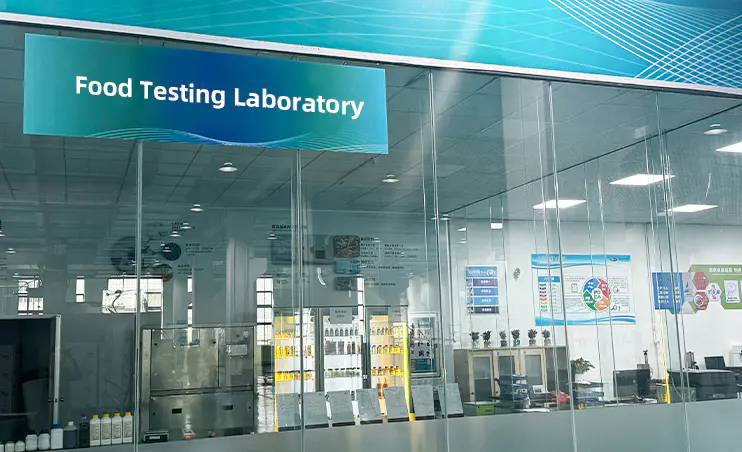
- Professional high-pressure testing from 300 to 600 MPa.
- Traceable test data and formal testing reports.
These services help manufacturers evaluate product compatibility, optimize processing parameters, and transition from small-scale trials to commercial production with greater confidence.
Manufacturing Experience and Technical Strength
Backed by more than 20 years of precision manufacturing experience from its parent company, HiLock combines engineering expertise with equipment development and industrial manufacturing capabilities.
With more than 40 patents and core technical achievements, hundreds of ultra-high-pressure systems delivered, and products supplied to international markets, HiLock continues to develop HPP equipment and integrated processing solutions for global customers.
Conclusion: Choose an HPP Technology Partner, Not Just a Machine
Selecting an industrial HPP machine is ultimately a long-term investment decision.
The right equipment should not only meet today’s production requirements but also provide the stability, reliability, flexibility, and technical support needed as a business grows.
When comparing different HPP solutions, manufacturers should evaluate six essential dimensions: production capacity, pressure stability, vessel lifespan, operating costs, regulatory compliance, and technical service capabilities.
More importantly, equipment selection should be supported by actual product testing and process validation rather than specifications alone.
For food manufacturers planning to adopt or expand high pressure processing, working with an experienced equipment manufacturer that understands both HPP technology and real-world production requirements can make the transition from laboratory development to industrial-scale manufacturing much smoother.