
Table of Contents
Freshly squeezed orange juice is valued for its natural flavor, refreshing taste, and nutritional benefits. However, maintaining its microbiological safety without compromising its fresh characteristics remains a major challenge for juice producers.
A recent orange juice recall involving Voila Juice Company highlights the importance of effective pathogen control in fresh juice production. For orange juice brands and processors, this incident also raises an important question: How can manufacturers achieve the required food safety standards while preserving the natural qualities consumers expect?
High Pressure Processing (HPP) offers a promising solution. By using extremely high pressure rather than conventional high-temperature treatment, HPP helps reduce harmful microorganisms while maintaining much of the juice’s original flavor, color, and nutritional value.
Orange Juice Recall Highlights the Importance of Pathogen Control
In October 2026, Voila Juice Company initiated a recall involving approximately 32 gallons of 100% squeezed orange juice. The affected products included 16 oz, 32 oz, 64 oz, and 128 oz packages distributed in California.
According to the U.S. Food and Drug Administration (FDA), the products were not processed to achieve the required 5-log pathogen reduction. The recall was listed under FDA Enforcement Report Event ID 100060 (Recall No. H-0166-2027).[Source: U.S. FDA – Food Enforcement Report, Event ID 100060]
For juice manufacturers, this requirement is not simply a processing target. It is an essential part of a properly validated food safety management system.
The recall demonstrates why fresh juice producers need reliable, validated pathogen reduction processes rather than relying solely on raw material quality, sanitation, or refrigeration.
Why Is Orange Juice Safety Challenging?
Fresh orange juice is susceptible to microbial contamination at different stages of production, from fruit harvesting and transportation to washing, extraction, processing, and packaging.
Potential pathogens of concern include:
- Salmonella: Can contaminate fresh produce and survive in acidic juice environments.
- Escherichia coli (E. coli): Certain pathogenic strains can cause serious foodborne illness.
- Other microorganisms: Depending on the product and processing conditions, additional microorganisms may need to be considered in the manufacturer’s hazard analysis.
Although orange juice has a naturally acidic environment, acidity alone cannot guarantee pathogen elimination.
Traditional thermal pasteurization is widely used to improve juice safety. However, excessive heat exposure may affect heat-sensitive nutrients and sensory characteristics, including vitamin C, fresh citrus aroma, and natural flavor.
For premium cold-pressed and freshly squeezed orange juice brands, this creates a challenge: how to achieve effective microbial control while maintaining the fresh juice experience.
How High Pressure Processing Works for Orange Juice
High Pressure Processing is a non-thermal food preservation technology that uses extremely high hydrostatic pressure to inactivate microorganisms.
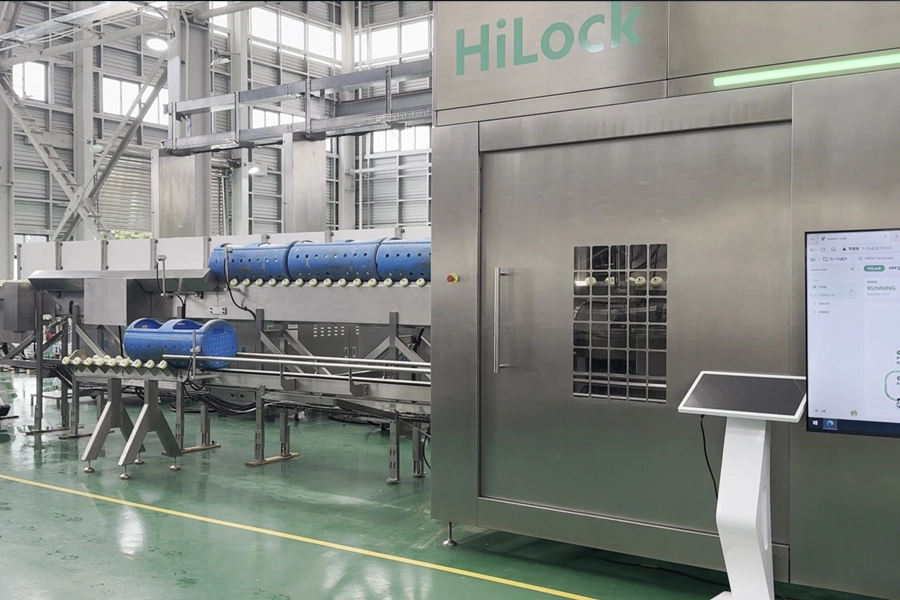
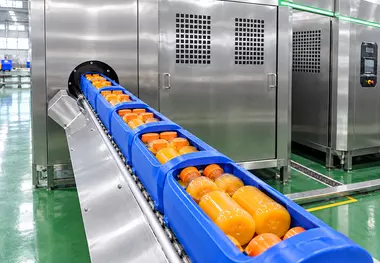
During HPP treatment, sealed juice packages are placed inside a high-pressure vessel filled with water. The equipment then applies uniform pressure, typically within the range of 300–600 MPa, depending on the product and validated processing requirements.
The process works through several key mechanisms:
1. Pressure Application
High hydrostatic pressure is transmitted uniformly through the water and packaging to the juice, rather than relying on direct heat transfer.
2. Microbial Inactivation
The pressure disrupts important cellular structures and functions in susceptible microorganisms, including membrane integrity and protein activity, leading to microbial inactivation.
3. Quality Preservation
Because High Pressure Processing does not depend on conventional high-temperature treatment, it can help preserve heat-sensitive nutrients and fresh sensory characteristics.
4. Cold-chain Distribution
After processing, the juice is maintained under appropriate refrigerated storage conditions to support product safety and shelf-life management.
Unlike conventional thermal pasteurization, High Pressure Processing allows manufacturers to develop premium juice products with a fresher taste profile while implementing a scientifically validated microbial control process.
Key Benefits of HPP Juice for Orange Juice Manufacturers
Effective Pathogen Reduction
Food safety is the primary consideration for fresh juice manufacturers.
With properly validated pressure, holding time, temperature, and other critical processing parameters, High Pressure Processing can achieve the required 5-log reduction in target pathogens for suitable juice formulations.
HiLock’s HPP solutions for fruit and vegetable juices and beverages are designed to support 5-log inactivation of target microorganisms, including Salmonella and E. coli, under validated processing conditions.
This helps manufacturers establish a more reliable pathogen control strategy and support their Juice HACCP programs.
Importantly, the actual treatment parameters must be validated for each juice formulation and target microorganism. High pressure processing equipment alone does not automatically establish regulatory compliance.
Better Retention of Vitamin C and Natural Nutrients
Vitamin C is one of the most important nutritional components of orange juice, but it is sensitive to heat, oxygen, and storage conditions.
Conventional thermal processing may cause vitamin C degradation, depending on treatment intensity and other processing factors.
High Pressure Processing uses high pressure instead of conventional high-temperature treatment, helping preserve vitamin C and other heat-sensitive nutritional components.
For manufacturers producing premium fresh orange juice, this provides an opportunity to offer products that better retain their natural nutritional characteristics.
Preserve Natural Color, Aroma, and Fresh Flavor
Consumers expect freshly squeezed orange juice to maintain its characteristic orange color, citrus aroma, and refreshing taste.
Excessive heat treatment may alter these sensory properties and reduce the perception of freshness.
High Pressure Processing helps minimize heat-related quality changes, allowing manufacturers to retain more of the juice’s original sensory characteristics.
This makes HPP particularly attractive for:
- Freshly squeezed orange juice
- Cold-pressed citrus juice
- Premium NFC (Not From Concentrate) juice
- Mixed fruit and vegetable juices
- Functional fruit beverages
Extend Refrigerated Shelf Life
Fresh juice typically has a relatively short refrigerated shelf life, creating challenges for distribution, inventory management, and retail sales.
High Pressure Processing can reduce spoilage microorganisms and relevant pathogens, helping extend the refrigerated shelf life of juice when combined with suitable formulation, hygienic packaging, and cold-chain management.
The actual shelf-life improvement depends on the initial microbial load, juice composition, processing parameters, packaging, and storage temperature.
For juice brands, a longer refrigerated shelf life can help reduce product waste, expand distribution opportunities, and improve supply-chain efficiency.
What Should Orange Juice Manufacturers Consider When Choosing High Pressure Processing Equipment?
For HPP juice manufacturers planning to introduce high-pressure processing into their production lines, equipment selection is an important investment decision.
Several factors should be evaluated:
Processing Capacity
Manufacturers should select vessel capacity and production throughput based on daily output, packaging formats, and future expansion plans.
Operating Pressure and Holding Time
The equipment should provide sufficient pressure capability and stable control to support the validated processing parameters for the target juice products.
Packaging Compatibility
HPP is generally suitable for flexible and semi-flexible packaging that can withstand high-pressure treatment. Packaging materials, seals, and headspace should be evaluated before commercial production.
Process Control and Automation
Reliable pressure control, real-time monitoring, safety interlocks, and automated operating systems are essential for consistent production.
Technical Support and Process Validation
Beyond equipment performance, manufacturers should consider whether their equipment supplier can provide application testing, process development, installation, operator training, and technical support.
Choosing the right high pressure processing equipment is not only about achieving the required pressure. It is about building a reliable and scalable juice processing solution.
HiLock: HPP Solutions for Fruit and Vegetable Juice Processing
As a specialist in ultra-high-pressure technology, HiLock provides High Pressure Processing equipment and integrated application solutions for fruit and vegetable juices, beverages, and other food products.
Our solutions focus on helping juice manufacturers achieve effective microbial control while preserving the natural qualities of their products.
Key application advantages include:
- 5-log pathogen reduction: Supporting validated inactivation processes for target pathogens, including Salmonella and E. coli.
- Nutritional retention: Helping preserve heat-sensitive components such as anthocyanins and vitamin C.
- Natural sensory quality: Maintaining natural color, aroma, and fresh flavor characteristics.
- Flexible applications: Suitable for the development of orange juice, mixed fruit juice, vegetable juice, and other beverage products.
- Application testing: Supporting sample testing and process development to evaluate product-specific HPP parameters.
HiLock offers more than high-pressure equipment. We work with customers throughout equipment selection, process development, production line planning, installation, and technical support.
For juice manufacturers looking to enter or expand the premium HPP juice market, our team can help develop processing solutions based on their products, production capacity, and application requirements.
Is HPP the Future of Fresh Orange Juice Processing?
The fresh juice market is evolving as consumers increasingly seek products with clean labels, natural ingredients, fresh flavors, and reliable food safety.
At the same time, manufacturers face growing pressure to meet food safety requirements, reduce waste, and maintain consistent product quality.
The Voila Juice Company recall serves as a reminder that fresh juice production must prioritize validated pathogen reduction processes.
High Pressure Processing provides an alternative to conventional thermal treatment, helping manufacturers balance microbial safety with nutritional and sensory quality.
For brands developing premium fresh orange juice and other refrigerated beverages, HPP is not just a preservation technology. It is an opportunity to create higher-value products and build consumer confidence.