
Table of Contents
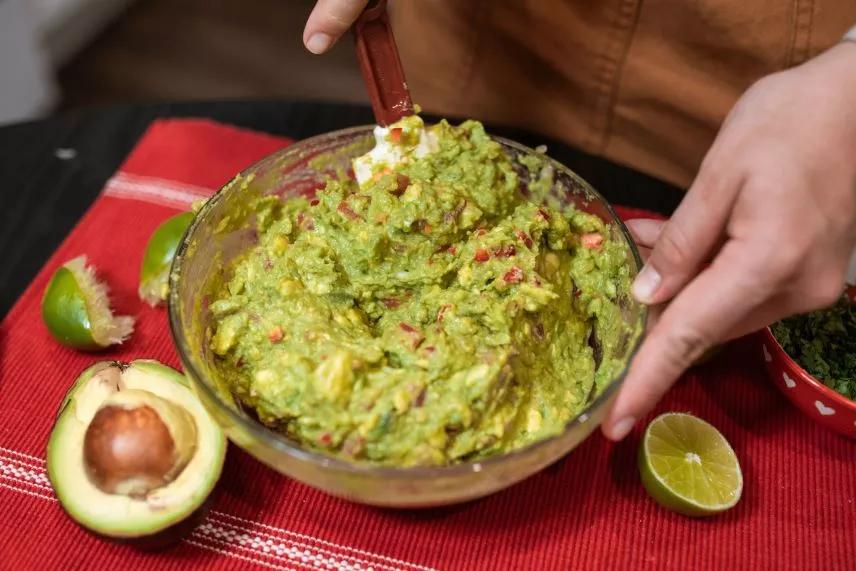
Guacamole has evolved from a traditional Mexican avocado-based food into a globally popular ready-to-eat product. As consumers increasingly seek fresh taste, clean-label formulations, convenient packaging, and longer refrigerated shelf life, guacamole manufacturers face a fundamental challenge: how can they improve food safety and shelf life without compromising the fresh characteristics of avocado?
This challenge has accelerated the adoption of HPP technology, or High Pressure Processing.
Unlike conventional thermal processing, HPP uses extremely high hydrostatic pressure to control microorganisms while minimizing the heat exposure of the product. This makes it particularly suitable for avocado-based products, where color, aroma, flavor, texture, and fresh sensory characteristics are important to product value.
HPP has become one of the most established applications of high-pressure processing in the avocado sector. By December 2019, more than 75 HPP machines were operating in avocado processing facilities across 12 countries, while more than 40 avocado and guacamole companies reportedly owned HPP equipment.
Today, HPP is used not only for guacamole but also for avocado pulp, avocado halves, dips, salsas, and avocado-based beverages.
What Makes Guacamole Challenging to Process?
Avocado is a highly perishable raw material. Once the fruit is cut, mashed, or processed into pulp, its internal components are exposed to oxygen and enzymes, accelerating quality deterioration.
One of the most visible problems is enzymatic browning.
Polyphenol oxidase (PPO) is one of the key enzymes associated with browning in avocado products. Oxidative reactions can gradually change the characteristic green color of avocado into undesirable brown tones.
At the same time, conventional heat treatment can affect the sensory characteristics that consumers associate with fresh guacamole.
This creates several processing challenges:
- Microbial safety
- Enzymatic browning
- Color preservation
- Fresh flavor retention
- Texture stability
- Refrigerated shelf life
- Clean-label product development
- Distribution over longer distances
For manufacturers, the objective is therefore not simply to make guacamole safer. The goal is to extend its usable shelf life while retaining as much of its fresh quality as possible.
How HPP Technology Works for Guacamole
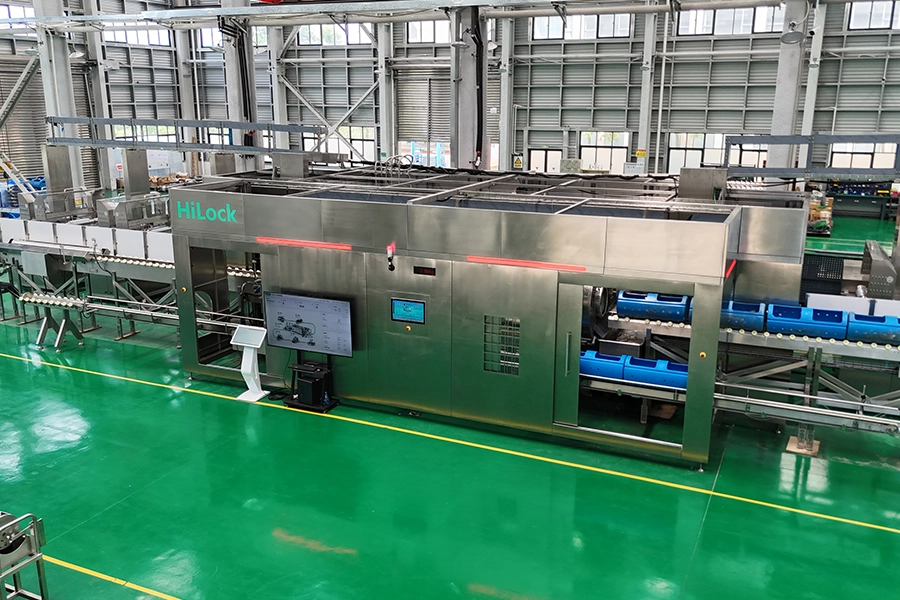
HPP technology applies high hydrostatic pressure to packaged food products. The product is typically sealed in a pressure-compatible package and placed inside the pressure vessel of the high pressure processing equipment.
Water is used as the pressure-transmitting medium.
When pressure is applied, it is transmitted uniformly throughout the product rather than being transferred primarily from the surface inward as in conventional heating.
A simplified HPP process for guacamole can be described as:
Avocado Preparation → Guacamole Formulation → Packaging → HPP Treatment → Refrigerated Storage → Distribution
During HPP treatment, pressure can reach hundreds of megapascals. Commercial HPP applications for avocado products commonly operate around the 600 MPa range, although actual processing parameters must be established through product-specific validation rather than applying one universal recipe.
This distinction is important for industrial production. Pressure, holding time, temperature, pH, formulation, packaging, initial microbial load, and target shelf life all need to be evaluated together.
HPP Technology Helps Improve the Microbiological Stability of Guacamole
One of the most important contributions of HPP technology to the guacamole industry is microbial control.
High pressure can disrupt microorganisms by affecting cellular structures and biological functions. This allows manufacturers to reduce microbial populations without relying on conventional high-temperature processing.
Early research on HPP-treated guacamole found that standard plate counts as well as yeast and mold counts were reduced to below detectable levels under the tested conditions.
Research on avocado puree also demonstrated strong microbial reductions following HPP treatment, with treated samples maintaining very low microbial counts under the study’s storage conditions.
However, HPP should not be described simply as a universal “sterilization” process. Commercial HPP conditions are generally designed around the specific microorganisms, formulation, packaging, and regulatory requirements of the product.
For guacamole manufacturers, the more accurate value proposition is:
Microbial control + refrigerated preservation + fresh product positioning.
HPP Technology Supports Longer Refrigerated Shelf Life
Shelf life is one of the most important commercial factors in the guacamole industry.
Fresh guacamole has a relatively limited shelf life because microbial growth, enzymatic activity, oxidation, and other quality changes continue after production.
HPP can significantly improve microbiological stability and help manufacturers develop products with longer refrigerated shelf life.
Commercial studies have reported HPP-guacamole products with intended shelf lives of approximately 1–3 weeks under refrigerated conditions of 1–6°C, although actual shelf life varies significantly according to formulation, processing conditions, packaging, and storage.
This can provide manufacturers with several commercial advantages:
- Longer distribution windows
- Reduced pressure on production schedules
- Wider retail distribution
- Better inventory management
- Reduced product losses
- Greater access to distant markets
For an international guacamole business, shelf-life extension can therefore have an impact far beyond the processing stage.
It can influence the entire supply chain.
Preserving the Fresh Color of Guacamole
Color is one of the most important quality attributes of guacamole.
Consumers generally associate the bright green color of avocado with freshness. Browning can therefore negatively affect both consumer perception and product acceptance.
HPP can reduce certain enzyme activities associated with quality deterioration, including PPO and lipoxygenase (LOX), depending on the processing conditions.
In a foundational study of HPP-processed guacamole, researchers observed reduced residual PPO and LOX activity as pressure treatment time and the number of pressure cycles increased. The study also found that the sensory acceptability and instrumental color of HPP-treated guacamole were not significantly different from the control immediately after processing under the tested conditions.
However, HPP does not automatically eliminate all browning reactions.
Residual enzyme activity and storage conditions can still influence color changes over time. Therefore, effective commercial guacamole processing often requires a combination of:
HPP parameters + formulation + pH control + oxygen management + packaging + cold-chain management.
This is where process development becomes particularly important.
Better Preservation of Fresh Flavor and Sensory Characteristics
Traditional thermal processing can expose avocado products to elevated temperatures, potentially changing volatile compounds and sensory characteristics.
HPP provides a different processing approach.
Because HPP is a non-thermal or minimally thermal preservation technology, it can help manufacturers preserve characteristics associated with fresh avocado.
A comparative study of commercial guacamoles found that HPP-treated products exhibited sensory characteristics including fresh, green, avocado, fruity, nutty, and velvety attributes and were more similar to the original product than the conventionally thermally processed products evaluated in the study.
This is particularly relevant to premium guacamole.
For manufacturers targeting:
- Premium retail
- Fresh refrigerated foods
- Clean-label products
- Foodservice
- Ready-to-eat foods
- Export markets
maintaining the sensory identity of fresh avocado can be a major competitive advantage.
HPP Technology Supports Clean-Label Guacamole Development
Consumer demand for simple ingredient lists has become an important driver in the fresh food industry.
Guacamole is naturally associated with a relatively simple ingredient profile:
Avocado + Lime/Citric Acid + Salt + Other Natural Ingredients
HPP can help manufacturers develop refrigerated products without relying solely on traditional preservation approaches.
Industry experience has demonstrated that HPP has played an important role in enabling natural, preservative-free guacamole products to achieve broader distribution.
This does not mean that every HPP product is automatically “preservative-free” or “clean label.” Product formulation and local food regulations still determine the appropriate ingredient and labeling strategy.
Nevertheless, HPP provides manufacturers with another tool for designing fresh-positioned products.
HPP Is Expanding Beyond Traditional Guacamole
The impact of HPP technology is no longer limited to conventional guacamole.
As manufacturers become more familiar with high-pressure processing, the technology is being applied to a broader range of avocado-based products.
These include:
Guacamole
The most established application, including traditional, spicy, flavored, and premium formulations.
Avocado Pulp
HPP can stabilize avocado pulp for use as an ingredient in food manufacturing and foodservice applications.
Avocado Halves
Research has investigated HPP treatment of whole avocado tissue and slices, demonstrating potential effects on respiration and post-processing quality.
Avocado Salsa and Dips
HPP can support the development of refrigerated avocado-based dips and combination products.
Avocado-Based Beverages
HPP is also being explored and used for avocado-containing beverage applications.
This expansion creates new opportunities for processors to move from a single guacamole product toward a broader avocado product portfolio.
The Evolution of HPP in the Guacamole Industry
Processed avocado pulp and guacamole have maintained their status as mainstream adopters of high pressure processing (HPP) throughout the relatively short history of industrial HPP. Many leading suppliers of avocado pulp, guacamole, and other avocado derivatives adopted HPP following the success of Avomex—Fresherized Foods, which began using the technology in 1995 in the USA and Mexico and was acquired by Hormel Foods Group in 2011.
Adoption has continued steadily. As of December 2019, more than 75 HPP machines were operating at avocado processors in 12 countries, including major avocado-producing markets such as Mexico, the USA, Peru, Chile, Brazil, Costa Rica, Guatemala, the Dominican Republic, South Africa, Spain, Australia, and New Zealand. More than 40 avocado and guacamole companies owned HPP machines, including Calavo, Verfruco, Simplot, Frutas Montosa, and Avomix.
(Source: Milan Houška, Filipa Vinagre Marques Silva, Evelyn, Roman Buckow, Netsanet Shiferaw Terefe, Carole Tonello,“High Pressure Processing Applications in Plant Foods”, National Library of Medicine (NIH).)
Conclusion
The impact of HPP technology on the guacamole industry goes far beyond microbial preservation.
HPP has helped transform guacamole from a highly perishable fresh product into a commercially scalable refrigerated food with opportunities for longer distribution, clean-label positioning, and improved preservation of fresh sensory characteristics.
From the early commercial adoption of HPP in avocado products to today’s global applications across guacamole, avocado pulp, dips, halves, and beverages, high-pressure processing has become an important technology in the modern avocado value chain.
For food manufacturers, the key consideration is no longer simply whether HPP can process guacamole, but how the right HPP process and high pressure processing equipment can help create a stable, scalable, and commercially competitive avocado product. That is where professional process development, equipment engineering, customization, validation, and lifecycle support become essential.
HiLock is committed to providing high-performance HPP equipment and integrated high-pressure processing solutions, helping food manufacturers turn high-pressure technology into scalable production capabilities.