
The food industry is evolving as consumers increasingly demand products that are fresh, safe, minimally processed, and free from unnecessary preservatives. At the same time, manufacturers need to improve food safety, extend shelf life, and maintain consistent product quality.
Traditional thermal processing can effectively preserve food, but heat may affect flavor, color, texture, and heat-sensitive nutrients. This has increased demand for alternative technologies that better preserve the characteristics of fresh products.
This is where HPP technology, or High Pressure Processing, is transforming modern food processing.
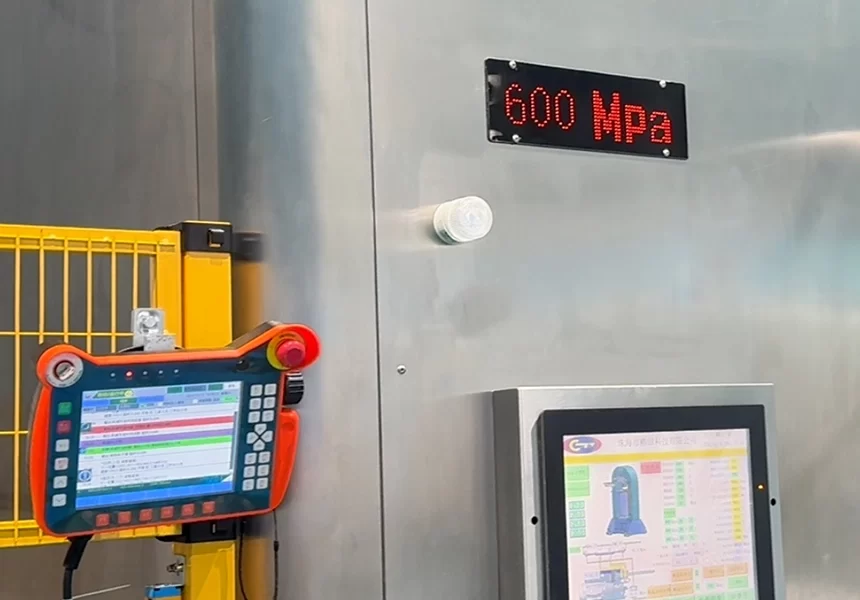
By applying ultra-high hydrostatic pressure—commonly up to 600 MPa—HPP can help inactivate spoilage microorganisms and foodborne pathogens without relying on high temperatures. The result is safer, fresher, and longer-lasting food products.
From cold-pressed juices and ready-to-eat meals to meat, seafood, dips, sauces, pet food, and functional beverages, 600 MPa HPP technology is becoming an increasingly important solution for food manufacturers worldwide.
But how does it work, and why has 600 MPa become a key benchmark in high pressure food processing?
What Is HPP Technology?
HPP technology, also known as High Pressure Processing or High Hydrostatic Pressure Processing, is a non-thermal food preservation technology that uses extremely high pressure to improve food safety and extend product shelf life.
During the HPP process, packaged food or beverages are placed inside a high-pressure vessel filled with water. The system then generates hydrostatic pressure, typically ranging from several hundred megapascals up to approximately 600 MPa.
For perspective:
600 MPa is approximately 6,000 bar or 87,000 psi.
At this pressure level, microorganisms experience significant structural and biological disruption.
The pressure is transmitted uniformly through the water and around the packaged product. Unlike conventional thermal processing, pressure is applied evenly and almost instantaneously throughout the product.
This uniform pressure transmission is one of the fundamental advantages of HPP technology.
Because pressure acts in all directions, the size and shape of the packaged food generally have less influence on pressure transmission than heat transfer processes.
The basic HPP process typically includes the following stages:
- Product loading
- Placement inside the high-pressure vessel
- Filling the pressure vessel with water
- Pressurization to the target pressure
- Holding at the required pressure for a specific time
- Depressurization
- Product unloading
The complete processing cycle can be optimized depending on the product, packaging, microbial targets, and production requirements.
Why 600 MPa?
While HPP systems can operate at different pressure levels, 600 MPa has become one of the most widely recognized operating pressures in commercial HPP food processing.
The reason is simple: pressure intensity plays a critical role in microbial inactivation.
Higher pressure levels can increase the effectiveness of microbial control, although the final processing parameters must always be determined based on the specific product and target microorganisms.
A typical HPP process may involve a combination of:
- Pressure level
- Holding time
- Product temperature
- Initial microbial load
- Product pH
- Water activity
- Product composition
For many commercial food applications, 600 MPa provides a strong balance between microbial inactivation performance and industrial processing requirements.
However, HPP is not a one-size-fits-all technology.
Different products may require different process conditions. For example, the optimal HPP parameters for a fruit juice may differ significantly from those required for cooked meat, seafood, dairy products, or high-viscosity sauces.
This is why successful HPP implementation requires more than simply purchasing a machine.
Manufacturers need the right combination of:
- Reliable high pressure processing equipment
- Process development
- Product testing
- Packaging compatibility evaluation
- Production capacity planning
- Equipment customization
- Long-term technical support
How Does 600 MPa HPP Technology Work?
The effectiveness of HPP technology is based on the impact of high hydrostatic pressure on microorganisms.
When food is subjected to hundreds of megapascals of pressure, the cellular structures and biological functions of microorganisms can be affected.
High pressure can influence:
- Cell membranes
- Cellular proteins
- Enzyme activity
- Biological structures
- Cellular metabolic functions
These effects can lead to the inactivation of many vegetative microorganisms and help improve the microbiological safety and shelf life of food products.
One of the key principles behind HPP technology is that pressure is transmitted uniformly.
Water acts as the pressure-transmitting medium, allowing pressure to surround the packaged product.
This means that pressure reaches the food relatively uniformly regardless of its position inside the pressure vessel.
Unlike heat, which must gradually travel from the surface toward the center of a product, pressure can be transmitted throughout the product much more uniformly.
This makes HPP particularly attractive for products with complex shapes, different package sizes, and high product density.
The Major Benefits of 600 MPa HPP Technology
1. Improved Food Safety
Food safety is one of the most important drivers behind the adoption of HPP technology.
High pressure processing can help manufacturers control spoilage microorganisms and certain foodborne pathogens.
Depending on the product and validated process conditions, HPP can contribute to improved microbial safety.
This is particularly important for refrigerated products with high moisture content, including:
- Fresh juices
- Smoothies
- Ready-to-eat foods
- Cooked meats
- Seafood products
- Refrigerated dips
- Sauces
However, effective HPP processing requires proper validation.
Manufacturers must consider:
- Product formulation
- pH
- Water activity
- Packaging
- Storage temperature
- Target microorganisms
A professional HPP solution should therefore include process development and validation support.
2. Extended Shelf Life
Shelf life is a major challenge in modern food processing.
Consumers want fresher products, while retailers and distributors require sufficient shelf life for transportation and inventory management.
HPP technology can help extend the refrigerated shelf life of many food products by reducing spoilage microorganisms.
A longer shelf life can provide manufacturers with several advantages:
- Reduced product waste
- Improved distribution flexibility
- Greater geographic market reach
- Better inventory management
- Increased retail opportunities
For emerging food brands, extended shelf life can be particularly important when expanding beyond local markets.
Without sufficient shelf life, distribution may be limited to regional areas.
With properly developed HPP processing, manufacturers may be able to support broader cold-chain distribution strategies.
3. Better Preservation of Fresh Characteristics
One of the most recognized advantages of HPP technology is its ability to support products with a fresh and minimally processed positioning.
Because HPP does not rely primarily on high processing temperatures, many products can better retain characteristics associated with fresh ingredients.
Depending on the product, these may include:
- Natural flavor
- Fresh aroma
- Color
- Texture
- Nutritional characteristics
This makes HPP particularly valuable in premium food and beverage categories.
Consumers increasingly look for products that combine convenience with a “fresh” product experience.
HPP helps manufacturers bridge the gap between food safety and fresh product quality.
4. Reduced Dependence on Preservatives
Clean-label food trends continue to influence product development.
Consumers increasingly examine ingredient lists and look for products with fewer artificial additives.
While HPP does not eliminate the need for proper formulation and food safety controls, it can help manufacturers reduce their dependence on certain chemical preservation strategies.
This can support product positioning such as:
- Minimally processed
- No heat processing
- No preservatives added
- Fresh refrigerated product
- Clean-label formulation
The actual claims used on a product must always comply with local regulations and product-specific requirements.
However, from a product development perspective, HPP technology provides manufacturers with greater flexibility.
5. Processing Products After Packaging
Another important advantage of HPP technology is that products are typically processed after being sealed inside their final packaging.
This is often referred to as in-package processing.
The product is packaged first and then placed inside the high-pressure vessel.
This can help reduce the risk of post-processing contamination.
For many food manufacturers, this is an important advantage.
However, packaging must be compatible with high-pressure processing.
The packaging must be able to withstand pressure changes during the HPP cycle.
Packaging evaluation is therefore an important part of HPP process development.
Choosing the Right High Pressure Processing Equipment
HPP equipment is more than a pressure vessel.
When evaluating high pressure processing equipment, manufacturers should look beyond maximum pressure.
A reliable industrial HPP system requires multiple critical technologies to work together.
These include:
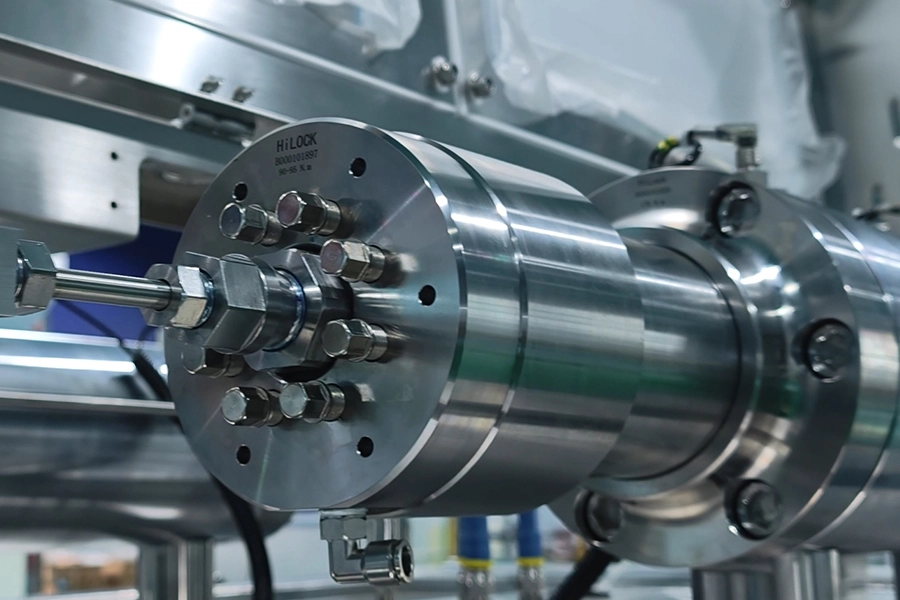
- High-pressure vessel design
- Pressure intensifier system
- Hydraulic systems
- High-pressure sealing technology
- Material selection
- Control systems
- Automation systems
- Safety systems
- Loading and unloading systems
The performance and reliability of each component can influence the overall productivity of the system.
For industrial food processing, equipment reliability is particularly important.
Unexpected downtime can affect:
- Production schedules
- Product quality
- Labor efficiency
- Supply chain operations
- Manufacturing costs
Therefore, manufacturers should evaluate not only the initial equipment price but also the long-term performance of the system.
HiLock 600 MPa High-Pressure Processing Technology: Addressing Industry Pain Points
HiLock specializes in the core technologies behind 600 MPa High Pressure Processing (HPP) and has developed benchmark 600 MPa HPP systems for commercial food applications. Based on product characteristics, production capacity targets, and facility layouts, HiLock provides customized solutions and comprehensive support—from process validation and equipment selection to production line design, installation, commissioning, and operator training.
Independently Developed and Manufactured Core Components
HiLock independently develops and manufactures key components of its HPP systems, enabling greater control over core technologies and component production. This integrated capability helps ensure a stable supply of critical components while reducing procurement and long-term maintenance costs.
Flexible Processing Parameters for Different Food Applications
Supported by an advanced closed-loop control system, HiLock HPP equipment enables flexible adjustment and precise control of key processing parameters to meet the requirements of different food categories.
By accurately matching processing conditions to specific products, manufacturers can achieve greater batch-to-batch consistency, improve product quality, and reduce the risk of non-conforming products.
Scalable Solutions for a Wide Range of Production Requirements
HiLock offers a complete range of HPP systems with capacities ranging from 2 L to 525 L. Equipment can be customized according to specific production capacity requirements.
Whether for laboratory research, pilot-scale process development, or industrial-scale food production, HiLock provides integrated solutions designed around customer requirements. With comprehensive engineering and technical support, manufacturers can shorten project implementation cycles and optimize their overall investment.
HiLock 600 MPa HPP Systems: Proven Solutions for Food Processing Applications
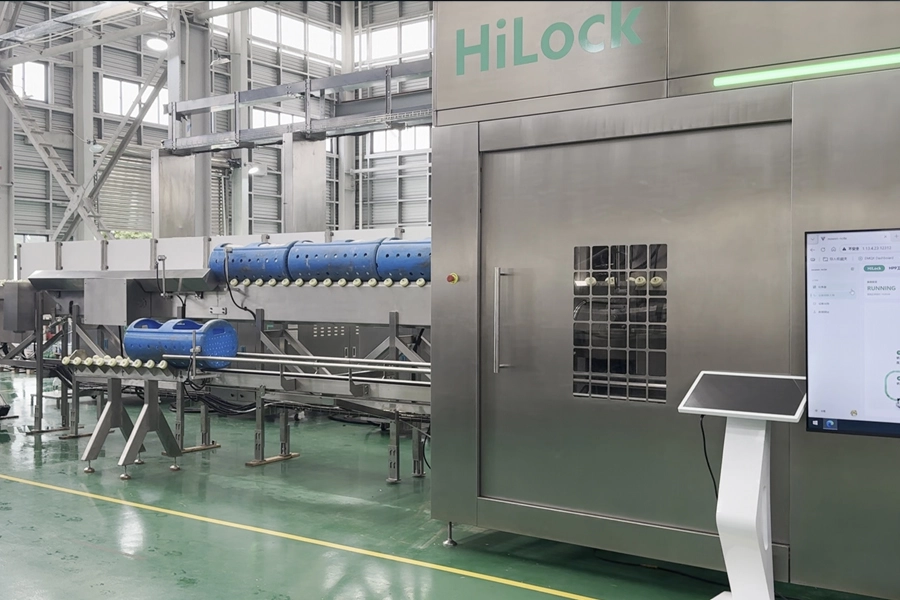
HiLock high-pressure processing systems and its core 600 MPa HPP models have been developed for practical food processing applications, helping food manufacturers improve product quality, production efficiency, and market competitiveness.
NFC Juice Applications
For Not From Concentrate (NFC) juice, HPP technology can help extend refrigerated shelf life while better preserving the natural flavor and fresh characteristics of the product.
This enables juice manufacturers to develop premium refrigerated products and explore opportunities in high-end retail and supermarket channels, supporting stronger product differentiation and greater market value.
Ready-to-Eat and Prepared Food Applications
For ready-to-eat and prepared foods, manufacturers often face the challenge of balancing food safety with product quality.
HiLock 600 MPa HPP technology provides a non-thermal processing solution that can help improve microbial control while better maintaining product texture, flavor, and other quality characteristics.
By extending product shelf life and supporting premium product positioning, HPP technology can help food manufacturers expand into higher-value market segments.
Specialty Agricultural Product Processing
HPP technology can also create new opportunities for the processing of specialty agricultural products.
By enabling innovative processing methods and supporting higher-value food products, HPP can help manufacturers enhance product value, develop premium brands, expand distribution channels, and improve overall profitability.
Conclusion: 600 MPa Is More Than Just a Number
600 MPa HPP technology represents one of the most important developments in modern food processing.
By utilizing ultra-high hydrostatic pressure, HPP can help food manufacturers improve food safety, extend product shelf life, and better preserve the fresh characteristics of a wide range of foods and beverages.
From cold-pressed juices and functional beverages to ready-to-eat meals, meat products, seafood, sauces, and premium refrigerated foods, HPP technology is reshaping the way food is processed.
For companies exploring high-pressure food processing, choosing the right technology partner is just as important as choosing the right equipment. The right partner can determine whether a company simply purchases an HPP machine—or builds a reliable, scalable, and competitive HPP production system.
HiLock delivers more than equipment.
Centered around its 600 MPa HPP systems, HiLock provides market-oriented and application-focused solutions designed to help food manufacturers move from product concepts to commercial production.
Customers simply need to share their product category, production requirements, and processing challenges. HiLock can then develop a customized solution based on their specific needs.
Looking ahead, HiLock will continue to optimize HPP equipment performance and advance toward larger vessel capacities, higher production throughput, and smarter automation.Supported by independently developed core 600 MPa high-pressure technologies, HiLock is committed to helping more food manufacturers reduce costs, improve operational efficiency, and achieve higher-value industrial development.
With HiLock, 600 MPa is not simply a pressure rating—it is the foundation for a smarter, more efficient, and more competitive future in food processing.