
Table of Contents
Sodium reduction has become an important priority for the global food and beverage industry. As consumers increasingly pay attention to nutritional balance, food manufacturers are under growing pressure to develop products with lower sodium content without compromising taste, texture, product safety, or shelf life.
Salt, primarily in the form of sodium chloride (NaCl), plays several essential roles in food processing. Beyond providing a salty taste, it contributes to protein functionality, moisture retention, texture development, and microbial stability. Simply reducing salt can therefore create significant formulation challenges, particularly in processed meat, seafood, sauces, and ready-to-eat products.
Traditional sodium reduction strategies, such as replacing sodium chloride with potassium chloride or adjusting formulations, may introduce bitter or metallic notes and affect product texture. This has encouraged manufacturers to explore advanced processing technologies.
High pressure processing (HPP) offers a promising approach to addressing some of these challenges. By applying high hydrostatic pressure to packaged foods, HPP can modify protein structures, influence functional properties, and improve microbial safety. When combined with appropriate formulation strategies, it can help manufacturers develop reduced-sodium products while maintaining important quality attributes.
Why Is Sodium Reduction Challenging for Food Manufacturers?
Sodium plays multiple functional roles in food systems, making its reduction more complicated than simply removing salt from a recipe.
Flavor and Consumer Acceptance
Salt enhances flavor perception and helps balance bitterness and acidity. When sodium chloride is reduced, products may taste less flavorful or develop undesirable sensory characteristics. Potassium chloride is commonly used as a partial sodium replacement, but excessive substitution can introduce bitter or metallic aftertastes.
Texture and Protein Functionality
In processed meat products, sodium chloride promotes the extraction and solubilization of myofibrillar proteins, which contribute to binding, water retention, and gel formation. Reducing salt can weaken protein interactions, increase cooking losses, and produce harder or less cohesive textures.
Food Safety and Shelf Life
Salt also contributes to microbial control by reducing water activity and creating conditions that inhibit certain microorganisms. Lowering salt levels may weaken these protective effects, requiring manufacturers to adopt additional preservation strategies and carefully validate product safety.
According to a 2024 review published in Critical Reviews in Food Science and Nutrition, high pressure processing can partially compensate for the functional and sensory changes associated with salt reduction in ready-to-eat meat products. The review highlights its potential to improve product quality, safety, and shelf-life management.
Source: Nuygen et al. (2024), The Use of High Pressure Processing to Compensate for the Effects of Salt Reduction in Ready-to-Eat Meat Products
How Does High Pressure Processing Support Sodium Reduction?
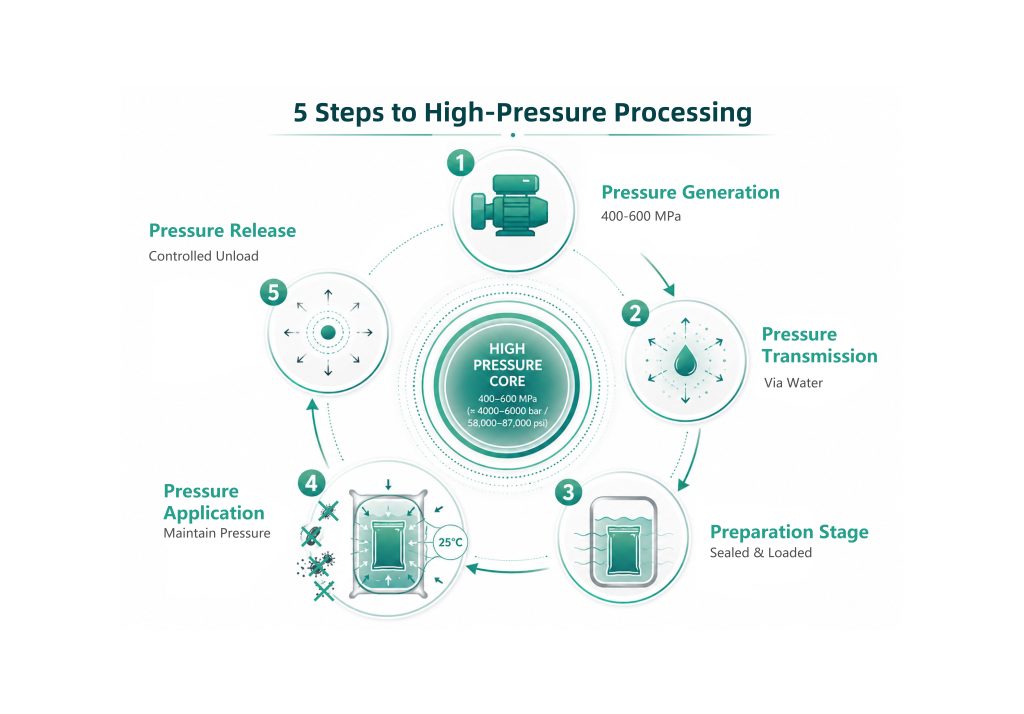
High pressure processing is a non-thermal food preservation technology that uses hydrostatic pressure, typically within the range of 300–600 MPa, to treat packaged food products.
Unlike conventional thermal processing, pressure is transmitted uniformly throughout the product, regardless of its shape or size. This allows HPP to influence food structures and microbial activity without relying on high processing temperatures.
Although HPP does not directly remove sodium from food, it can support sodium reduction through several mechanisms.
Modifying Protein Structure and Improving Texture
High pressure can change protein conformation, promote protein unfolding, and influence protein aggregation. These structural changes may improve certain functional properties, including water-holding capacity, gelation, and texture.
In reduced-sodium meat products, these effects are particularly important because lower salt concentrations can weaken the protein network responsible for product firmness and moisture retention.
With optimized pressure conditions, HPP may help compensate for some of the textural disadvantages associated with reducing sodium chloride, supporting better product consistency and consumer acceptance.
Research published in Comprehensive Reviews in Food Science and Food Safety in 2022 confirms that high hydrostatic pressure can modify food protein structures and influence functional properties such as solubility, water-holding capacity, emulsification, and gelation.
Source: Wang et al. (2022), Effect of High Hydrostatic Pressure Processing on the Structure, Functionality, and Nutritional Properties of Food Proteins
Supporting Flavor and Saltiness Perception
Reducing sodium does not necessarily mean that a food product must lose all of its characteristic flavor. The way salt interacts with food components and how flavor compounds are released can influence the overall perception of saltiness.
Pressure-induced changes in protein structures and food matrices may affect the distribution and release of sodium ions and other taste-active compounds.
Some research has also investigated whether HPP can enhance saltiness perception through interactions between salty and umami taste characteristics.
A 2024 study published in Frontiers in Nutrition found that high-pressure treatment enhanced saltiness perception and sensory acceptability in raw cured pork loins, although similar improvements were not observed in cooked samples. This demonstrates that the effectiveness of HPP depends on product composition and processing conditions.
Source: Bolumar et al. (2024), High-Pressure Processing Enhances Saltiness Perception and Sensory Acceptability of Raw but Not of Cooked Cured Pork Loins
Improving Microbial Safety and Shelf-Life Potential
One of the major challenges in sodium-reduced food production is maintaining microbiological stability after reducing salt, which can contribute to preservation.
HPP provides an additional microbial control step by inactivating many vegetative foodborne pathogens and spoilage microorganisms. This can help manufacturers manage the microbiological risks associated with reduced-sodium formulations.
When combined with appropriate refrigeration, packaging, formulation, and validated processing parameters, HPP can help extend refrigerated shelf life while maintaining product quality.
However, HPP is not a universal replacement for salt-based preservation. Pressure-resistant bacterial spores may survive conventional HPP treatments, and each product requires a validated food safety strategy.
Research Evidence: HPP Enables Up to 50% Salt Reduction in Ready-to-Eat Chicken Breast
Scientific research provides practical evidence of how HPP can support sodium reduction in commercial food formulations.
A study published in LWT – Food Science and Technology in June 2020 investigated the effects of high hydrostatic pressure processing and sodium reduction on ready-to-eat (RTE) chicken breasts.
The researchers evaluated two HPP conditions:
- 300 MPa for 5 minutes after tumbling.
- 600 MPa for 3 minutes applied to the final packaged product.
The study partially replaced sodium chloride with potassium chloride at substitution levels of 25%–50% and evaluated the physicochemical properties, sensory quality, and microbiological shelf life of the products.
Research Findings:
| Research Parameter | Results |
|---|---|
| Maximum NaCl Reduction | Up to 50% in HPP-treated chicken breast |
| Shelf-Life Extension | More than 60 days |
| Intermediate HPP Treatment | 300 MPa for 5 minutes after tumbling |
| Final Product HPP Treatment | 600 MPa for 3 minutes after packaging |
The results showed that potassium chloride substitution increased cooking loss and hardness in conventional chicken breasts. However, HPP significantly reduced cooking loss and hardness while improving the sensory attributes of sodium-reduced products compared with the corresponding controls.
Based on physicochemical properties and sensory evaluation, unpressurized samples achieved up to 25% NaCl reduction, while pressurized samples achieved up to 50%.
Importantly, HPP extended the microbiological shelf life of sodium-reduced chicken breasts by more than 60 days.
These findings demonstrate the potential of high pressure processing to compensate for some of the quality and safety challenges associated with sodium reduction.
Source: Orel et al. (2020), Effects of High Hydrostatic Pressure Processing and Sodium Reduction on Physicochemical Properties, Sensory Quality, and Microbiological Shelf Life of Ready-to-Eat Chicken Breasts. LWT, Volume 127, Article 109352.
Food and Beverage Applications of HPP for Sodium Reduction
The potential of HPP extends across several food categories. However, its role in sodium reduction varies depending on the product’s composition, processing requirements, and functional characteristics.
Processed Meat and Poultry
Processed meats are among the most promising applications for combining HPP with sodium reduction strategies.
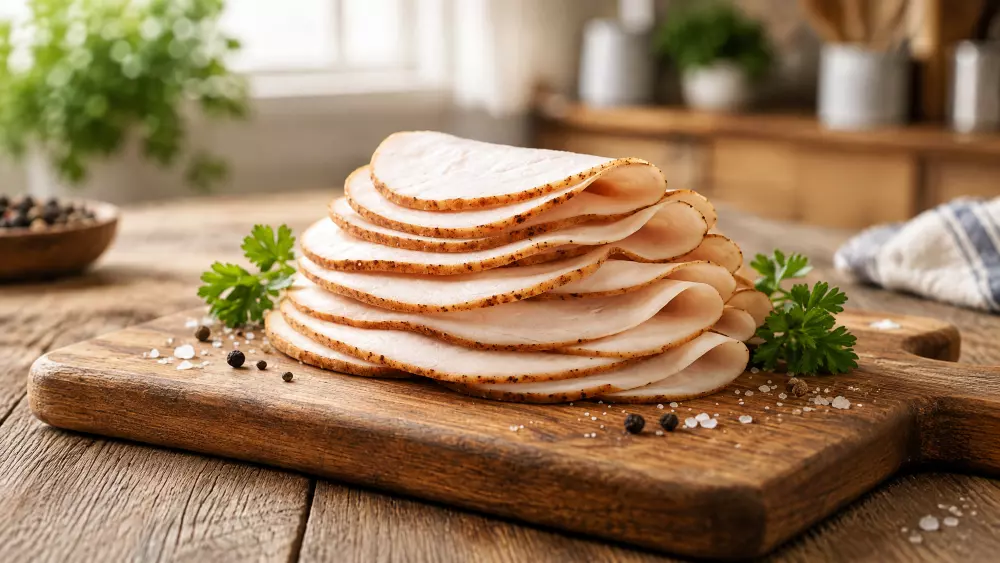
Products such as cooked ham, chicken breast, turkey slices, and sausages rely on salt for protein extraction, binding, moisture retention, and flavor development.
By modifying protein functionality and supporting microbial control, HPP can help manufacturers formulate reduced-sodium meat products while maintaining desirable texture and product stability.
This application is particularly relevant for ready-to-eat meat products, where maintaining refrigerated shelf life and preventing post-processing contamination are important considerations.
Seafood and Surimi Products
Seafood products, including surimi, fish cakes, shrimp products, and processed seafood, also offer opportunities for HPP-assisted sodium reduction.
Salt is important for myofibrillar protein extraction and gel formation in surimi products. Reducing sodium can weaken gel networks and affect elasticity and firmness.
HPP can modify seafood protein structures and influence gelation properties. When combined with suitable ingredients and formulation adjustments, it may help maintain the functional characteristics of reduced-sodium seafood products.
Sauces, Dips, and Condiments
Sauces, dips, and condiments are often formulated with significant amounts of salt to enhance flavor and contribute to product stability.
Products such as guacamole, salsa, vegetable dips, and refrigerated dressings can benefit from HPP’s ability to control many vegetative microorganisms while maintaining fresh-like sensory characteristics.
For these products, sodium reduction generally requires a combination of ingredient reformulation, flavor optimization, and appropriate preservation methods.
HPP can provide an additional preservation step, helping manufacturers develop refrigerated products with lower sodium content without relying exclusively on traditional thermal processing.
Beverages and Functional Drinks
In the beverage industry, sodium reduction is closely related to ingredient selection and nutritional formulation.
Vegetable juices, functional drinks, and plant-based beverages may contain naturally occurring sodium or added sodium-containing ingredients. Manufacturers can adjust formulations to achieve specific nutritional targets.
HPP is particularly relevant for refrigerated juice and beverage products because it helps control many vegetative microorganisms while retaining fresh-like flavor and quality.
However, HPP does not directly extract sodium from beverages. Its primary role is preservation, while sodium reduction must be achieved through ingredient selection and formulation design.
For manufacturers developing healthier beverages, combining optimized formulations with HPP can support product safety, quality, and refrigerated shelf-life management.
Key Considerations When Developing Reduced-Sodium Products with HPP
While HPP offers significant potential, successful sodium reduction requires a comprehensive product development strategy.
The following considerations can help manufacturers achieve better results:
1. Start with formulation analysis. Identify the functional role of sodium chloride in the product, including flavor, protein extraction, water retention, and microbial control.
2. Evaluate sodium replacement strategies. Potassium chloride and other alternative ingredients may help reduce sodium content, but their effects on flavor and texture must be assessed.
3. Conduct pressure testing. Compare different pressure levels, holding times, and processing sequences to identify suitable conditions for each product.
4. Perform sensory evaluation. Assess saltiness, flavor intensity, texture, juiciness, and overall consumer acceptance.
5. Validate food safety and shelf life. Conduct microbiological testing under relevant storage conditions to confirm that the reduced-sodium formulation remains safe throughout its intended shelf life.
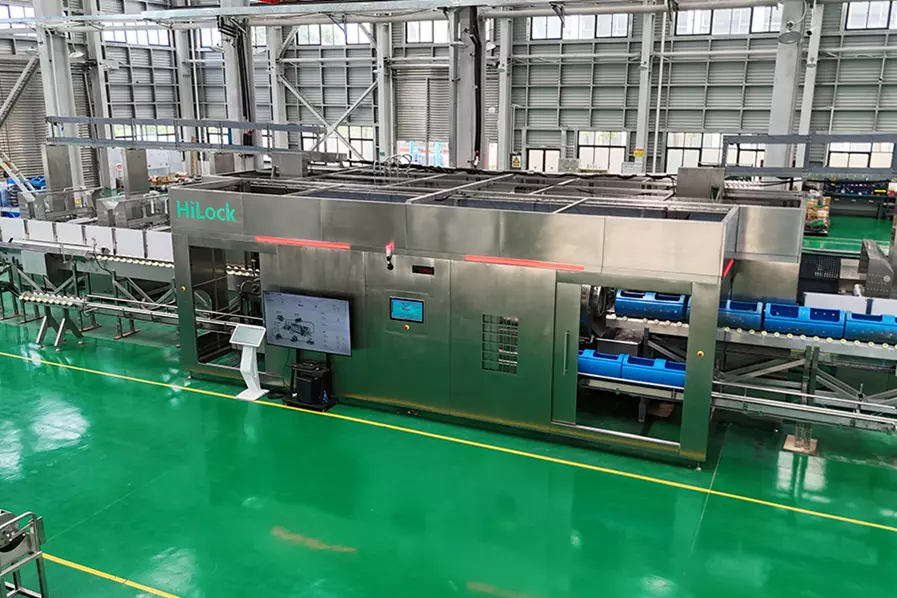
6. Scale up with suitable equipment. Select industrial HPP process systems based on production volume, packaging specifications, process requirements, and future capacity needs.
It is also important to recognize that HPP cannot replace every function of salt. In particular, it does not directly lower the sodium concentration of a product or guarantee control of bacterial spores. Manufacturers must combine formulation optimization with validated preservation and food safety measures.
Conclusion
Sodium reduction presents significant challenges for food manufacturers because salt contributes to much more than flavor. It also influences protein functionality, texture, moisture retention, and microbial stability.
High pressure processing offers a promising way to address some of these challenges. Research on ready-to-eat chicken breast has demonstrated up to 50% NaCl reduction under specific HPP conditions, alongside improved product quality and an extension of microbiological shelf life by more than 60 days.
Although these results cannot be generalized to every food category, they highlight the potential of HPP as part of an integrated sodium reduction strategy.
For manufacturers of processed meats, seafood, sauces, and refrigerated beverages, combining formulation innovation with advanced HPP technology can help create products that meet changing market demands for healthier, safer, and higher-quality foods.
Sources & References
1. Orel, R., et al. (2020). Effects of High Hydrostatic Pressure Processing and Sodium Reduction on Physicochemical Properties, Sensory Quality, and Microbiological Shelf Life of Ready-to-Eat Chicken Breasts. LWT, 127, 109352.
2. Nuygen, M., Arvaj, L., & Balamurugan, S. (2024). The Use of High Pressure Processing to Compensate for the Effects of Salt Reduction in Ready-to-Eat Meat Products. Critical Reviews in Food Science and Nutrition, 64(9), 2533–2547.
3. Wang, W., et al. (2022). Effect of High Hydrostatic Pressure Processing on the Structure, Functionality, and Nutritional Properties of Food Proteins: A Review. Comprehensive Reviews in Food Science and Food Safety.
4. Bolumar, T., et al. (2024). High-Pressure Processing Enhances Saltiness Perception and Sensory Acceptability of Raw but Not of Cooked Cured Pork Loins. Frontiers in Nutrition.
5. Hu, J., et al. (2025). Current Physical Processing Technologies for Salt Reduction in Prepared Dishes. Food Research International, 214, 116653.