
Table of Contents
High Pressure Processing (HPP) technology has become a key solution for the global food and beverage industry to achieve clean labels, extend shelf life, and differentiate products. However, with a wide range of HPP machine available on the market—from laboratory systems to large-scale production machines and numerous brands—choosing the right HPP machine for your business can be a major challenge for purchasing decision-makers.
Based on industry research and equipment parameter analysis, this article highlights 8 key factors to confirm before purchasing HPP machine, helping you avoid common selection pitfalls and make a more informed investment decision.
1. Processing Capacity: Daily Throughput Determines Machine Size
Key question: How much product do you need to process every day?
HPP machine can range from laboratory-scale systems with a capacity of around 10 L per day to large-scale production systems capable of processing up to 300,000 L per day. Before selecting equipment, you should clearly define your current production capacity as well as your expansion plans for the next 1–3 years.
| Machine Type | Typical Model | Daily Processing Capacity | Typical Application |
|---|---|---|---|
| Laboratory | HiLock-2L | 10 L | R&D, product testing and validation |
| Small-Scale Production | HiLock-55L | 2,500 L | Small-scale commercial production |
| Production | HiLock-135L | 5,900 L | Large-scale production |
| Enterprise | HiLock-300L | 13,000 L | Enterprise-scale production |
| Flagship | HiLock-525L | 25,000 L | Large enterprises and high-volume production facilities |
Recommendation: If you are still in the product development or market validation stage, a 2L–55L laboratory or pilot-scale system may be sufficient. For commercial production, consider starting from a 135L system and make sure the machine can accommodate future capacity expansion.
2. Product Characteristics: Product Properties Determine Machine Compatibility
Key question: Is your product liquid, solid, or highly viscous?
Although HPP technology uses the principle of isostatic pressure and can process a wide range of food products, different product types place different requirements on the machine.
- High-moisture solid foods such as meat, seafood, fruits, and vegetables: Make sure the water activity is generally above aw 0.96 and that the packaging has sufficient flexibility and resilience.
- Liquids and semi-liquids such as juices and sauces: Pay attention to loading efficiency and intensifier configuration to ensure uniform processing.
- Highly viscous products: The material handling and fluid transfer system should be optimized to ensure smooth loading and unloading from the pressure vessel.
- Fragile or delicate products such as premium chocolate and high-value beverages: Specialized pressure control strategies may be required to minimize excessive mechanical impact.
Recommendation: Provide product samples to the equipment supplier for testing whenever possible. This allows you to verify the actual processing performance of the equipment for your specific product.
3. Working Pressure and Temperature Control: The Foundation of Process Stability
Key question: Does your process require a specific pressure range or precise temperature control?
- Working pressure: 600 MPa is widely used in commercial HPP applications, while some R&D applications may require a fully adjustable pressure range from 0–600 MPa. Laboratory systems such as the HiLock-2L support adjustable pressure control, making them suitable for process development and experimentation.
- Working temperature: Temperature control is particularly important for heat-sensitive products such as NFC juices and raw seafood. HiLock HPP systems operate at ambient temperatures of approximately 5–25°C and use automatic PLC monitoring for pressure, temperature, and holding time, with data recording and batch traceability.
Recommendation: For high-value or heat-sensitive products, prioritize HPP machine with an active temperature control system and temperature accuracy within ±2°C.
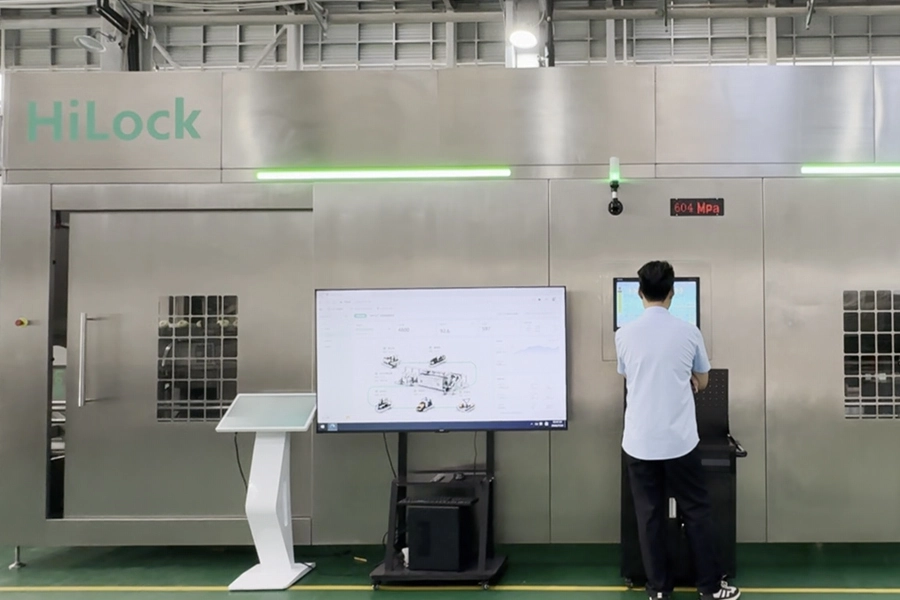
4. Evaluate Customization and System Integration Capabilities
Not every production facility has the same requirements.
Some companies need standardized HPP machine, while others may require customized solutions based on their production lines, factory layout, packaging formats, automation level, and hygiene requirements.
When selecting an HPP machine supplier, check whether it can provide customization services such as:
- Customized pressure vessel configurations
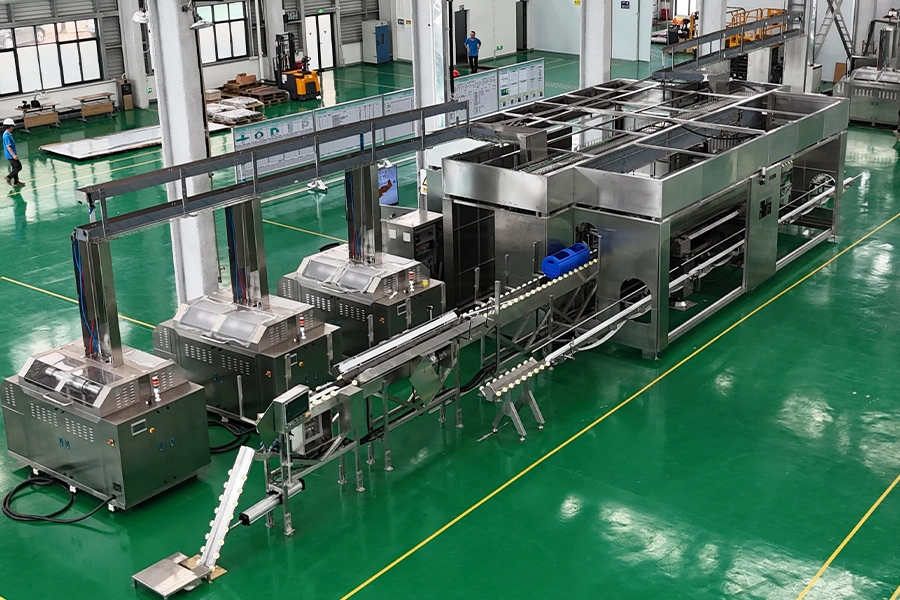
- Automatic loading and unloading systems
- Conveyor line integration
- CIP systems
- SIP systems
- GMP-compatible configurations
- Customized data recording systems
- Production line integration
- Specialized packaging handling solutions
- Customized electrical and control systems
This capability is particularly important for companies transitioning from laboratory R&D to commercial-scale production.
A supplier capable of providing an integrated high-pressure processing solution can significantly reduce the complexity of coordinating multiple equipment vendors.
5. Energy Consumption and Operating Costs: Key to Long-Term ROI
Key question: How much will the machine cost to operate over a year?
The operating costs of HPP machine mainly consist of energy consumption, consumables, maintenance, and spare parts. Current industry trends include:
- Energy consumption: Advanced systems can achieve energy consumption below 0.6 kWh/L through technologies such as variable-frequency motors and energy recovery.
- Intensifier efficiency: Advanced high-pressure intensifiers can improve efficiency, while optimized dynamic sealing components can further reduce operating costs.
- Maintenance requirements: Machine using high-strength steel structures and high-quality guide components can support extended continuous operation with reduced maintenance requirements.
Recommendation: Ask suppliers to provide a Total Cost of Ownership (TCO) analysis covering energy consumption, spare-part replacement cycles, labor costs, maintenance expenses, and other long-term operating costs.
6. Intelligent Automation: From Automated Control to Predictive Maintenance
Key question: Do you need remote monitoring, data traceability, or AI-assisted diagnostics?
Modern HPP systems are increasingly becoming more intelligent and connected.
- Basic configuration: PLC and touchscreen control for precise pressure ramp-up, pressure holding, and pressure compensation.
- Advanced functions: Remote monitoring, cloud-based data management, and preset process recipe libraries for quick parameter selection.
- Advanced intelligent functions: AI-based pressure compensation algorithms, predictive maintenance based on operating data, and SCADA control systems.
Recommendation: If your company is planning digital production management or future production-line upgrades, prioritize machine with remote monitoring capabilities and open data interfaces.
7. Space and Installation Requirements: Can the Machine Fit Your Existing Facility?
Key question: Can your facility meet the requirements for ceiling height, floor loading, utilities, and power supply?
Due to differences in machine design, HPP systems can have significantly different installation requirements.
- Horizontal HPP systems: These offer high throughput and are suitable for large-scale production, but generally require more floor space. For example, the HiLock-525L measures approximately 26 × 6.2 × 3.6 m and weighs about 125 tons.
- Vertical HPP systems: These require less floor space and may reduce the need for extensive production-line modifications, making them suitable for small- and medium-scale production.
- Power requirements: Laboratory systems such as the 2L model can use standard 220V power, while production systems of 135L and above generally require 380V industrial power.
Recommendation: Before purchasing, provide the supplier with your factory layout and request a detailed equipment installation plan. Confirm transportation access, foundation load-bearing capacity, ventilation and heat dissipation space, power supply, and other installation conditions.
8. After-Sales Service and Technical Support: Protection Throughout the Machine Lifecycle
Key question: How quickly can the supplier respond if the machine encounters a problem?
HPP machine is a highly sophisticated, heavy-duty processing system. Reliable after-sales support directly affects production continuity.
When evaluating suppliers, consider:
- Technical support: Is 24/7 technical support available? Does the supplier have a professional service team?
- Spare parts: Are critical components such as seals and intensifier plungers kept in stock?
- Training: Does the supplier provide equipment operation, maintenance, and process optimization training?
- Local service: Does the supplier have service capabilities or support networks in your region?
Recommendation: Prioritize suppliers capable of providing full-lifecycle services, including equipment installation, process customization, certification support, operator training, and after-sales service. It is also important to evaluate their customer references and reputation within the industry.
Final Recommendations for HPP Machine Selection
Choosing the right HPP machine is essentially a balance between processing capacity, product characteristics, process requirements, compliance requirements, and total investment cost.
We recommend following these steps:
- Define your requirements: Identify your current production capacity, future expansion plans, product portfolio, and target markets.
- Conduct product testing: Provide product samples to the supplier and verify processing performance and suitable process parameters.
- Evaluate the complete solution: Compare equipment specifications, energy consumption, certifications, automation capabilities, and after-sales support.
- Conduct a site visit: Visit the supplier’s factory and operating customer sites to verify equipment reliability and production performance.
- Negotiate the contract: Clearly define delivery schedules, installation and commissioning, training plans, warranty terms, and service commitments.
HPP machine is a long-term investment. Choosing the right system can be a critical step toward product upgrading, production efficiency, and market expansion.
Why Choose HiLock?
Among the many HPP machine manufacturers available today, HiLock offers several key advantages that make it a trusted choice for food processing companies.
A Full Range of Machine for Different Production Requirements
HiLock provides a complete equipment portfolio ranging from 2L laboratory systems to 525L large-scale production systems, covering R&D, pilot testing, and commercial production.
Whether you are a startup brand developing a new product or a large food manufacturer expanding production capacity, HiLock offers equipment configurations designed to match different processing requirements.
Controlled Core Components and Lower Maintenance Costs
The high-pressure vessel uses aerospace-grade 15-5 stainless steel forgings, with a tested service life of up to 200,000 cycles.
HiLock also develops and manufactures its own core intensifier systems and maintains inventory of key spare parts, helping reduce maintenance costs by up to 40% compared with industry averages.
Intelligent Control and Energy Efficiency
HiLock HPP systems incorporate technologies such as remote monitoring, predictive maintenance, and AI-based pressure compensation.
Energy consumption can be as low as 0.6 kWh/L. Taking the 135L system, with a daily processing capacity of approximately 5,900L, as an example, the system can potentially save more than RMB 100,000 in annual electricity costs under applicable operating conditions.
One-Stop Turnkey Service from Product Testing to Commercial Production
HiLock provides free product sample testing, process database matching, customized production-line design, installation and commissioning, operator training, and after-sales support.
This integrated approach helps customers move more efficiently from initial product testing to stable commercial production.
Comprehensive Certifications for Multi-Industry Applications
HiLock equipment has obtained certifications including ISO 9001, ISO 14001, and ASME-U, supporting compliance requirements across industries such as food, pharmaceuticals, and cosmetics.
These certifications can help manufacturers meet the regulatory and quality requirements of different target markets.
Proven Equipment in Real-World Applications
HiLock has delivered more than 100 high-pressure processing systems, serving companies and leading research institutions in different industries.
With equipment deployed in domestic and international markets, HiLock’s HPP systems have undergone extensive real-world application and market validation.
Conclusion
If you are evaluating high pressure processing machine for a new production line, laboratory, or product development project, start by defining your product type, target capacity, packaging format, processing objectives, and future production plans.
Based on these requirements, a professional HPP machine manufacturer can help determine the appropriate equipment configuration and develop a suitable processing solution.
The best HPP system is not necessarily the one with the highest pressure. Instead, it is the system that delivers the best balance of performance, reliability, scalability, and return on investment for your specific application.
Choosing HiLock means more than choosing an HPP machine. It means choosing an integrated cold sterilization solution backed by more than 100 validated projects. From capacity planning and compliance support to energy optimization and after-sales service, HiLock provides full-process support to help you move from testing to commercial production with confidence.