
Table of Contents
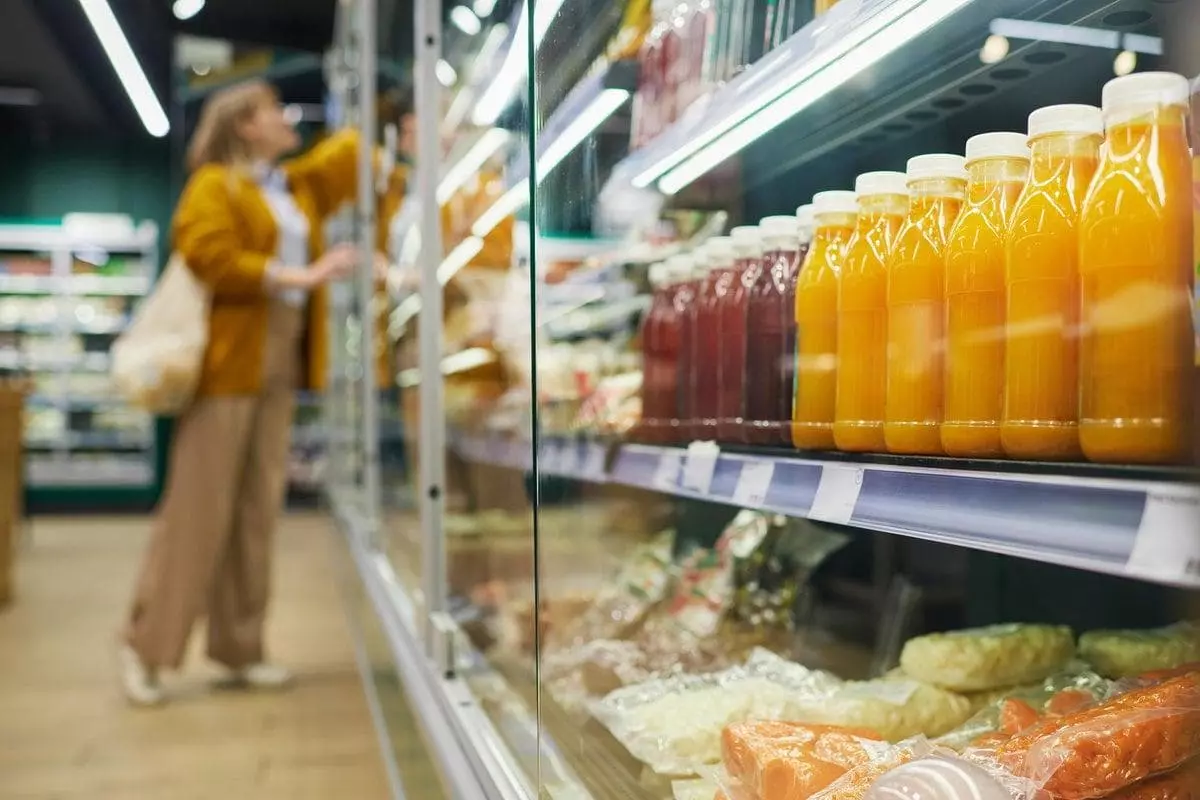
Walk into a major U.S. retailer such as Costco or Walmart, and you will find a growing range of premium juices, cold-pressed beverages and functional wellness shots. These products are no longer limited to local juice bars or specialty stores. They are becoming part of a broader modern-retail beverage market where consumers expect freshness, clean ingredients, convenience and consistent quality.
Two examples illustrate this shift. Costco currently lists Pressed Juicery’s 3-day Juice + Protein Cleanse, while Pressed Juicery’s own product pages identify its cold-pressed juices as HPP processed to help protect nutrients and flavor.
At Walmart, Suja Organic’s Vitamin D and Zinc Juice Shot combines functional nutrition with cold-pressed juice positioning. Suja explicitly identifies its “Cold Pressure” process as High Pressure Processing (HPP), explaining that the process extends shelf life and helps maintain vitamins, minerals and nutrients without high-temperature processing.
These examples point to a larger industry trend: for premium juice brands, processing technology is becoming part of product strategy.
The Rise of Premium Juice in Modern Retail
Today’s premium juice consumer is looking for more than a beverage.
They want recognizable ingredients, fresh taste, nutritional value, convenience and products that fit an increasingly health-conscious lifestyle.
Cold-pressed juices and functional beverages are particularly well positioned for this trend. Brands such as Pressed Juicery have built their product portfolios around cold-pressed juices, wellness shots and functional nutrition. Pressed currently offers a broad range of cold-pressed products, including green, citrus, root and functional juice categories.
Suja Organic follows a similar product philosophy, emphasizing organic ingredients, clean-label positioning and functional nutrition. The company states that its products use High Pressure Processing to maintain quality and natural freshness without preservatives.
For premium juice brands, however, maintaining this product positioning becomes more difficult as distribution expands.
A juice that performs well in a local market may face very different challenges when it needs to move through a regional or national retail supply chain.
The Retail Challenge: Freshness vs. Shelf Life
Fresh juice creates a fundamental processing challenge.
Consumers want products that taste fresh. Retailers, meanwhile, need products that can safely move through manufacturing, warehousing, transportation and refrigerated distribution before reaching the consumer.
This creates several requirements for juice manufacturers:
- Microbial safety
- Consistent product quality
- Refrigerated shelf-life management
- Longer distribution windows
- Reduced product waste
- Reliable production at commercial scale
Traditional thermal pasteurization can provide microbial control, but excessive heat exposure may alter the sensory characteristics of some premium juice products.
For brands built around a “fresh” proposition, the question becomes:
How can manufacturers improve food safety and shelf life without turning a premium fresh-tasting juice into a conventional processed beverage?
This is where HPP juice processing becomes particularly relevant.
What Is HPP Juice Processing?
High Pressure Processing (HPP) is a non-thermal food processing technology that uses extremely high hydrostatic pressure rather than relying primarily on heat.
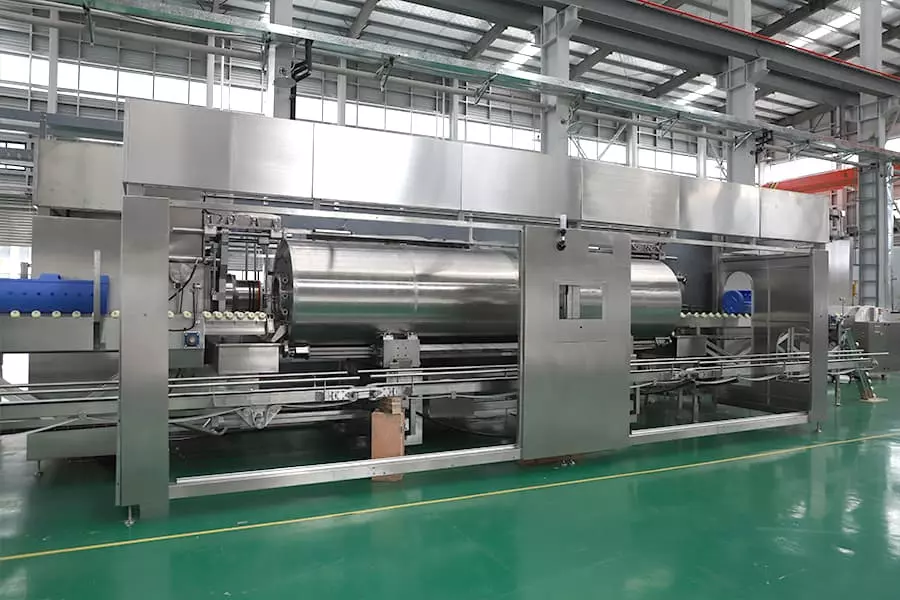
In an HPP system, packaged products are placed inside a pressure vessel. Water is pressurized to a very high level, and the pressure is transmitted uniformly through the packaging and into the food.
HiLock’s HPP technology is designed for ultra-high-pressure processing in the range of 300–600 MPa, providing a physical cold-processing approach for packaged juice and other food products.
Unlike conventional thermal processing, HPP does not require the product to be exposed to high processing temperatures as the primary preservation mechanism.
This makes HPP particularly attractive for premium juice categories where the product’s value depends heavily on freshness, flavor, color and nutritional positioning.
Why Are Premium Juice Brands Turning to HPP?
1. Protecting Fresh Taste and Product Quality
For premium juice, taste is part of the brand.
Consumers buying cold-pressed juice expect the product to retain the character of the original fruits and vegetables.
HPP can help brands maintain the fresh sensory profile associated with cold-pressed products while providing microbial reduction through a non-thermal process.
Pressed Juicery’s current product pages provide a practical example: its cold-pressed Orange Juice is identified as “HPP processed to help protect nutrients and flavor.”
Pressed Juicery also describes HPP as a cold-water-pressure technology used to maintain freshness and quality without heat or added preservatives.
For premium juice manufacturers, this creates an important product advantage:
Freshness becomes more scalable.
Instead of treating freshness as something available only immediately after production, HPP can help manufacturers design a more practical refrigerated distribution model.
2. Supporting Nutritional and Functional Positioning
Many modern juices are marketed around nutritional or functional benefits.
Examples include:
- Vitamin-rich juices
- Green juices
- Fruit and vegetable blends
- Wellness shots
- Functional beverages
- Organic cold-pressed juices
Suja’s Vitamin D and Zinc Juice Shot is a strong example of this product direction. The Walmart listing highlights vitamin C, vitamin D3, zinc, acerola cherry, reishi and live probiotics, while also identifying HPP as the cold-pressure preservation method.
For these products, processing is not simply a manufacturing step. It is connected directly to the product proposition.
A processing technology that minimizes reliance on high-temperature treatment can therefore support brands seeking to position their beverages around fresh, functional and premium qualities.
3. Enabling Clean-Label Positioning
Clean label has become an important consideration in premium food and beverage.
Consumers increasingly look for:
- Simple ingredients
- Organic ingredients
- No artificial ingredients
- No unnecessary preservatives
- Transparent processing
HPP is a physical processing technology rather than a chemical preservative.
Suja states that its HPP process helps extend shelf life without preservatives and describes its products as clean-label beverages.
This does not mean every HPP juice automatically qualifies as clean label. Formulation, ingredients and regulatory requirements still matter.
However, HPP can give premium juice manufacturers another tool for developing products aligned with clean-label positioning.
4. Extending Refrigerated Shelf Life
Shelf life is one of the biggest commercial challenges for fresh juice.
Without an effective preservation strategy, refrigerated juice can have a relatively short distribution window. That limits:
- Transportation distance
- Retail distribution
- Inventory flexibility
- Production planning
- Geographic expansion
HPP can significantly extend the refrigerated shelf life of suitable juice products when the formulation, packaging and validated process are properly designed.
Suja currently states that the shelf life of its juices and shots is approximately 30–90 days depending on the product, and attributes its cold-pressure HPP process to maintaining freshness and extending shelf life.
For a growing juice brand, a longer validated shelf life can change the economics of distribution.
It can make it easier to move from:
Local Production → Regional Distribution → Large-Scale Retail
This is one reason HPP is increasingly viewed not simply as a preservation technology, but as a potential retail-enabling technology.
From Premium Product to Retail Growth
The real value of HPP becomes clearer when viewed from a business perspective.
Imagine a premium juice manufacturer developing a new cold-pressed product.
At the beginning, production may be relatively local:
Fresh Produce → Juice Processing → Bottling → Local Refrigerated Sales
As demand grows, the supply chain becomes more complex:
Ingredient Sourcing → Juice Production → Packaging → HPP → Refrigerated Distribution → Regional Retail → National Retail
HPP can become an important link in this expanded production model.
The examples of Pressed Juicery and Suja demonstrate how HPP is already associated with premium cold-pressed and functional juice categories. Pressed Juicery identifies HPP processing across its cold-pressed products, while Suja explicitly describes HPP as its cold-pressure preservation method.
The implication for emerging brands is significant:
Technology can help turn a premium product concept into a scalable retail product.
How HiLock HPP Technology Empowers Premium Juice Brands
HPP technology uses physical cold pasteurization to treat juice at ultra-high pressures of 300–600 MPa at low temperatures (5–25°C). By addressing the key limitations of traditional thermal processing, HPP helps premium juice brands build stronger product differentiation and competitiveness:
Preserves Key Nutrients and Flavor
- Nutrient retention: Thermal processing can cause a 30–60% loss of vitamin C, while HPP can achieve over 90% vitamin C retention, while also preserving heat-sensitive nutrients such as anthocyanins and proteins.
- Flavor preservation: HPP avoids the “cooked” taste caused by thermal processing, helping preserve the fresh-pressed taste and original flavor of the juice.
Enables a “Clean Label”
As a purely physical preservation process, HPP requires no chemical preservatives, aligning with premium consumers’ demand for natural, clean, and healthy foods while helping brands enhance their premium positioning.
Significantly Extends Shelf Life and Reduces Product Loss
- Under refrigerated conditions, HPP can extend shelf life from 3–7 days to 30–60 days or even longer.
- It can effectively reduce losses during distribution. According to industry data, product losses can be reduced by approximately 28%, enabling brands to expand their sales radius and access a wider range of retail channels.
| Traditional Thermal Processing | HPP vs. Thermal Processing |
|---|---|
| Vitamin C loss of 30–60%, flavor degradation, very short shelf life, and high product loss. | Over 90% vitamin C retention, compared with 30–60% loss during traditional thermal processing; fresh-like taste; 2–3× longer shelf life and approximately 28% lower product loss. |
HiLock Service Support: Lowering the Barrier to Market Entry
HiLock provides one-stop services to help new brands with limited HPP experience, as well as established brands seeking process upgrades, quickly implement HPP production:
Equipment Selection: HiLock offers a full range of models from 2 L for laboratory R&D to 525 L for large-scale production, with a capacity of up to 25,000 L/day, supporting every stage from product development to commercial-scale production.
Free Sample Testing: Customers send product samples to the HiLock laboratory for process feasibility testing and pressure-profile optimization.
Process Database: With a database containing process parameters for 1,000+ types of ingredients, HiLock can accurately match processing solutions to different products.
Customized Production Lines: HiLock provides complete production-line design, from raw material processing and HPP integration to downstream packaging, along with recommendations on packaging material selection, formulation, and HPP parameter matching to help avoid common implementation pitfalls.
Conclusion: HPP as a Product-Development and Retail-Growth Tool
The premium juice market is moving toward products that deliver both freshness and convenience.
For brands seeking to expand into modern retail, the challenge is to preserve the characteristics that make their products premium while building a production and distribution system capable of supporting larger markets.
HPP juice processing provides one potential solution.
By applying high-pressure processing to suitable packaged juice products, manufacturers can pursue microbial control and extended refrigerated shelf life while reducing reliance on high-temperature processing.
For premium juice brands, the value of HPP therefore extends beyond preservation.
It can help connect:
Premium Ingredients → Better Processing → Better Product Experience → Longer Distribution Window → Retail Growth
With laboratory-to-industrial HPP equipment, process testing, a 1,000+ food-material process database and customized production-line support, HiLock helps premium food and beverage manufacturers move from HPP concept to scalable production.