
Table of Contents
High Pressure Processing (HPP) is gradually becoming an important non-thermal processing technology for food, beverages, cosmetics, and emerging biopharmaceutical applications. By applying extremely high hydrostatic pressure to packaged or bulk products, HPP reduces microbial levels while minimizing the impact that conventional thermal processing can have on product quality.
However, selecting an HPP system is not simply a matter of choosing higher pressure or a larger processing chamber. The right equipment depends on your product characteristics, R&D objectives, production scale, process development stage, packaging format, validation requirements, and long-term production plans.
For companies evaluating HPP Machine, an important question is: should you choose Laboratory HPP Machine for R&D and process development, or move directly into commercial production with an Industrial-Scale HPP Machine?
Understanding the differences between these two types of equipment can help companies avoid overinvestment, reduce process scale-up risks, and establish a more reliable technical pathway from laboratory testing to industrial-scale production.
Based on the HiLock high pressure processing equipment portfolio, this article explores the key differences and selection criteria between laboratory-scale and industrial-scale HPP equipment to help you make a more informed decision.
Laboratory HPP Machine: Precise Validation from “0” to “1”
The laboratory is the starting point for innovation. The core mission of laboratory-scale HPP equipment is to validate process feasibility at the lowest possible cost.
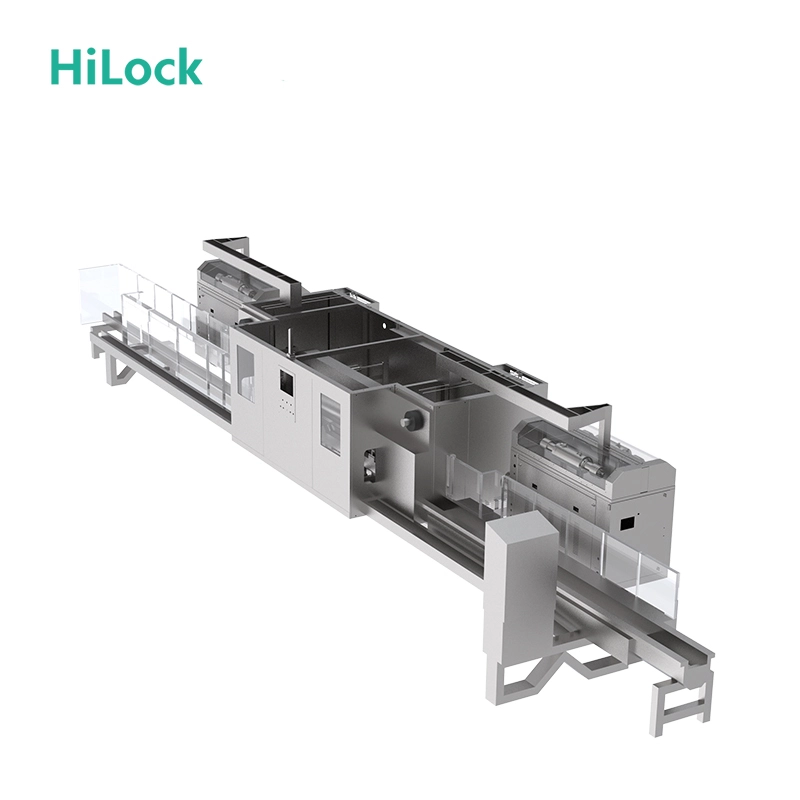
Typical Model: HiLock-55 — Laboratory-Scale HPP Equipment
Positioning: Designed specifically for laboratory R&D and small-batch pilot production.
Key advantages:
- Small-volume processing: With a 55 L working chamber, it is suitable for small-batch testing, valuable samples, process validation, and parameter optimization.
- Precise parameter control: Pressure can be accurately adjusted from 100 to 600 MPa, helping ensure repeatable experimental results.
- Rapid validation: With a processing capacity of approximately 0.69 tons per hour, it is sufficient for small-scale process validation and helps R&D teams quickly identify optimal processing parameters.
- Compact design: Its small footprint requires no major production-line modifications and allows rapid integration into existing laboratory spaces.
Typical Applications:
- Initial exploration and validation of new formulations and processes.
- HPP testing of rare or high-value samples, such as premium chocolate and specialty alcoholic beverages.
- Fundamental research at universities and research institutes.
- Premium product development for small specialty food manufacturers.
Industrial-Scale HPP Machine: Scalable Production from “1” to “N”
Once the HPP process has been successfully validated in the laboratory, the next challenge is to scale up the process smoothly for commercial production. Industrial-scale HPP equipment is the core solution for large-scale manufacturing.
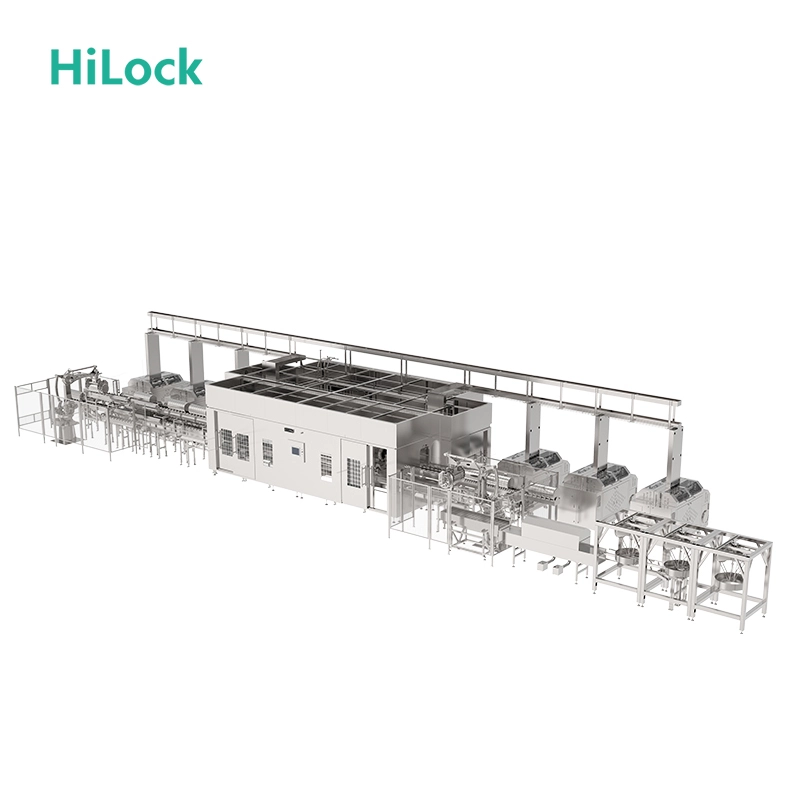
Typical Model: HiLock-525 — Industrial-Scale HPP Equipment
Positioning: Designed to meet the demands of large-scale industrial production.
Key advantages:
- High production capacity: With a 525 L working chamber and a processing capacity of up to 2.27 tons per hour, it can process tens of thousands of liters per day, meeting the large-scale processing requirements of major food manufacturers.
- Continuous operation: Equipped with 10 pressure intensifiers, it supports 24-hour continuous operation, ensuring high throughput and operational stability.
- Intelligent control: Integrated remote monitoring and cloud-based data management enable predictive maintenance and remote diagnostics, helping reduce downtime.
- Lower unit processing costs: Economies of scale significantly reduce the processing cost per package and improve return on investment (ROI).
Typical Applications:
- Large-scale HPP processing of NFC juices and meat products.
- Mass production of sauces and ready-to-eat meals for multinational food companies.
- High-volume preservation and processing of seafood.
- Centralized HPP contract processing facilities.
Key Differences Between Laboratory and Industrial HPP Machine
To make the decision easier, the key differences between the laboratory-scale HiLock-55L and industrial-scale HiLock-525L HPP systems are summarized below:
| Comparison Factor | Laboratory-Scale (HiLock-55L) | Industrial-Scale (HiLock-525L) |
|---|---|---|
| Primary Objective | Process feasibility validation and parameter optimization | Large-scale production and cost control |
| Working Chamber Volume | 55 L | 525 L |
| Processing Capacity | 0.69 tons/hour | 2.27 tons/hour |
| Number of Pressure Intensifiers | 2 | 10 |
| Level of Automation | Basic HMI interface | Remote monitoring, cloud management, predictive maintenance |
| Typical Users | R&D personnel, scientists, small manufacturers | Process engineers, production managers, large enterprises |
| Key Decision Point | Do I need to validate the process using the smallest possible sample volume? | Do I need maximum economies of scale and the lowest possible unit cost? |
How to Choose: Three Key Decision Factors
1. Consider Your Project Stage
- Early-stage R&D: Choose laboratory-scale equipment. At this stage, the priority is experimentation and optimization—finding the right process with minimal investment.
- Commercial-scale production: Choose industrial-scale equipment. Once the process has been established, production capacity and cost efficiency become the priorities.
2. Consider Sample Value and Production Volume
- High-value, small-batch products: Laboratory-scale equipment is preferred. Its small-volume processing capability helps minimize sample consumption while supporting premium product development.
- Lower-value, high-volume products: Industrial-scale equipment is more suitable. Large-scale production can reduce unit processing costs and improve market competitiveness.
3. Consider Your Ultimate Goal
- Academic research or laboratory studies: Laboratory-scale HPP equipment is generally sufficient.
- Commercial production: The process should normally go through pilot-scale and then industrial-scale validation. Skipping pilot-scale validation and moving directly into mass production can introduce significant risks.
HiLock Full-Scale Solutions: Seamless Scale-Up from R&D to Production
Whether you choose laboratory-scale or industrial-scale HPP equipment, HiLock provides a unified and scalable technology platform.
- Common technology platform: All models use physical, non-thermal HPP technology, applying 400–600 MPa of ultra-high hydrostatic pressure to products at approximately 5–20°C. This helps facilitate the transfer of process parameters from laboratory testing to commercial production.
- End-to-end capabilities: From core components such as high-pressure intensifiers to complete systems and process development, HiLock maintains control over the key stages of the technology chain.
- Comprehensive support: HiLock provides one-stop support, from free sample testing and process validation to production-line customization, helping customers transition smoothly from laboratory development to commercial production.
Laboratory HPP or Industrial HPP Machine: Which One Should You Choose?
The final decision depends on your company’s current product development and commercialization stage.
If your primary requirements include:
- Product development
- HPP process development
- Feasibility testing
- Packaging compatibility studies
- Academic research
- Shelf-life studies
- Process parameter optimization
then Laboratory HPP Equipment is generally the more appropriate choice.
If your primary requirements include:
- Commercial production
- Large-scale processing
- High throughput
- Automated operation
- Production-line integration
- Long-term stable production
- Capacity expansion
then an Industrial-Scale HPP Machine is better suited to your needs.
For companies still in the HPP process development stage, starting with laboratory-scale testing can effectively reduce the risks associated with subsequent industrial scale-up.
For companies that have already completed product validation, have clear market demand, and are preparing for commercial production, an industrial-scale HPP system can provide the production capacity, stability, and scalability required for commercialization.
Most importantly, your choice of HPP equipment should serve your process and production strategy—not force your production strategy to adapt to the equipment.
Conclusion
There is no absolute “best” choice between laboratory-scale and industrial-scale HPP equipment. There is only the most suitable choice for your specific needs. The key is to clearly define your current project stage and primary objectives.
Whether you are conducting your first HPP product tests in the laboratory or planning a large-scale commercial production line, choosing an HPP equipment manufacturer with comprehensive technical capabilities can help you transition from laboratory R&D to industrial production more quickly, reliably, and efficiently.
From precise laboratory validation and pilot-scale process confirmation to final mass production, HiLock’s complete HPP equipment portfolio provides a clear and reliable pathway for technology scale-up.