
Table of Contents
The global High Pressure Processing (HPP)Equipment and Food Market size is estimated to be USD 0.54 Billion in 2023 and is predicted to reach USD 1.12 Billion by 2030 with a CAGR of 11.0% from 2024-2030.
High Pressure Processing equipment is mainly used in the food industry for the sterilization of food products. HPP is equivalent to pasteurization, enhancing processed food quality and extending shelf life. The equipment generates isostatic pressure using water to inactivate bacteria and other microorganisms in food products, helping prevent degradation.
One of the major benefits of High Pressure Processing equipment is its ability to eliminate bacteria, parasites, and viruses while extending product shelf life. It also helps preserve the nutritional value and flavor of processed foods, offering an advantage over thermal treatment. For these reasons, HPP equipment is gaining traction among global food manufacturers.
(Source: Jayanta Das, “HPP Equipment and Foods Market,” Next Move Strategy Consulting (NMSC).)
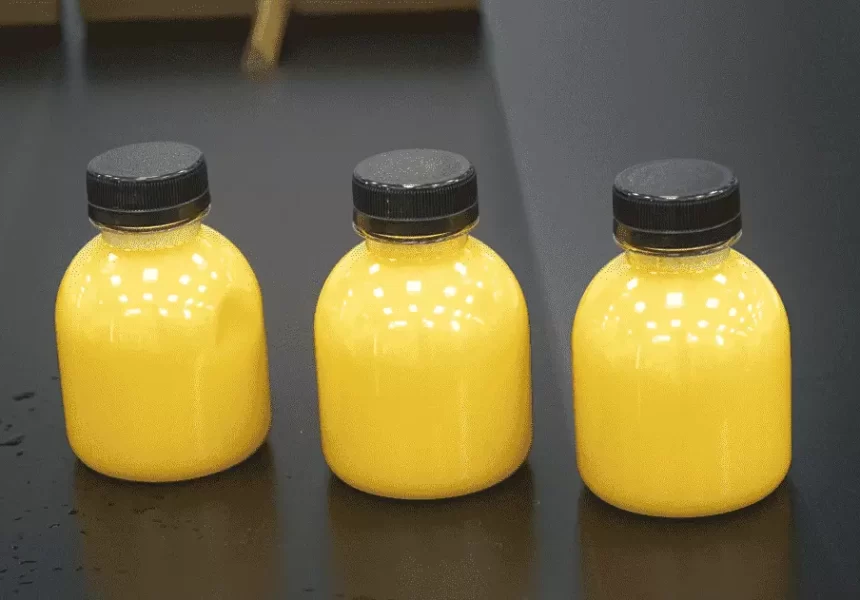
As demand grows for clean-label, minimally processed, and fresh-tasting beverages, HPP juice has emerged as an increasingly attractive solution.For orange juice manufacturers, this technology can provide a valuable balance between food safety, shelf life, sensory quality, and product differentiation.
In this article, we explore how High Pressure Processing works for orange juice, its key benefits, packaging considerations, and how an advanced High Pressure Processing machine can support commercial juice production.
What Is HPP (High Pressure Processing) Technology?
HPP (High Pressure Processing) is a non-thermal food processing technology that places foods such as orange juice under ultra-high hydrostatic pressure, typically 300–600 MPa (approximately 3,000–6,000 atmospheres), at a relatively low temperature of 5–20°C for several minutes to inactivate microorganisms.
The pressure is transmitted uniformly through a medium such as water, regardless of the product’s shape or size, ensuring consistent treatment throughout the entire product.
What Is HPP for Orange Juice?
High Pressure Processing, commonly known as HPP, is a non-thermal food processing technology that applies high hydrostatic pressure to packaged food and beverages.
For orange juice, filled and sealed packages are placed inside an HPP vessel. The vessel is then filled with water, and pressure is increased to hundreds of megapascals. Because pressure is transmitted uniformly through the water, it reaches the juice from virtually every direction.
Unlike conventional thermal processing, High Pressure Processing does not rely primarily on high temperatures to achieve microbial inactivation.
A typical HPP process includes:
- Juice preparation – Freshly processed orange juice is prepared according to the desired formulation.
- Filling and sealing – The juice is filled into suitable pressure-resistant packaging.
- Loading – Sealed packages are placed into the HPP vessel.
- Pressurization – Water is pressurized to the specified processing pressure.
- Holding – The pressure is maintained for a predetermined processing time.
- Depressurization – Pressure is released and the processed products are removed.
- Cold-chain distribution – The finished HPP juice is stored and distributed under appropriate refrigerated conditions.
This process allows manufacturers to combine microbial safety objectives with a fresh-oriented product positioning.
How Does HPP Improve Orange Juice Safety?
Efficient Inactivation of Pathogenic Microorganisms
One of the most important applications of High Pressure Processing Machine is the effective reduction of spoilage microorganisms and pathogenic bacteria in orange juice. High Pressure Processing can efficiently inactivate common foodborne pathogens such as Salmonella, Listeria, and norovirus. For juice and other food products, this technology can achieve a 99.999% reduction in target microorganisms (5-log reduction) under appropriately validated processing conditions, supporting compliance with food safety requirements such as those established by the U.S. FDA and other major international food safety authorities.
For orange juice manufacturers, this can help reduce food safety and spoilage risks while reducing reliance on intensive thermal processing.
However, High Pressure Processing should not simply be considered a universal replacement for all conventional processing methods. The appropriate pressure and holding time must be determined, validated, and verified through product-specific process development.
Key factors affecting HPP processing effectiveness include:
- Orange juice pH and composition
- Initial microbial load
- Target microorganisms
- Processing pressure
- Holding time
- Processing temperature
- Packaging format
- Storage temperature
- Target shelf life
Therefore, a professional High Pressure Processing solution requires not only high-performance equipment but also product-specific process development. High Pressure Processing equipment should be integrated into a complete processing solution rather than treated as a standalone machine.
Post-Packaging Processing to Minimize Recontamination
High Pressure Processing uses a “package first, process second” approach. Orange juice is sealed in its final packaging before undergoing high-pressure treatment, helping minimize the risk of recontamination during subsequent processing and handling.
This approach provides an additional layer of protection for product safety from the processing facility through distribution and ultimately to the consumer.
How Does HPP Improve Orange Juice Quality?
Food safety is only one part of orange juice processing. For premium orange juice products, maintaining sensory quality is equally important.
Better Retention of Vitamin C and Nutrients
Compared with conventional thermal processing, one of the key advantages of High Pressure Processing is that it can minimize heat-related damage to many nutritional and sensory components. Because High Pressure Processing does not rely on intensive heating, it can help preserve vitamins, flavor compounds, and natural pigments.
High Pressure Processing-treated orange juice can retain a high proportion of heat-sensitive nutrients such as vitamin C while maintaining a fresh, fruit-forward flavor.
Actual nutrient retention depends on the specific formulation, processing parameters, packaging, and storage conditions, so product-specific testing is still essential.
Preserving Fresh Taste and Color
During High Pressure Processing treatment, the temperature increase caused by adiabatic compression is typically limited, and the product temperature can return toward its original level after depressurization.
As a result, the taste, color, and aroma of orange juice can be better preserved, helping deliver a sensory profile closer to that of fresh juice.
Preserving Fresh Flavor and Aroma
High temperatures can affect some volatile compounds in orange juice that contribute to its characteristic citrus aroma and flavor.
Because High Pressure Processing relies primarily on pressure rather than intensive heat, it can help manufacturers develop orange juice products with a fresher sensory profile.
This is particularly valuable for premium juice brands that emphasize freshness and minimal processing.
Significantly Extending Shelf Life
High Pressure Processing can significantly extend the refrigerated shelf life of orange juice compared with untreated fresh juice, potentially extending it from just a few days to 45 days or longer, depending on the formulation, processing conditions, packaging, and storage environment.
Under specific validated commercial processes, some High Pressure Processing products may achieve even longer shelf lives. However, claims of 90–360 days should be supported by product-specific shelf-life studies and validated processing data.
By extending shelf life without necessarily relying on added preservatives, High Pressure Processing can help reduce food waste and create greater opportunities for longer-distance transportation and broader market distribution.

HPP Juice vs. Traditional Thermal Processing
High Pressure Processing and thermal pasteurization use fundamentally different mechanisms.
| Feature | HPP Juice | Traditional Thermal Processing |
|---|---|---|
| Main processing mechanism | High hydrostatic pressure | Heat |
| Product temperature | Relatively low compared with thermal processing | Elevated |
| Microbial control | Pressure-induced microbial inactivation | Heat-induced microbial inactivation |
| Fresh sensory profile | Can help preserve fresh characteristics | Greater potential for heat-related changes |
| Nutrient preservation | Favorable for many heat-sensitive components | Some heat-sensitive components may be affected |
| Packaging | Requires HPP-compatible packaging | Broader packaging options |
| Product positioning | Fresh, minimally processed, clean-label oriented | Conventional processed beverage |
| Process development | Product-specific pressure/time validation | Product-specific thermal validation |
The best processing technology depends on the product, target shelf life, packaging, regulatory requirements, production volume, and commercial positioning.
The Role of Packaging in HPP Juice Production
Packaging is a critical consideration when producing HPP juice.
Because High Pressure Processing applies pressure uniformly around the packaged product, the package must be able to withstand compression and recover its original shape without leaking or permanently deforming.
Suitable packaging is generally flexible or semi-flexible and must be carefully evaluated for:
- Material compatibility
- Seal integrity
- Package geometry
- Headspace
- Oxygen transmission
- Pressure resistance
- Transportation performance
- Consumer convenience
This is one reason why High Pressure Processing is commonly integrated with packaging and process development rather than implemented as an isolated processing step.
For orange juice brands considering an High Pressure Processing launch, packaging trials should be conducted before full-scale commercial production.
How an HPP Machine Supports Commercial Orange Juice Production
An industrial High Pressure Processing machine is designed to provide controlled high-pressure processing at commercial production volumes.
A complete system may include:
- High-pressure vessel
- Pressure generation and intensification system
- High-pressure water circulation system
- Automated control system
- Temperature management system
- Safety monitoring system
- Loading and unloading system
- Process data recording and traceability functions
For industrial juice production, equipment selection should go beyond maximum pressure.
Important considerations include:
Processing Capacity
The effective throughput of an High Pressure Processing system depends on vessel volume, product loading, cycle time, packaging configuration, and production schedule.
Manufacturers should evaluate the required output based on actual package dimensions and production targets rather than relying solely on vessel capacity.
Pressure and Process Control
Stable and repeatable pressure control is essential for consistent processing.
An industrial High Pressure Processing system should provide accurate control of pressure, holding time, temperature, and process parameters while maintaining appropriate safety protections.
Automation and Data Management
Modern High Pressure Processing systems can integrate HMI interfaces, process monitoring, data recording, alarms, and production traceability.
These capabilities are especially important for commercial food manufacturers that need repeatable production and documented process parameters.
Equipment Reliability
High Pressure Processing involves extremely high pressures and demanding operating conditions. The pressure vessel, intensifier system, valves, seals, piping, and control components must therefore be engineered for long-term operation.
Equipment reliability directly affects production efficiency, maintenance costs, and overall return on investment.
Market Outlook and Consumer Acceptance
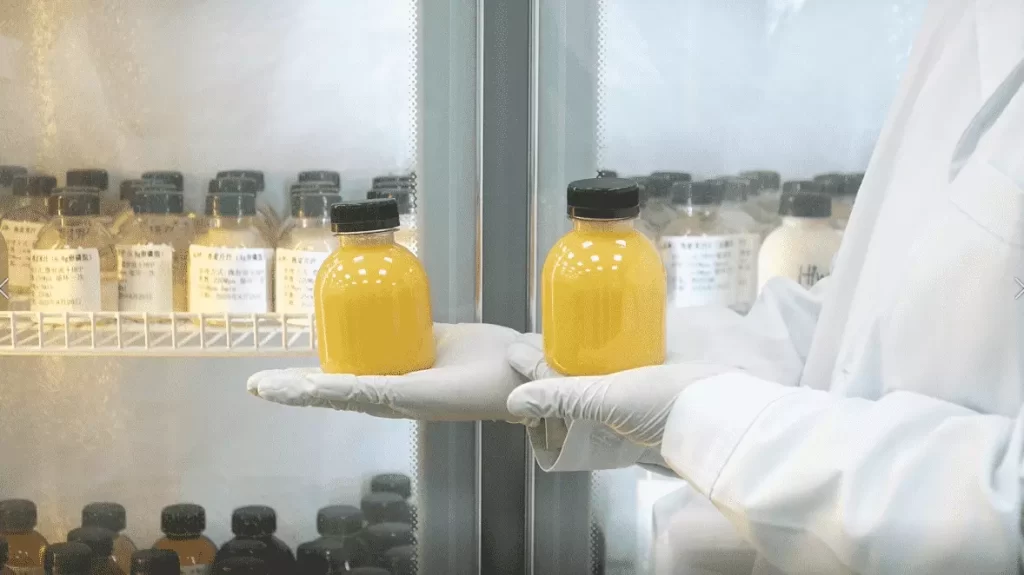
As consumer demand for natural, fresh, safe, and additive-free foods continues to grow, High Pressure Processing orange juice is emerging as an increasingly popular choice in the market. The global high-pressure processing equipment market is projected to grow from RMB 2.7 billion in 2020 to RMB 5.3 billion by 2026, representing a compound annual growth rate (CAGR) of approximately 9.5%. The juice industry is one of the major application areas for High Pressure Processing technology.
Conclusion
High Pressure Processing technology provides an ideal solution for orange juice processing that balances food safety and product quality. It not only effectively inactivates pathogens and enhances food safety, but also helps preserve the nutritional value and fresh flavor of orange juice while significantly extending its shelf life. For consumers seeking a healthier lifestyle, High Pressure Processing orange juice offers an attractive choice.
For juice manufacturers developing premium High Pressure Processing Juice products, this technology creates opportunities for product differentiation, clean-label positioning, and product innovation.
However, successfully implementing High Pressure Processing involves more than simply selecting a high-pressure processing system. Product formulation, packaging, pressure-time parameters, microbial validation, shelf-life testing, equipment configuration, and cold-chain management must all be integrated into a comprehensive processing strategy.
Choosing the right High Pressure Processing Machine and working with an experienced High Pressure Processing technology partner can help orange juice manufacturers move more confidently from laboratory-scale development to scalable industrial production.