
Table of Contents
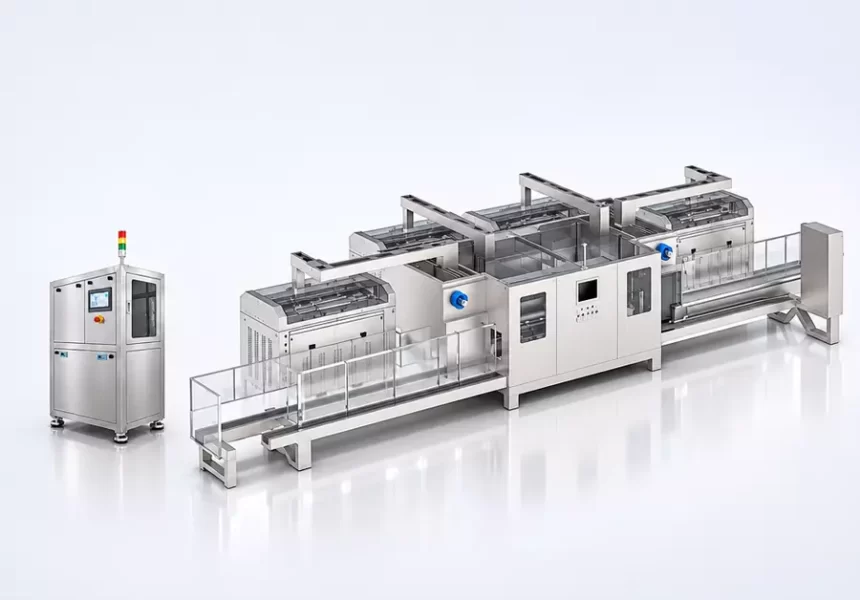
High Pressure Processing (HPP) has become an important technology for food preservation, product development, and industrial processing. By applying extremely high pressure to packaged products, HPP helps reduce many harmful microorganisms while maintaining much of the original flavor, color, texture, and nutritional quality of food. As demand for clean-label products and extended refrigerated shelf life continues to grow, more food manufacturers, research institutions, and biotechnology companies are exploring HPP technology.
However, choosing the right HPP equipment is not always straightforward. Should you start with a laboratory-scale system for research and product testing, or invest in a pilot-scale system to validate processing conditions and prepare for commercial production?
Although both types of equipment use the same fundamental principle of high pressure processing, they serve different purposes in terms of processing capacity, operational requirements, application scenarios, and investment considerations.
Understanding these differences is essential for selecting an HPP system that matches your current research needs while supporting future production goals.
What Is HPP Equipment and How Does It Work?
HPP equipment is designed to process food and other suitable products under extremely high hydrostatic pressure, typically using water as the pressure-transmitting medium.
Unlike conventional thermal processing, which relies primarily on heat to inactivate microorganisms, HPP uses pressure as the main processing factor. Products are placed inside a high-strength pressure vessel, usually in sealed, flexible or semi-flexible packaging. Water is then used to transmit pressure uniformly throughout the vessel.
Depending on the product, target microorganisms, formulation, packaging, pressure level, holding time, and temperature, HPP treatment can help reduce pathogenic and spoilage microorganisms without relying on conventional high-temperature processing.
Commercial food HPP systems commonly operate within a pressure range of approximately 300–600 MPa, although specific operating parameters depend on the application and equipment design.
The main components of an HPP system generally include:
- High-pressure vessel: A specially engineered chamber designed to withstand repeated high-pressure cycles.
- Pressure generation system: A hydraulic intensifier or booster system that generates the required processing pressure.
- Pressure control system: Monitors and regulates pressure throughout each processing cycle.
- Water circulation system: Transfers pressure through the water medium and supports the processing cycle.
- Control system: Coordinates operating parameters, records processing data, and provides operational monitoring.
- Safety protection system: Includes pressure monitoring, interlocks, and other protective mechanisms.
While laboratory and pilot-scale systems share these basic components, their engineering configurations, chamber volumes, automation levels, and production capabilities can differ considerably.
What Is Laboratory-Scale HPP Equipment?
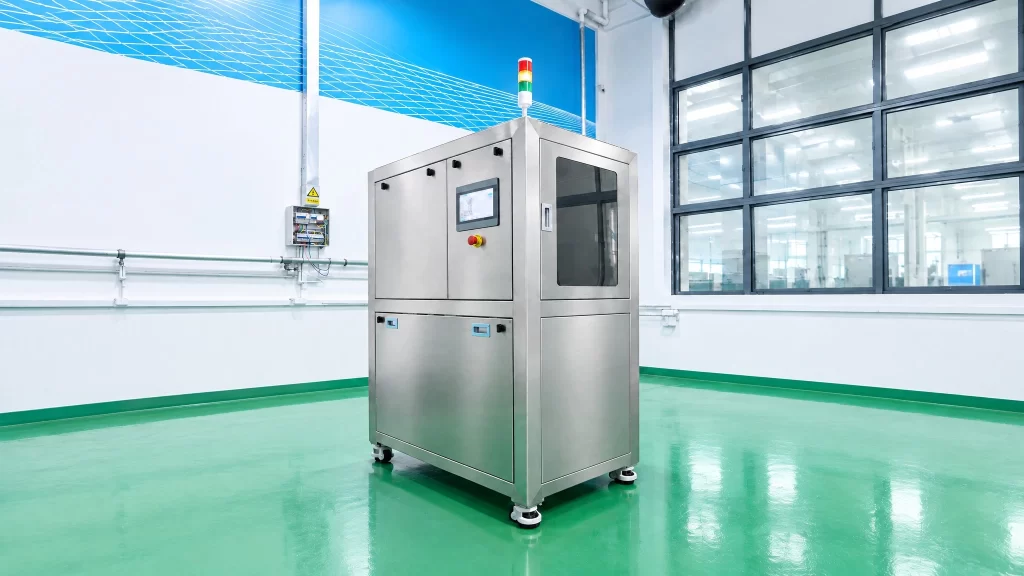
Laboratory-scale HPP equipment is primarily designed for scientific research, product development, feasibility studies, and small-batch processing experiments.
It provides researchers and product developers with a controlled environment to investigate how different pressure conditions affect product quality, microbial inactivation, physical properties, and storage stability.
Because laboratory experiments usually require relatively small sample quantities, laboratory HPP systems are generally more compact and have smaller pressure vessel volumes than pilot-scale systems.
Key Characteristics of Laboratory HPP Systems
1. Small Processing Volume
Laboratory HPP systems are designed for small batches, making them suitable for processing experimental samples and evaluating new formulations. Their compact structure also makes them easier to accommodate in research laboratories, universities, and product development facilities.
2. Flexible Parameter Adjustment
Researchers need to investigate different combinations of pressure, holding time, and temperature. Laboratory systems allow controlled adjustments to processing parameters, helping users identify suitable conditions for specific products.
3. Experimental Repeatability
Consistent processing conditions are essential for comparing experimental results. A properly designed laboratory HPP system provides pressure monitoring and process control to support repeatable testing and data collection.
4. Lower Initial Investment and Space Requirements
Compared with larger pilot-scale systems, laboratory equipment generally requires less installation space and a smaller initial investment. This makes it a practical starting point for organizations exploring HPP technology.
Typical Applications of Laboratory HPP Equipment
Laboratory HPP systems are widely used in:
- Food science research: Investigating microbial inactivation, shelf-life extension, and food quality changes.
- Beverage development: Evaluating HPP treatment conditions for fruit juices, plant-based beverages, and functional drinks.
- Meat and seafood research: Studying the effects of pressure on texture, color, microbial safety, and product stability.
- Dairy product development: Exploring pressure-induced changes in milk proteins, cheese structure, and other dairy components.
- Biotechnology research: Investigating pressure-related effects on selected biological materials and processing applications.
For example, a beverage manufacturer developing a new cold-pressed juice may use laboratory HPP equipment to compare different pressure levels and holding times. By evaluating microbial reduction, color retention, flavor, and storage performance, the R&D team can establish preliminary processing conditions before moving to larger-scale trials.
Laboratory HPP equipment is therefore most suitable when the primary objective is to understand the technology, develop processing methods, or validate product concepts using small sample quantities.
What Is Pilot-Scale HPP Equipment?
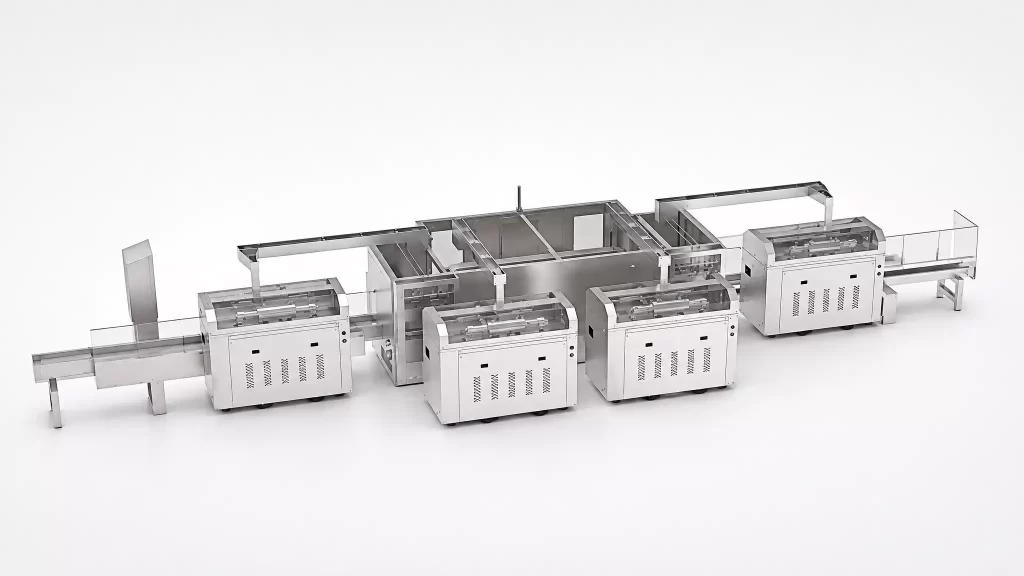
Pilot-scale HPP equipment is designed to bridge the gap between laboratory research and industrial manufacturing.
Once a product has demonstrated promising results in laboratory experiments, manufacturers need to determine whether the processing conditions can be maintained consistently at a larger scale. Pilot-scale systems provide a more production-oriented environment for evaluating process feasibility, equipment performance, packaging compatibility, and operational requirements.
Unlike laboratory systems, pilot-scale HPP equipment is intended to handle larger batches and support more representative production trials.
Key Characteristics of Pilot-Scale HPP Systems
1. Larger Pressure Vessel Capacity
Pilot-scale systems typically feature larger pressure vessels, allowing more products to be processed in each cycle. This makes them suitable for testing production-oriented batch sizes and evaluating processing efficiency.
2. Higher Processing Throughput
With larger chamber volumes and appropriately configured pressure generation systems, pilot-scale equipment can process more products per unit of time than laboratory systems.
Actual throughput depends on vessel capacity, product dimensions, loading efficiency, pressure-holding time, pressurization and decompression time, and material handling procedures.
3. Production-Oriented Engineering
Pilot-scale equipment is designed to simulate important aspects of commercial operation. Depending on the configuration, it may incorporate automated loading and unloading arrangements, integrated water systems, advanced control systems, and operational monitoring.
4. Process Validation and Scale-Up
Pilot-scale HPP equipment helps manufacturers evaluate whether laboratory-developed processing parameters can be transferred to larger production conditions. It also provides opportunities to investigate packaging performance, product consistency, operational efficiency, and process repeatability.
Typical Applications of Pilot-Scale HPP Equipment
Pilot-scale systems are particularly useful for:
- Food and beverage manufacturers: Testing commercial product formulations and processing conditions before full-scale production.
- New product development teams: Evaluating product quality and shelf-life performance using larger sample batches.
- Food processing companies: Assessing production efficiency, packaging compatibility, and process consistency.
- Research institutions: Conducting application studies that require larger and more representative sample quantities.
- Technology development centers: Providing HPP process testing and validation services for different industries.
For example, a juice manufacturer may have already identified suitable HPP conditions through laboratory experiments. The next step is to process larger batches of packaged juice using pilot-scale equipment to evaluate loading arrangements, batch consistency, processing time, and product quality after treatment.
This stage helps identify potential technical and operational challenges before investing in a commercial HPP production line.
Laboratory vs. Pilot-Scale HPP Equipment: Key Differences
Although laboratory and pilot-scale HPP equipment operate on the same high-pressure principle, they differ in several important aspects.
The following comparison can help you understand which system is more suitable for your application.
| Comparison | Laboratory HPP Equipment | Pilot-Scale HPP Equipment |
|---|---|---|
| Primary purpose | Research and experimentation | Process validation and scale-up |
| Processing volume | Small batches | Larger, production-oriented batches |
| Pressure vessel | Compact chamber | Larger chamber |
| Throughput | Limited | Higher |
| Parameter testing | Flexible experimental testing | Production-oriented process evaluation |
| Automation | Basic to advanced laboratory controls | More production-oriented automation |
| Installation space | Relatively small | Requires more space |
| Investment | Generally lower | Generally higher |
| Typical users | Universities, laboratories, R&D teams | Food manufacturers, pilot plants, technology centers |
| Main objective | Develop and understand processing conditions | Validate processes before industrialization |
Processing Capacity and Throughput
Processing capacity is one of the most noticeable differences between laboratory and pilot-scale HPP equipment.
Laboratory systems are designed to process small quantities of samples. Their main advantage is experimental flexibility rather than production efficiency.
Pilot-scale systems feature larger pressure vessels and can accommodate more products per cycle. This allows manufacturers to evaluate the relationship between batch size, loading efficiency, cycle time, and overall processing throughput.
It is important to distinguish between pressure vessel volume and actual production capacity. A larger vessel does not automatically mean higher output. Product dimensions, packaging arrangement, usable chamber space, and the complete processing cycle all influence production efficiency.
Pressure Control and Process Parameters
Both laboratory and pilot-scale systems need reliable pressure control.
However, their control requirements may differ depending on the purpose of the equipment.
Laboratory systems prioritize experimental flexibility, allowing researchers to adjust pressure, holding time, and other relevant parameters to investigate product responses.
Pilot-scale systems place greater emphasis on maintaining consistent processing conditions across larger batches. Reliable pressure control, monitoring, and data recording are particularly important when evaluating process repeatability and preparing for commercial production.
When comparing equipment, buyers should evaluate the pressure range, pressure stability, control accuracy, temperature monitoring capabilities, and available process records rather than focusing only on the maximum pressure rating.
Operational Efficiency and Automation
Laboratory equipment is generally designed around manual or semi-automated experimental workflows. This is suitable for research environments where flexibility and ease of parameter adjustment are important.
Pilot-scale equipment may incorporate more advanced automation, including integrated control systems, loading and unloading arrangements, process monitoring, and operational data management.
These features help reduce manual intervention and improve workflow consistency during repeated production trials.
Investment and Operating Costs
Laboratory HPP equipment generally requires a lower initial investment because of its smaller processing volume and more compact configuration.
Pilot-scale systems involve greater investment due to larger pressure vessels, higher-capacity pressure generation systems, and potentially more complex automation and supporting equipment.
However, equipment selection should not be based on purchase price alone. Buyers should also consider installation requirements, utilities, maintenance, consumables, spare parts, operator training, and expected utilization.
The most cost-effective system is the one that meets the actual application requirements without creating unnecessary capacity or limiting future development.
How to Choose the Right HPP Equipment for Your Application
Selecting between laboratory and pilot-scale HPP equipment requires a clear understanding of your project objectives, product characteristics, and future development plans.
Here are five important factors to consider.
Define Your Primary Objective
Start by identifying what you expect the equipment to accomplish.
If your goal is to investigate pressure effects, conduct scientific experiments, develop new formulations, or evaluate preliminary processing parameters, laboratory HPP equipment is generally the more appropriate choice.
If you have already completed initial research and need to validate processing conditions using larger batches, pilot-scale equipment is likely to be more suitable.
For organizations planning to establish commercial production, pilot-scale testing can also help identify equipment requirements and process challenges before selecting an industrial system.
Evaluate Your Required Processing Capacity
Estimate how much product you need to process during each experiment or production trial.
Consider not only the volume of the product but also its packaging dimensions, loading arrangement, and required number of processing cycles.
For example:
- Small samples and experimental batches may only require a laboratory system.
- Larger product batches and repeated application trials may require pilot-scale equipment.
- Commercial production requires an additional assessment of hourly or daily throughput and production-line integration.
A suitable HPP system should provide enough usable chamber capacity for your current application while allowing reasonable room for future development.
Consider Product Types and Packaging
Different products may have different processing requirements.
Juices, ready-to-eat meals, seafood, meat products, dairy products, and plant-based beverages can vary in viscosity, composition, packaging structure, and pressure sensitivity.
Packaging is particularly important because HPP is generally applied to products in sealed packaging. The packaging material must be compatible with the pressure cycle and capable of accommodating the associated volume changes.
Before selecting equipment, evaluate:
- Product composition and physical characteristics.
- Packaging materials and dimensions.
- Product loading and unloading methods.
- Required pressure and holding time.
- Temperature sensitivity.
- Post-processing quality and storage requirements.
For specialized applications, conducting sample tests is an effective way to assess product compatibility and establish preliminary processing conditions.
Evaluate Future Scale-Up Requirements
One of the most important considerations is whether your project will eventually move from laboratory research to commercial production.
A laboratory system may be sufficient for initial feasibility studies, but successful experimental results do not automatically guarantee identical outcomes at a larger scale.
Scale-up should consider vessel configuration, product loading patterns, packaging performance, pressure control, cycle time, and the complete processing workflow.
If commercial production is a near-term objective, investing in pilot-scale validation can help reduce uncertainty and provide more practical information for industrial equipment selection.
Assess Technical Support and Customization Capabilities
HPP equipment is not simply a pressure vessel with a booster system. It is an integrated processing solution that must match the customer’s products, production objectives, and operating environment.
When evaluating equipment suppliers, consider whether they can provide:
- Application-specific process development.
- Equipment configuration and capacity recommendations.
- Product sample testing and technical evaluation.
- Customized equipment design.
- Installation and commissioning.
- Operator training and technical documentation.
- Preventive maintenance and lifecycle support.
Working with an experienced HPP equipment manufacturer can help shorten the development process and reduce the technical challenges associated with equipment selection and process scale-up.
Why Choose HiLock for Your HPP Equipment Needs?
Selecting the right HPP equipment requires more than comparing pressure ratings and vessel volumes. It requires an understanding of the entire application, from initial product research to stable industrial production.
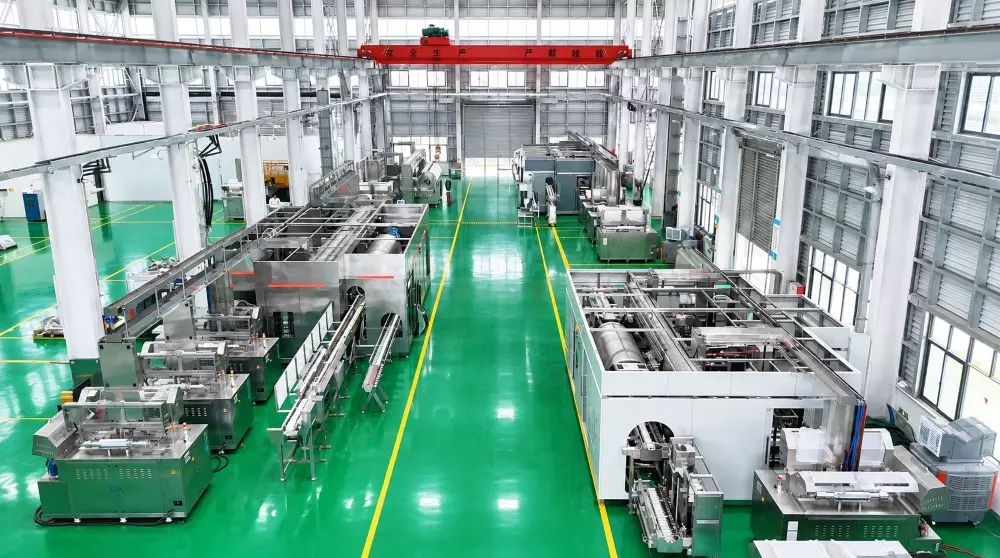
HiLock specializes in the R&D, design, and manufacturing of ultra-high-pressure equipment, providing integrated high pressure processing solutions for the food, beverage, cosmetics, and biopharmaceutical industries.
With capabilities in precision machining, supply chain management, customized equipment design, and integrated system development, HiLock supports customers throughout the entire equipment lifecycle.
Integrated R&D and Manufacturing Capabilities
Our multidisciplinary R&D team works alongside modern production facilities, standardized quality control systems, and dedicated ultra-high-pressure laboratories.
Comprehensive testing capabilities support equipment development, technical verification, and application-specific process evaluation.
Laboratory and Pilot-Scale Application Support
Whether you are conducting initial research or preparing for larger-scale production, HiLock can help evaluate your processing requirements and identify a suitable equipment configuration.
Our technical support includes:
- HPP application and process development.
- Equipment selection and customized design.
- Product sample testing and technical evaluation.
- Pilot-scale process validation.
- Installation, commissioning, and operator training.
- Lifecycle maintenance and technical support.
Customized High Pressure Processing Solutions
Every product has different processing characteristics and production requirements. HiLock focuses on developing practical equipment configurations and integrated solutions based on specific customer applications.
From laboratory experiments to pilot-scale testing and industrial production, our goal is to help customers translate promising processing concepts into reliable manufacturing capabilities.
HiLock has supplied equipment and solutions to customers across more than 10 countries on five continents, including Fortune 500 companies and over ten universities.
We aim to be more than an HPP equipment supplier — we are your long-term high pressure processing technology partner.
Conclusion: Choose HPP Equipment Based on Your Development Stage
Laboratory and pilot-scale HPP equipment serve different but complementary roles in the development of high pressure processing applications.
Laboratory systems are ideal for scientific research, small-batch experiments, and preliminary process development. Pilot-scale systems provide a practical bridge between laboratory results and industrial manufacturing by enabling larger-batch testing and production-oriented process validation.
The right choice depends on your research objectives, product characteristics, processing capacity, investment plans, and long-term production strategy.
Whether you are exploring HPP technology for the first time or preparing to scale up an established product, selecting the right equipment and technical partner can make a significant difference to your project’s success.