
Table of Contents
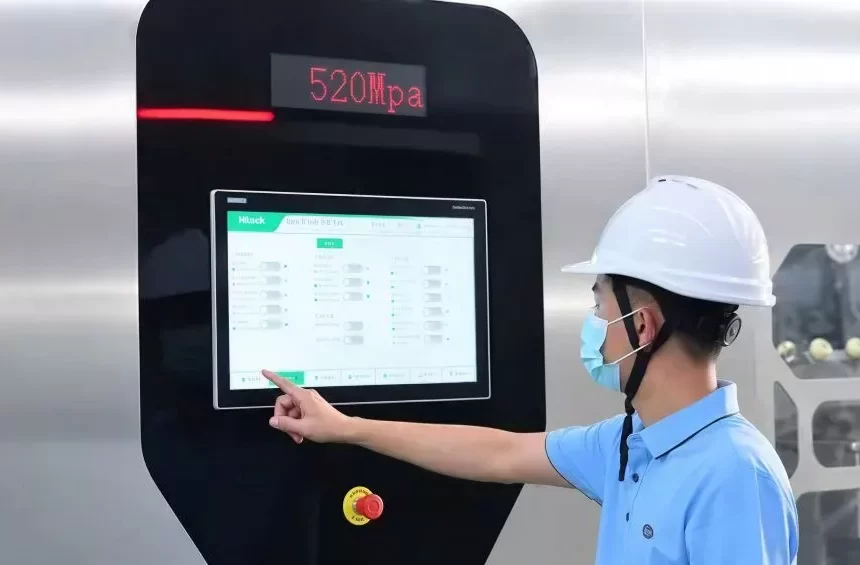
In the high-pressure processing (HPP) industry, one common misconception is that higher pressure always delivers better microbial inactivation and more stable product quality. When upgrading food processing technology or selecting HPP equipment, some manufacturers focus excessively on maximum pressure ratings, assuming that higher pressure automatically means better food safety and longer shelf life.
In practice, excessive pressure can affect food texture, flavor, and appearance while increasing equipment wear and production costs.
HPP pressure alone does not determine processing performance. Effective high-pressure processing depends on the combined effects of pressure, holding time, product composition, initial microbial load, processing temperature, and packaging conditions. Simply increasing pressure without validating the complete process may waste resources and compromise product quality.
Drawing on its experience in high-pressure technology development and industrial food processing, HiLock explores the key principles of HPP pressure, typical processing ranges for different food categories, and the factors manufacturers should consider when selecting HPP equipment.
Why Higher HPP Pressure Is Not Always Better
High-pressure processing uses intense hydrostatic pressure to inactivate susceptible microorganisms and help preserve packaged foods without conventional high-temperature treatment. Depending on the food matrix and processing conditions, HPP can reduce populations of pathogens and spoilage microorganisms while helping retain fresh flavor, color, and nutritional quality.
However, the relationship between pressure and microbial inactivation is not unlimited. Once a suitable processing range has been reached, increasing pressure may deliver diminishing benefits for certain products, while undesirable quality changes and higher operating costs can become more significant.
Three challenges are particularly important.
Food Texture and Quality Changes
Fruit juices, dairy products, fresh produce, and other sensitive foods can respond differently to pressure. Excessive pressure may alter protein structures, affect fruit tissue integrity, or change the texture and appearance of certain products.
Depending on the formulation, these changes may contribute to juice separation, softened fruit tissue, altered milk consistency, or flavor differences. The appropriate HPP pressure should therefore be established through product-specific testing rather than maximum-pressure assumptions.
Higher Equipment Wear and Operating Costs
HPP equipment relies on high-pressure vessels, intensifiers, seals, and other precision-engineered components. Operating at higher pressures increases the mechanical demands placed on these systems.
Selecting a pressure rating beyond actual processing requirements may increase energy consumption, maintenance demands, and component replacement costs. Proper equipment sizing and operation within the manufacturer’s specified limits are essential for reliable production.
Diminishing Returns in Processing Performance
The effectiveness of HPP depends on the target microorganism and the food matrix. Once the required microbial reduction has been achieved under validated conditions, additional pressure may not provide a meaningful improvement in shelf life or product quality.
The objective is not to achieve the highest possible pressure, but to identify the most effective combination of pressure, holding time, and temperature for the target product.
The principle is simple: choose the pressure that meets validated food safety and quality requirements, rather than pursuing maximum pressure without a clear processing objective.
Understanding HPP Pressure Ranges
HPP systems are commonly designed to operate across different pressure ranges. The following classification provides a preliminary framework for understanding pressure levels, not a universal sterilization standard. Actual performance depends on the food, microorganisms, temperature, holding time, and intended shelf life.
Lower Pressure Range: 200–300 MPa
This range may be useful for exploratory trials, selected quality-modification applications, and certain pressure-sensitive processing studies.
Depending on the product, pressure in this range may affect enzyme activity, tissue structure, or other quality characteristics. However, it should not automatically be considered sufficient for commercial pathogen control or extended shelf life.
Manufacturers should validate the effectiveness of the process against the relevant microbial targets before adopting it for production.
Medium-to-High Pressure Range: 300–500 MPa
This range covers many research and commercial HPP applications, with the specific operating point determined by product requirements.
It is commonly investigated for beverages, fruit and vegetable products, sauces, and selected ready-to-eat foods. Depending on the formulation and process conditions, HPP can help control susceptible pathogens and spoilage microorganisms while preserving many fresh-food characteristics.
For food manufacturers, this range can provide a practical starting point for balancing microbial reduction, sensory quality, processing throughput, and operating costs.
High Pressure Range: 500–600 MPa
This range is widely used in commercial HPP applications that require substantial microbial reduction, including many packaged meat, seafood, and ready-to-eat products.
Higher pressure can improve the inactivation of certain microorganisms under suitable conditions. Nevertheless, it does not guarantee complete sterilization or the destruction of bacterial spores.
Product-specific validation remains essential. Meat proteins, seafood tissue, and other food components can also undergo pressure-induced changes, so the highest available pressure is not necessarily the best option for every formulation.
HPP Pressure Parameters for Different Food Categories
There is no single HPP pressure setting suitable for every food. Differences in pH, water activity, composition, packaging, initial microbial load, and storage conditions can substantially affect processing outcomes.
The ranges below are preliminary trial ranges for process development, not universally validated production recipes. They should be confirmed through laboratory testing, microbial challenge studies where appropriate, and shelf-life validation.
Juices and Functional Beverages: 350–450 MPa as an Initial Trial Range
Fruit juices and functional beverages are often developed with a focus on preserving fresh flavor, natural color, and heat-sensitive nutrients.
A pressure range of 350–450 MPa can serve as an exploratory starting point for selected formulations. A holding time of approximately 3–5 minutes may be evaluated during initial trials, depending on the target microorganisms and product characteristics.
The final process must demonstrate the required microbial reduction and shelf life. Pressure treatment does not guarantee that all pathogens will be eliminated, and the effects on cloud stability, pulp distribution, acidity, and sensory quality should be assessed.
Increasing pressure above 500 MPa should be considered only when the product-specific benefits justify the additional processing intensity.
Milk and Dairy Products: 400–450 MPa as an Initial Trial Range
Milk contains proteins, fat, minerals, and heat-sensitive components that can respond differently to pressure. Its behavior under HPP is therefore more complex than simply increasing pressure until a target microbial reduction is reached.
For selected dairy formulations, 400–450 MPa may be investigated during process development. Holding time, temperature, microbial targets, and the desired product characteristics must be evaluated together.
Pressure can alter milk protein interactions and other functional properties. Manufacturers should therefore assess texture, viscosity, flavor, protein functionality, and refrigerated shelf life alongside microbial performance.
Important: HPP-treated milk should not automatically be described as commercially sterile or equivalent to conventionally pasteurized milk. Regulatory requirements and process validation must be addressed for the intended market.
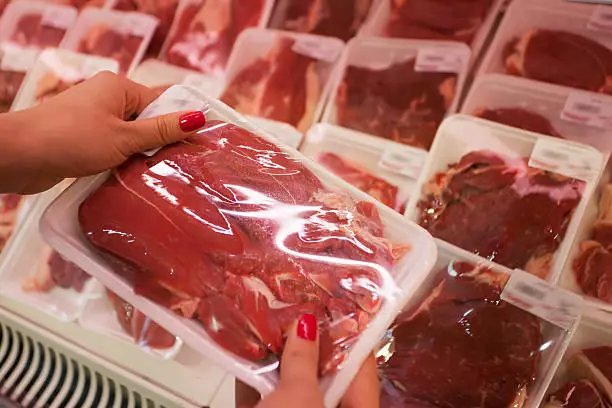
Meat, Seafood, and Ready-to-Eat Foods: 500–550 MPa as an Initial Trial Range
Packaged meats, seafood, and ready-to-eat foods are important applications for commercial HPP equipment. These products may require substantial reductions in relevant foodborne pathogens and spoilage microorganisms.
A range of 500–550 MPa is a common starting point for evaluating selected products, with holding times established according to the food matrix, microbial targets, and intended shelf life.
HPP can help reduce the risks associated with susceptible microorganisms and extend refrigerated shelf life under suitable conditions. It can also affect meat color, protein structure, texture, seafood appearance, and water-holding capacity.
Because bacterial spores may survive HPP, the process should not be assumed to produce shelf-stable foods without additional validated controls. Refrigeration, formulation, packaging, and storage conditions remain important safety considerations.
Pet Food and High-Protein Prepared Foods: 550–600 MPa for Selected Applications
Some packaged pet foods and high-protein prepared foods may benefit from evaluation at higher pressure levels, particularly when microbial reduction and refrigerated shelf life are key objectives.
Pressures of 550–600 MPa can be investigated for suitable formulations, but the final operating conditions must be established through testing. High protein or fat content does not, by itself, prove that a product requires higher pressure.
Manufacturers should evaluate microbial safety, packaging compatibility, nutrient stability, texture, and storage performance. HPP also does not automatically eliminate the need for preservatives, refrigeration, or other safety controls.
For pet food applications, the process must be validated against the relevant microbiological and regulatory requirements for the target market.
Beyond Pressure: Precision Control and Process Optimization
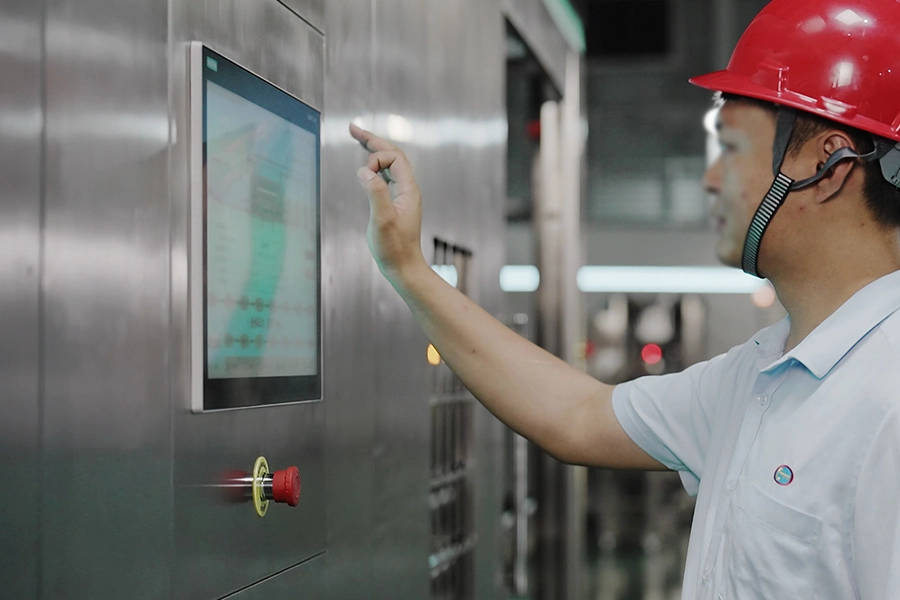
In industrial production, choosing a nominal pressure is only one part of the process. Reliable results also depend on pressure accuracy, holding-time control, temperature management, equipment condition, and consistent loading and unloading operations.
For manufacturers upgrading their food sterilization processes, three factors deserve particular attention.
Accurate Pressure Control
A reliable HPP system should deliver repeatable pressure cycles within its specified operating tolerances. Stable control helps manufacturers reproduce validated processing conditions across production batches.
HiLock develops high-pressure processing systems designed to support controlled operation and consistent industrial processing. Equipment selection should take into account the required pressure range, vessel capacity, production throughput, control functions, and maintenance requirements.
Customized Processing Parameters
Different formulations may require different pressure and holding-time combinations, even when they belong to the same food category.
HiLock works with food manufacturers to evaluate product composition, packaging format, target microbial reduction, sensory requirements, and production capacity. These factors help establish a practical processing window rather than relying on a single preset recipe.
Temperature should also be considered because it can influence both microbial inactivation and product quality. Initial and final product temperatures, as well as temperature changes during compression and decompression, may affect the outcome.
Laboratory Trials Before Full-Scale Production
Laboratory testing is an important step before transferring a process to a commercial HPP line.
By comparing multiple pressure levels and holding times, manufacturers can assess microbial performance, texture, flavor, appearance, and shelf-life characteristics. The selected process should then be validated under conditions representative of commercial production.
HiLock supports customers with product trials, parameter evaluation, equipment selection, and process development to help reduce scale-up uncertainty and improve production readiness.
How to Select the Right HPP Equipment for Your Food Products
Selecting HPP equipment involves more than choosing a maximum pressure rating. Manufacturers should consider the following factors.
- Product characteristics: Evaluate pH, water activity, composition, viscosity, structure, and sensitivity to pressure.
- Microbial targets: Identify the relevant pathogens and spoilage organisms, then define the required reduction and validation criteria.
- Processing parameters: Establish the pressure, holding time, and temperature combination required for the specific product.
- Production capacity: Match vessel volume, cycle time, loading efficiency, and daily throughput to actual production demand.
- Packaging compatibility: Confirm that the packaging can withstand compression and decompression without leakage or loss of integrity.
- Equipment reliability: Review pressure-control performance, vessel design, safety systems, maintenance requirements, and available technical support.
- Regulatory compliance: Confirm that the process meets the applicable food safety requirements in the intended market.
HiLock offers HPP equipment and process support for different stages of food processing, from laboratory evaluation to industrial-scale production. With customized equipment configurations and product-specific process development, manufacturers can work toward a practical balance between food safety, quality retention, and production efficiency.
Conclusion: Optimize HPP Pressure, Not Just Maximum Pressure
The value of HPP technology lies not in achieving the highest possible pressure, but in establishing a validated process that meets food safety requirements while preserving the desired product characteristics.
Excessive pressure may increase operating costs or cause undesirable quality changes, while insufficient pressure or holding time may fail to achieve the required microbial reduction. The correct processing conditions must be determined for each product and its intended storage conditions.
As demand grows for high-quality, minimally processed foods and clean-label products, precise HPP process development is becoming increasingly important. HiLock combines high-pressure equipment engineering with application testing and customized process support to help food manufacturers evaluate suitable processing conditions and prepare for reliable commercial production.
Looking for the right HPP pressure and equipment for your product? Contact HiLock to discuss your application, evaluate processing options, and explore a product-specific HPP solution.
The right pressure is not necessarily the highest one. It is the pressure that delivers validated food safety, consistent quality, and commercially practical performance.