
Table of Contents
Clean-label formulations, preservative-free products, natural flavor, and better nutrient retention have become increasingly important in the global food and beverage industry. As consumers look for fresher products with simpler ingredient lists, food manufacturers are exploring alternatives to conventional thermal processing and chemical preservation.
High-pressure cold sterilization, commonly associated with High-Pressure Processing (HPP), is one of the leading non-thermal processing technologies being adopted for these applications. By applying high hydrostatic pressure to sealed food products, HPP can reduce many vegetative microorganisms while helping preserve the fresh sensory characteristics of foods.
For food manufacturers, however, adopting HPP is not only about purchasing a high-pressure machine. Industrial-scale production requires reliable pressure vessels, stable intensification systems, automated process control, responsive technical support, and application-specific process development.
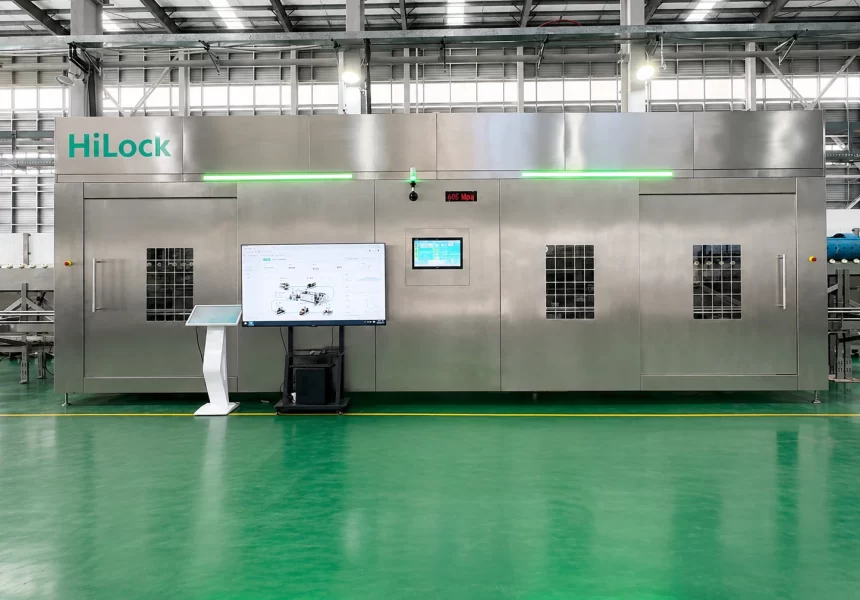
HiLock specializes in the R&D, design, and manufacturing of ultra-high-pressure equipment and provides integrated application solutions for food, beverage, cosmetics, and biopharmaceutical industries. With capabilities in precision machining, stable supply chain management, and customized non-standard solutions, HiLock supports customers from process development and equipment customization to installation and lifecycle maintenance.
This article explains the working principles of high-pressure cold sterilization, its advantages for clean-label production, key application areas, and the features to consider when selecting industrial high pressure processing equipment.
Why Conventional Food Processing Faces New Challenges
Traditional food preservation technologies remain widely used, but manufacturers increasingly need to balance microbial safety, shelf life, product quality, formulation requirements, and production costs.
Thermal Processing Can Affect Fresh Food Quality
Pasteurization and ultra-high-temperature (UHT) processing rely on heat to control microorganisms. Depending on the product and processing conditions, thermal treatment can affect heat-sensitive nutrients, volatile flavor compounds, color, texture, and other quality attributes.
For fresh juices, for example, excessive heat exposure may alter the fresh flavor profile. Similar challenges can occur with heat-sensitive fruits, vegetables, sauces, and other products.
Preservatives Can Conflict With Clean-Label Positioning
Preservatives such as sorbates and benzoates can contribute to microbial control and shelf-life extension in appropriate formulations. However, some brands are seeking to reduce or eliminate chemical preservatives as part of a clean-label product strategy.
This creates demand for physical preservation technologies that can improve microbial stability without relying solely on chemical additives.
Aseptic Production Can Require Significant Infrastructure
Aseptic processing and filling can provide excellent microbial control, but they require sophisticated filling systems, hygienic design, environmental controls, and strict operational procedures.
For some product categories, HPP provides an alternative approach by allowing the packaged product to undergo high-pressure processing after sealing.
Short Shelf Life Limits Distribution
Fresh beverages, ready-to-eat foods, prepared meals, seafood, and other refrigerated products can have relatively short shelf lives. Limited shelf life may restrict distribution distance and increase inventory and food waste risks.
A suitable HPP process can extend refrigerated shelf life for many products, allowing manufacturers to explore broader distribution channels.
What Is High-Pressure Cold Sterilization?
High-pressure cold sterilization is a term commonly used to describe the application of high hydrostatic pressure for microbial reduction without relying on conventional high-temperature treatment.
The underlying technology is known as High-Pressure Processing (HPP) or High-Pressure Processing technology.
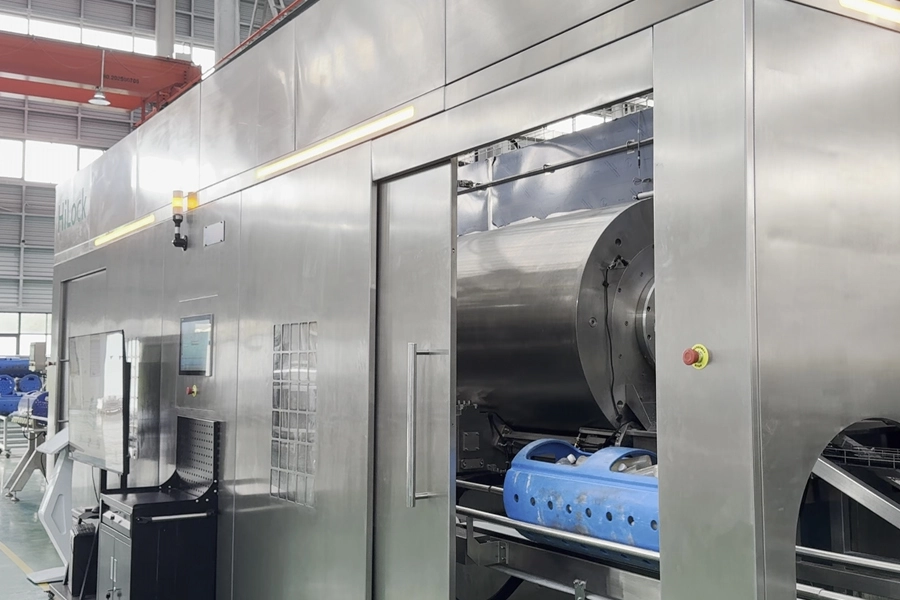
During HPP, packaged food is placed inside a pressure vessel filled with water. A high-pressure intensification system raises the pressure, typically within a range of approximately 300–600 MPa, depending on the product, packaging, target microorganisms, and validated process requirements.
Because water transmits hydrostatic pressure uniformly, pressure reaches the product from essentially all directions. Unlike conventional heating, HPP does not depend primarily on heat transfer from the surface toward the center of the product.
How Does HPP Work?
The basic HPP process can be summarized as follows:
- Product preparation – Food or beverage products are prepared according to the required formulation and hygiene procedures.
- Packaging – The product is filled into pressure-compatible packaging and sealed.
- Loading – Sealed products are placed into the HPP pressure vessel.
- Pressurization – Water is used as the pressure-transmitting medium and pressure is increased to the selected processing level.
- Holding – The product remains at the target pressure for a defined holding time.
- Depressurization – Pressure is released after the validated processing cycle is completed.
- Unloading and cold storage – Processed products are unloaded and handled according to the validated post-process requirements.
The exact pressure, holding time, temperature, packaging format, and other process parameters must be developed and validated for each product.
Why Does HPP Preserve Fresh Product Characteristics?
One of the fundamental differences between HPP and thermal processing is the physical mechanism used to control microorganisms.
High hydrostatic pressure can affect cellular structures, membrane functions, and certain protein structures of microorganisms. At the same time, many small molecules and covalent chemical bonds are less affected under appropriately controlled HPP conditions.
As a result, HPP can help retain many characteristics associated with fresh foods, including:
- Natural flavor and aroma
- Fresh color
- Texture
- Heat-sensitive nutrients
- Vitamins
- Certain bioactive compounds
This is why HPP is often described as a non-thermal food processing technology.
However, HPP does not guarantee complete preservation of every nutrient or sensory attribute, and its effects vary according to product formulation and process conditions. Product-specific testing remains essential.
Five Key Advantages of High-Pressure Cold Sterilization
1. Non-Thermal Processing for Fresh Flavor
HPP can process many products at relatively low temperatures compared with conventional thermal treatment. This helps minimize heat-related changes and makes the technology particularly attractive for products where fresh sensory characteristics are important.
Typical applications include:
- NFC juices
- Fruit and vegetable beverages
- Cold-brew beverages
- Herbal drinks
- Fruit and vegetable purees
- Fresh sauces
2. Supports Clean-Label and Preservative-Reduced Formulations
HPP uses pressure rather than relying primarily on chemical preservatives for microbial reduction.
This can support product development strategies focused on:
- Clean labels
- Preservative reduction
- Fresh positioning
- Natural ingredients
- Minimal processing
HPP should therefore be considered as one component of a broader food safety and formulation strategy rather than as a universal replacement for preservatives in every product.
3. Processing After Packaging Helps Reduce Post-Process Contamination Risks
A major characteristic of commercial HPP is that the product is typically packaged before pressure processing.
Once the sealed package enters the pressure vessel, the food is processed without being directly exposed to the external processing environment. This can help reduce opportunities for post-process contamination compared with processes where food is exposed after thermal treatment.
Packaging compatibility is nevertheless critical. The package must tolerate compression and recover appropriately after depressurization.
4. Uniform Pressure Distribution
Hydrostatic pressure is transmitted through water and acts throughout the product rather than being transferred from a hot surface inward.
This makes HPP particularly suitable for packaged foods with different shapes and sizes, provided the packaging and product formulation are compatible with the process.
5. Potentially Extends Refrigerated Shelf Life
For many refrigerated foods, validated HPP treatment can significantly extend shelf life compared with untreated products.
Longer shelf life can provide manufacturers with opportunities to:
- Expand distribution areas
- Reduce product waste
- Improve inventory flexibility
- Support retail distribution
- Increase production planning efficiency
Actual shelf-life extension varies significantly by product, packaging, initial microbial load, storage conditions, and validated process parameters.
Main Applications of HPP Technology
HPP is most established in products that contain sufficient moisture and can be packaged in pressure-compatible materials.
Beverages
HPP is widely considered for products such as:
- NFC fruit juices
- Vegetable juices
- Juice blends
- Herbal beverages
- Cold-brew beverages
- Smoothies
For beverage manufacturers, the combination of fresh flavor, refrigerated shelf life, and clean-label positioning can make HPP particularly attractive.
Ready-to-Eat Foods and Prepared Meals
HPP can be applied to various ready-to-eat and prepared food products, including:
- Ready meals
- Prepared foods
- Deli products
- Cooked meat products
- Sauces and dips
The technology can support microbial control while helping maintain the sensory characteristics of refrigerated foods.
Meat and Seafood
HPP is also used in selected meat and seafood applications, including:
- Processed meat products
- Ready-to-eat meat
- Seafood
- Fish products
- Shellfish products
Process parameters must be developed according to the specific product, target microorganisms, packaging, and applicable food safety requirements.
Dairy and Fresh Dairy Products
Selected dairy applications include:
- Yogurt
- Fresh cheese
- Dairy-based products
HPP process development should account for formulation, protein structure, fat content, packaging, and desired product characteristics.
Baby Food and Fruit & Vegetable Purees
HPP can be considered for selected baby food and puree applications where manufacturers seek to balance microbial safety with fresh product characteristics.
Pet Food
HPP is also used in certain pet food applications, including refrigerated raw pet food and wet food products.
Product-Specific HPP Process Development Is Essential
There is no single HPP recipe suitable for every food product.
The optimum processing conditions depend on factors such as:
- Product pH
- Water activity
- Microbial load
- Target microorganisms
- Product composition
- Packaging material
- Package geometry
- Processing pressure
- Holding time
- Processing temperature
- Refrigerated storage conditions
For this reason, purchasing equipment before validating the product process can create unnecessary technical and commercial risks.
HiLock provides HPP process development and application support, including sample testing and process verification. Customers can evaluate product compatibility and processing performance before moving toward industrial-scale equipment deployment.
How to Select High Pressure Processing Equipment for Industrial Production
As food manufacturers move from laboratory testing to commercial production, equipment selection becomes increasingly important.
Chamber Volume and Production Capacity
Chamber size directly affects batch capacity and production efficiency.
For large-scale food production, a 500L-class HPP system can provide substantially greater batch capacity than laboratory or pilot-scale equipment.
The correct equipment size should be determined according to:
- Target annual production
- Product package size
- Number of packages per cycle
- Required production hours
- Loading and unloading method
- Expected utilization rate
Pressure Stability and Process Control
Industrial HPP equipment should provide reliable pressure control and repeatable processing cycles.
A digital control system can allow operators to manage:
- Pressure
- Holding time
- Processing temperature
- Cycle status
- Alarm conditions
- Product recipes
Recipe management can also improve consistency when multiple products are processed on the same HPP production line.
Core Component Manufacturing Capability
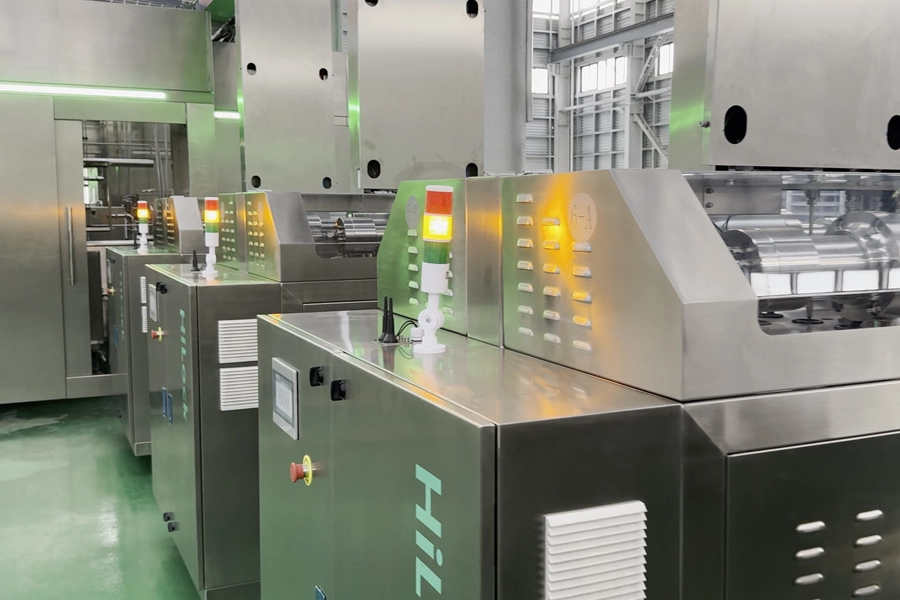
The pressure vessel, intensifier system, high-pressure sealing components, valves, and hydraulic systems are critical to equipment performance.
For industrial users, the supplier’s engineering and manufacturing capabilities can be as important as the equipment specifications themselves.
HiLock combines ultra-high-pressure equipment development with precision machining, supply-chain capabilities, and in-house manufacturing of key high-pressure components.
Automation and Production-Line Integration
Modern HPP systems can be integrated with upstream and downstream production operations.
Depending on factory requirements, HPP equipment can be designed to connect with:
- Packaging lines
- Conveying systems
- Loading systems
- Unloading systems
- Sorting systems
- Cold storage operations
Higher automation can reduce manual handling and improve production consistency.
After-Sales Service and Spare Parts
HPP equipment operates under extremely high pressure, making maintenance and spare-parts availability critical for commercial production.
Before purchasing equipment, manufacturers should evaluate:
- Spare-parts availability
- Technical response time
- Remote troubleshooting capabilities
- Preventive maintenance
- Local service support
- Core-component replacement
- Equipment lifecycle support
A lower initial equipment price does not necessarily mean a lower total cost of ownership.
HiLock 525L HPP Equipment for Industrial-Scale Production
HiLock’s 525L HPP system is designed for large-scale food processing and high-throughput production applications.
The system combines a large-volume pressure chamber with high-pressure processing technology and integrated control systems to support continuous industrial production.
525L Pressure Chamber for High-Volume Production
The 525L chamber provides substantial processing capacity per cycle, making it suitable for:
- Large food manufacturers
- Beverage producers
- Central kitchens
- HPP contract processing companies
- Multi-product production facilities
Higher batch capacity can help distribute equipment, labor, and energy costs across more products.
Up to 600 MPa Processing Pressure
HiLock 525L HPP equipment supports processing pressures up to 600 MPa, allowing manufacturers to develop different HPP processes according to their product requirements.
Pressure and holding parameters can be adjusted through the digital control system, while recipe management supports repeatable production across different batches.
In-House Development of Core High-Pressure Components
HiLock develops and manufactures key components used in its ultra-high-pressure systems.
This includes capabilities covering:
- High-pressure vessel engineering
- Intensifier systems
- High-pressure sealing components
- Hydraulic systems
- Precision machining
- System assembly
Greater control over core components can support spare-parts availability and long-term equipment maintenance.
Integrated Automation
The HPP system can automate key process stages, including:
Water filling → Pressurization → Holding → Depressurization → Drainage
Depending on the factory layout and automation requirements, the system can also be integrated with packaging, conveying, loading, unloading, and downstream production equipment.
Multiple Safety Protection Systems
Industrial HPP equipment requires comprehensive safety engineering.
HiLock systems can incorporate multiple protection and monitoring functions, including:
- Pressure monitoring
- Pressure over-limit protection
- Temperature monitoring
- Door safety interlocks
- Hydraulic system alarms
- Automated abnormal-condition shutdown
These functions are designed to support safe and reliable operation under ultra-high-pressure working conditions.
Who Should Consider Industrial HPP Equipment?
Industrial HPP equipment may be suitable for companies with:
- High-volume NFC juice production
- Fresh beverage production
- Ready-to-eat food production
- Prepared meal manufacturing
- Meat and seafood processing
- Central kitchen operations
- HPP contract processing services
- Multiple refrigerated product lines
For companies processing several product categories, flexible recipe management and process development capabilities can be particularly valuable.
HiLock: Integrated High-Pressure Processing Solutions
Selecting an HPP machine is only one part of implementing a successful industrial HPP project.
HiLock provides integrated high-pressure processing solutions covering the equipment and application requirements of industrial customers.
Our capabilities include:
- HPP process development
- Sample testing
- Equipment customization
- Industrial HPP equipment design
- Precision machining
- Installation and commissioning
- Operator training
- Technical support
- Spare-parts supply
- Lifecycle maintenance
HiLock’s multidisciplinary R&D team works with modern production lines, standardized quality-control systems, a dedicated ultra-high-pressure laboratory, and comprehensive testing systems.
Our equipment serves applications across food, beverage, cosmetics, and biopharmaceutical industries, supporting Fortune 500 companies and more than ten universities worldwide. HiLock products are supplied to customers in more than 10 countries across five continents.
High-Pressure Cold Sterilization vs. Traditional Thermal Processing
The choice between HPP and thermal processing should ultimately depend on product characteristics, safety objectives, regulatory requirements, production scale, and total cost.
| Factor | HPP / High-Pressure Cold Processing | Thermal Processing |
|---|---|---|
| Primary processing mechanism | High hydrostatic pressure | Heat |
| Typical processing temperature | Relatively low | Elevated |
| Fresh flavor retention | Generally favorable for suitable products | Can be affected by heat |
| Nutrient retention | Generally favorable for heat-sensitive components | Some heat-sensitive nutrients may be reduced |
| Preservative reduction | Can support clean-label formulations | Depends on formulation and process |
| Processing after packaging | Yes | Depends on process |
| Packaging requirements | Pressure-compatible packaging | Thermal-process-compatible packaging |
| Typical applications | Juices, RTE foods, seafood, sauces, selected meat and dairy products | Wide range of shelf-stable and refrigerated foods |
| Shelf-life effect | Product- and process-dependent | Product- and process-dependent |
Neither technology is universally suitable for every product. Food manufacturers should select a process based on validated microbial, quality, regulatory, packaging, and economic requirements.
Conclusion: Building a Scalable HPP Production Strategy
High-pressure cold sterilization, when used to describe HPP-based non-thermal microbial reduction, provides food manufacturers with a technology for developing fresh-tasting, clean-label, refrigerated products while reducing reliance on conventional thermal processing for suitable applications.
However, successful HPP commercialization requires more than pressure capacity alone. Product formulation, packaging, process validation, equipment reliability, automation, maintenance, and technical support all influence the long-term performance of an HPP production line.
For manufacturers moving from laboratory trials to industrial production, choosing the right high pressure processing equipment and developing a validated process are critical steps.
HiLock combines ultra-high-pressure equipment R&D, precision manufacturing, application testing, equipment customization, installation, and lifecycle service to provide integrated high-pressure processing solutions for global food, beverage, cosmetics, and biopharmaceutical customers.