
Table of Contents
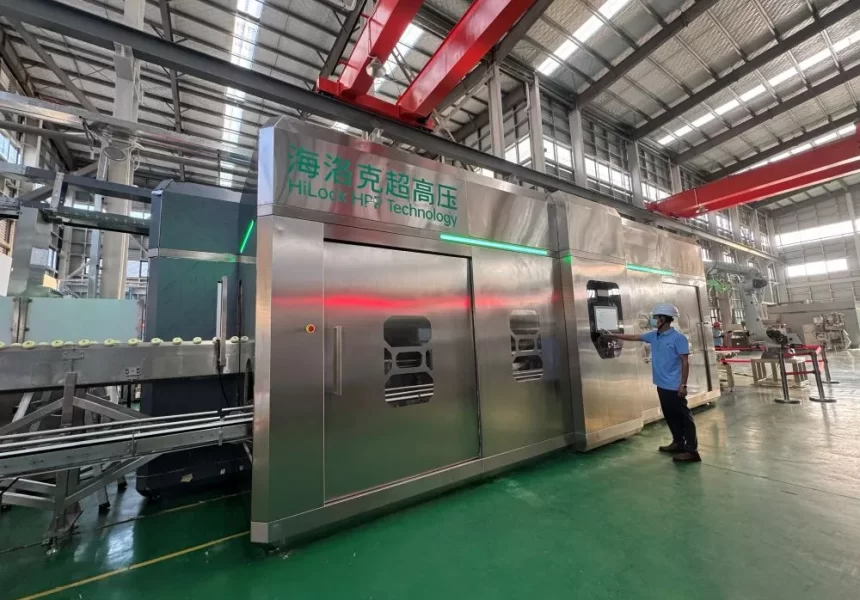
As food manufacturers, beverage producers, and other industrial processors face increasing demands for product safety, quality consistency, and clean-label formulations, High Pressure Processing (HPP) has become an important non-thermal processing technology. For businesses seeking to scale their operations, selecting the right HPP machine is a strategic decision that affects production efficiency, product quality, operating costs, and long-term competitiveness.
A 600 MPa HPP machine is designed to apply ultra-high hydrostatic pressure to packaged products, helping inactivate many vegetative microorganisms while preserving many sensory and nutritional characteristics better than some conventional thermal treatments. However, choosing equipment for industrial production involves much more than comparing maximum pressure ratings.
Buyers must evaluate processing capacity, pressure vessel design, automation, product compatibility, safety systems, factory integration, and after-sales support. The right equipment should meet current production requirements while providing a reliable foundation for future expansion.
This guide explains the key factors to consider when selecting a 600 MPa HPP machine and how to identify high-pressure processing solutions that support your specific industrial application.
1. Understand What a 600 MPa HPP Machine Can Do
Before evaluating equipment suppliers, it is important to understand the role of pressure in HPP processing and what a 600 MPa operating level means for your application.
HPP uses water as a pressure-transmission medium to apply relatively uniform hydrostatic pressure to products inside a specially engineered pressure vessel. Unlike conventional heat-based pasteurization, the process does not rely primarily on high temperatures to inactivate microorganisms.
For many packaged foods, pressure levels around 600 MPa are commonly used to support microbial inactivation while helping retain fresh-like flavor, color, and texture. Actual results depend on the product formulation, processing temperature, pressure holding time, target microorganisms, packaging, and other process conditions.
Key advantages of HPP technology
Non-thermal processing: HPP can reduce reliance on conventional thermal treatments for suitable products, helping preserve desirable sensory characteristics.
Microbial safety: Properly validated HPP processes can inactivate many vegetative foodborne pathogens, spoilage bacteria, yeasts, and molds. HPP is not a universal sterilization method and does not reliably destroy all bacterial spores under typical commercial food-processing conditions.
Clean-label product development: Because pressure processing can reduce the need for certain chemical preservatives in suitable formulations, it can support clean-label strategies. The formulation and shelf-life implications must still be validated.
Extended refrigerated shelf life: When combined with appropriate formulation, hygienic manufacturing, packaging, and cold-chain management, HPP can extend the refrigerated shelf life of many products.
Broad application potential: HPP is used for selected juices, beverages, ready-to-eat foods, meat products, seafood, dips, sauces, and other pressure-compatible products.
A 600 MPa rating alone, however, does not guarantee that a machine is suitable for every product or application. Buyers should evaluate the complete processing system and verify performance through product-specific trials.
2. Define Your Industrial Production Requirements
The first step in selecting an HPP machine is to determine what your production line actually needs. A machine that performs well in a laboratory or pilot facility may not provide the throughput, automation, or operational reliability required in a commercial plant.
Calculate the required processing capacity
Industrial HPP capacity depends on several variables:
- Pressure vessel working volume
- Basket dimensions and usable loading space
- Number and size of packages per cycle
- Loading and unloading time
- Pressure ramp-up, holding, and decompression time
- Number of production cycles per shift
- Planned operating hours and equipment availability
A practical capacity estimate can be expressed as:
Hourly output = Product quantity per cycle × Completed cycles per hour
For example, if a system processes 300 kg per cycle and completes three cycles per hour, its theoretical throughput is 900 kg per hour. Actual production may be lower because of loading variations, sanitation, planned maintenance, product changeovers, and downtime.
These figures are illustrative rather than specifications for a particular machine. Always request a capacity calculation based on your actual package dimensions, product density, basket configuration, and validated cycle time.
Consider current and future demand
When planning industrial production, evaluate both your immediate output target and your expected growth over the next several years.
Ask yourself:
- What is the daily and annual production target?
- How many shifts will the facility operate?
- Will several products share the same machine?
- Are seasonal demand fluctuations significant?
- Is additional capacity likely to be needed in the future?
The best HPP machine is not necessarily the one with the largest pressure vessel. It is the system that delivers the right balance of throughput, product flexibility, utilization, and total operating cost.
3. Evaluate the Pressure Vessel and Core Engineering
The pressure vessel is one of the most critical components of an industrial HPP machine. It must withstand repeated high-pressure cycles while maintaining structural integrity and supporting safe, reliable operation.
When comparing 600 MPa equipment, review the following engineering characteristics.
Pressure rating and operating range
Confirm the machine’s rated working pressure, permitted operating range, and intended duty cycle. A maximum rating of 600 MPa should be supported by appropriate engineering documentation and operating procedures.
Also clarify whether the equipment can accommodate different pressure settings when required by validated product recipes. Flexible pressure control may be useful for processors handling multiple product categories or developing new applications.
Pressure vessel materials and manufacturing quality
Ask the manufacturer about:
- Pressure vessel design and manufacturing standards
- Material traceability and relevant material certifications
- Manufacturing and inspection procedures
- Non-destructive testing and inspection records, where applicable
- Fatigue considerations under repeated pressure cycling
- Scheduled inspection and maintenance requirements
High-pressure equipment operates under demanding mechanical conditions. Material selection, precision machining, manufacturing consistency, and documented quality assurance all contribute to equipment reliability.
Intensifier and high-pressure system
The intensifier generates the pressure required for processing. Its design affects pressure generation, control, cycle performance, maintenance requirements, and long-term reliability.
Evaluate the manufacturer’s experience with high-pressure components, sealing systems, hydraulic systems, pressure regulation, and replacement parts availability.
Ask for documented information about expected maintenance intervals, service procedures, and component replacement costs rather than relying solely on general claims about durability.
4. Compare Automation and Process Control Capabilities
For industrial production, a high-performance pressure vessel is only part of the solution. Reliable process control is equally important.
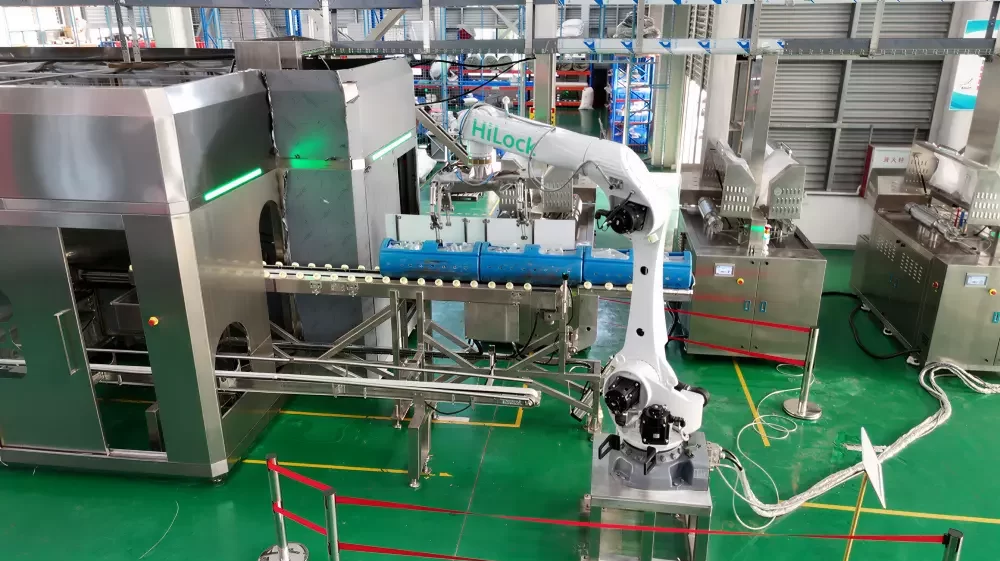
A modern HPP machine should provide operators with a clear interface for setting process parameters, monitoring machine status, and reviewing cycle records.
Essential control functions
Depending on the application and system configuration, useful functions include:
- Programmable pressure and holding-time settings
- Real-time pressure monitoring
- Temperature monitoring where required
- Automated pressure generation and decompression
- Recipe management for different products
- Alarm management and fault diagnostics
- Cycle history and production record storage
- Operator access control and parameter management
Automation can reduce routine manual intervention, improve repeatability, and simplify operator training. However, automation does not replace process validation, equipment maintenance, or appropriate operating procedures.
Data traceability and integration
Food and pharmaceutical-related manufacturing environments may require detailed production records, depending on the product and applicable regulations.
Discuss whether the system can support batch identification, process data export, supervisory control integration, and communication with existing production management systems.
If remote monitoring or technical support is offered, clarify how access is controlled, what data can be accessed, and how cybersecurity and production confidentiality are protected.
A well-designed control system should make it easier to operate, monitor, maintain, and document the process without adding unnecessary complexity to the production workflow.
5. Verify Product Compatibility and Packaging Requirements
An industrial HPP machine must be compatible with the products and packaging formats that will be processed.
Because HPP transmits pressure through water, products and their packaging must tolerate the pressure cycle without unacceptable changes to package integrity or product quality.
Packaging compatibility
HPP is commonly applied to products packaged in flexible plastic containers, pouches, bottles, and other pressure-compatible packaging formats.
Before purchasing equipment, evaluate:
- Package material and wall structure
- Seal integrity and closure design
- Package flexibility and compression behavior
- Product headspace and internal gas content
- Resistance to leakage, deformation, or seal failure
- Basket loading and unloading requirements
Rigid containers, glass packaging, metal containers, and certain composite structures may require special evaluation and should not be assumed compatible with conventional HPP processing.
Conduct packaging trials under representative processing conditions before committing to a commercial configuration.
Product-specific process development
Different formulations can respond differently to pressure. Acidity, water activity, fat content, viscosity, particulates, and other product characteristics may influence microbial inactivation and quality outcomes.
For example, an HPP process developed for an acidic fruit juice may not be suitable for a low-acid ready-to-eat meat product. Each product category requires its own process assessment and, where applicable, validation against relevant safety requirements.
An experienced equipment supplier should be able to support process trials and help define the operating parameters needed for your application.
6. Assess Hygiene, Cleaning, and Factory Integration
Industrial HPP equipment must fit into the daily realities of a production facility. A machine that meets pressure requirements but creates bottlenecks during cleaning or material handling may reduce overall plant efficiency.
Hygienic design and cleanability
For food and beverage applications, examine the materials and design features that come into contact with the product or process water.
Important considerations include:
- Corrosion-resistant materials appropriate to the application
- Accessible surfaces and practical cleaning procedures
- Process-water quality and management
- Basket handling and drainage
- Preventive maintenance access
- Applicable hygienic design requirements
The equipment configuration should align with the plant’s sanitation procedures and relevant industry standards. Buyers should request documentation instead of assuming that every stainless-steel component or food-grade material automatically makes the complete system compliant.
Production-line integration
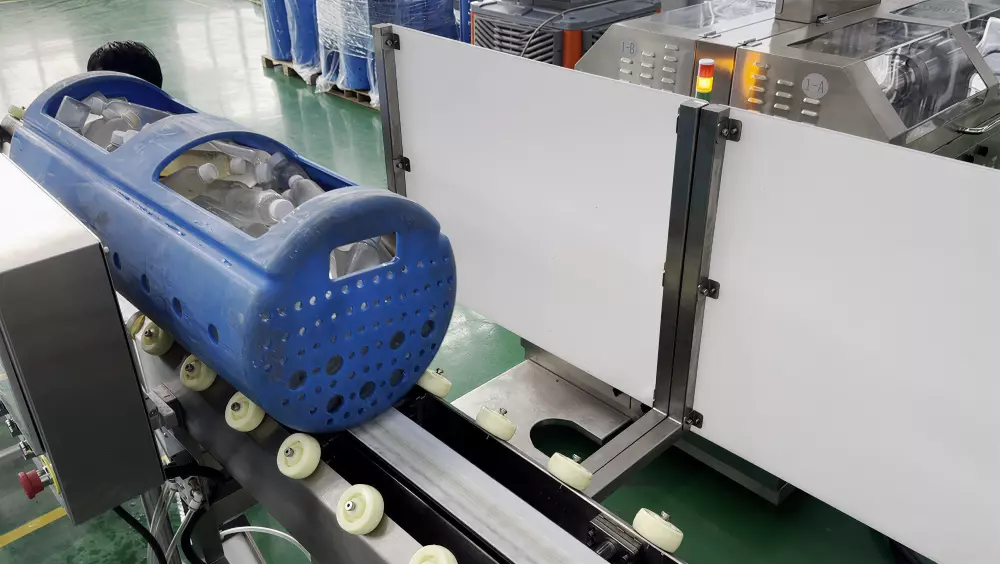
Consider the full workflow, including package preparation, basket loading, pressure processing, unloading, drying where necessary, secondary packaging, and refrigerated storage.
Depending on the facility, the HPP machine may operate as a standalone batch-processing unit or form part of a more automated production line.
Review the required floor space, utilities, foundation requirements, drainage, process-water supply, material-handling equipment, and operator access.
A site assessment before equipment installation can identify constraints early and reduce the risk of costly modifications later.
7. Make Safety and Compliance a Purchasing Priority
A 600 MPa HPP machine operates at extremely high pressure. Safety must therefore be considered from the initial equipment specification through installation, commissioning, operation, and maintenance.
Evaluate the machine’s safety architecture
Ask suppliers to explain and document relevant safety features, such as:
- Pressure vessel protection and monitoring
- Door or closure interlocking systems
- Pressure-release verification
- Emergency-stop functions
- Abnormal-pressure and fault alarms
- Safe access for inspection and maintenance
- Lockout and isolation procedures
- Operator training and emergency response instructions
The specific safeguards depend on the equipment design and applicable requirements. Request the risk assessment, operating manual, maintenance procedures, and relevant inspection or conformity documentation.
Confirm applicable regulations
Compliance requirements vary according to the installation location, equipment design, and intended application.
Before purchasing, establish which pressure equipment regulations, machinery safety requirements, electrical standards, and local inspection rules apply to the proposed installation.
For food processing, also assess the regulatory requirements governing the product, process validation, labeling, and shelf-life claims in each target market.
A reliable supplier should help identify the relevant documentation and responsibilities. Final compliance should be confirmed with qualified professionals and the appropriate authorities where necessary.
8. Compare Total Cost of Ownership, Not Just Purchase Price
The initial purchase price is only one part of the investment in an industrial HPP machine.
A lower-cost machine may become more expensive over time if it has higher maintenance requirements, limited throughput, inadequate service support, or expensive replacement components.
Key cost categories
Capital investment: Equipment price, optional automation, installation, engineering, and factory modifications.
Utilities: Electricity, water, cooling, and other services required by the specific system configuration.
Labor: Operators, loading and unloading, quality assurance, sanitation, and maintenance personnel.
Consumables and replacement parts: Seals, wear components, filters, lubricants, and other items specified by the manufacturer.
Maintenance and downtime: Preventive maintenance, inspections, repairs, spare-parts availability, and lost production during equipment outages.
Process development: Product trials, packaging evaluation, process validation, and technical consulting.
Lifecycle support: Training, troubleshooting, software or control-system support, and long-term service arrangements.
Evaluate the return on investment
A useful starting point is to compare the expected annual financial benefits against the full annualized cost of owning and operating the system.
Potential benefits may include additional sellable output, reduced product spoilage, improved product quality, and lower reliance on certain preservatives or conventional treatments where technically appropriate.
However, these benefits should be calculated using actual production and financial data. Do not assume that every HPP application will reduce costs or generate a specific percentage improvement.
Ask potential suppliers to provide realistic operating assumptions and a transparent cost model based on your production profile.
9. Integrated High-Pressure Processing Solutions for Industrial Applications
For many manufacturers, the best investment is an integrated processing solution rather than a standalone piece of equipment.
Industrial HPP projects may require coordinated support across product testing, process development, equipment design, manufacturing, installation, commissioning, and lifecycle maintenance.
A comprehensive project approach can help ensure that the machine is designed around the actual application and production environment.
What an integrated solution should include
Application assessment: Define product characteristics, target output, packaging, and processing objectives.
Process development: Conduct trials to establish suitable processing conditions and evaluate product quality.
Equipment customization: Configure vessel capacity, basket dimensions, control functions, and material-handling interfaces according to the application.
Installation and commissioning: Coordinate utilities, site preparation, operator training, and equipment acceptance.
Lifecycle maintenance: Establish preventive maintenance plans, technical support arrangements, and spare-parts availability.
This approach is particularly valuable for manufacturers introducing HPP for the first time, expanding an existing processing facility, or adapting equipment to specialized production requirements.
When evaluating high-pressure processing solutions, assess the supplier’s ability to coordinate the entire project rather than comparing equipment specifications in isolation.
10. Common Mistakes to Avoid When Purchasing a 600 MPa HPP Machine
Even experienced industrial buyers can overlook important factors when selecting high-pressure equipment.
Mistake 1: Choosing based on maximum pressure alone.
A 600 MPa rating does not establish production capacity, process effectiveness, or suitability for every product. Evaluate the complete system and application requirements.
Mistake 2: Overestimating throughput.
Theoretical cycle capacity may not reflect actual production after loading, unloading, sanitation, and downtime are considered. Request a realistic throughput estimate.
Mistake 3: Skipping product and packaging trials.
Packaging failures, quality changes, and insufficient microbial inactivation can create serious commercial problems. Test representative products and packaging before finalizing the equipment specification.
Mistake 4: Ignoring integration requirements.
Insufficient floor space, unsuitable utilities, or inefficient material handling can delay installation and reduce productivity. Conduct a site assessment early.
Mistake 5: Focusing only on the initial price.
Maintenance, consumables, service availability, and downtime can significantly influence lifecycle costs. Compare total cost of ownership.
Mistake 6: Treating HPP as universal sterilization.
Conventional commercial HPP processes do not reliably eliminate all bacterial spores. Product safety, storage conditions, and shelf-life claims must be supported by an appropriate validated process.
Mistake 7: Underestimating after-sales support.
Industrial HPP equipment requires ongoing maintenance and technical assistance. Verify the supplier’s service capabilities before signing the purchase agreement.
Conclusion: Invest in the Right HPP Machine for Long-Term Production
Choosing a 600 MPa HPP machine for industrial production requires a comprehensive assessment of pressure performance, processing capacity, engineering quality, automation, packaging compatibility, safety, operating costs, and technical support.
The right solution should do more than reach the required pressure. It should integrate into your manufacturing workflow, support consistent and validated processing, and provide a practical foundation for future business growth.
Working with an experienced equipment manufacturer can simplify this process by bringing together application assessment, process development, equipment customization, precision manufacturing, installation, and lifecycle maintenance.
At HiLock, we focus on high-pressure equipment research, design, and manufacturing, together with integrated application solutions for the food, beverage, cosmetics, and biopharmaceutical industries. Our multidisciplinary R&D team, modern production capabilities, standardized quality control processes, and dedicated ultra-high-pressure laboratory support the development of application-oriented equipment solutions.
From process evaluation and customized equipment design to installation and lifecycle support, our objective is to help customers identify high-pressure processing solutions aligned with their products and industrial production requirements.
FAQs About Industrial HPP Machine
Q1: What pressure is typically used in industrial HPP processing?
Commercial HPP food applications commonly use pressures in the range of approximately 400–600 MPa, depending on the product, target microorganisms, packaging, and validated processing requirements.
Q2: How do I calculate the production capacity of an HPP machine?
Production capacity depends on usable vessel volume, product loading per cycle, total cycle time, and operating efficiency. Calculate theoretical throughput first, then adjust for loading, unloading, sanitation, maintenance, and downtime.
Q3: Can a 600 MPa HPP machine process different food products?
Potentially, yes. However, each product requires an assessment of formulation, packaging compatibility, process parameters, product quality, and applicable food safety requirements.
Q4: What should I look for in an HPP machine manufacturer?
Evaluate engineering expertise, manufacturing quality, pressure vessel documentation, customization capabilities, application testing, installation support, spare-parts availability, and long-term maintenance services.
Q5: Does HPP eliminate all microorganisms and bacterial spores?
No. Conventional commercial HPP conditions can inactivate many vegetative microorganisms but do not reliably eliminate all bacterial spores. Appropriate process validation and storage controls remain essential.