
Table of Contents
Today’s food consumers are paying closer attention to what goes into their food. Beyond taste, convenience, and price, they increasingly want products made with recognizable ingredients, fewer artificial additives, and processing methods that preserve natural quality. This shift has pushed the clean-label movement from a niche marketing trend into a mainstream consideration for food and beverage manufacturers.
Clean-label products generally emphasize ingredient transparency, simplified formulations, and the reduction of certain artificial preservatives, colors, and flavor enhancers. However, producing foods with shorter and more recognizable ingredient lists is not always straightforward. Manufacturers must still maintain microbiological safety, consistent product quality, and commercially viable shelf life throughout storage and distribution.
Traditional thermal processing remains an essential food preservation method, but heat can negatively affect certain heat-sensitive nutrients, flavors, colors, and textures. For manufacturers looking for alternative processing technologies, high pressure processing (HPP) offers a compelling solution.
By using extremely high pressure rather than relying primarily on heat, high pressure processing can help food manufacturers improve microbial safety while maintaining many of the sensory and nutritional characteristics consumers associate with fresh products. As demand for cleaner-label foods continues to grow, this technology is becoming an increasingly valuable part of modern food manufacturing.
What Is Driving the Demand for Cleaner-Label Foods?
The clean-label movement is influenced by several interconnected changes in consumer behavior and the food industry.
Greater Ingredient Transparency
Consumers increasingly examine ingredient lists before purchasing food and beverages. They want to understand what ingredients are included, why they are used, and how products are manufactured.
Products with shorter ingredient lists and familiar ingredients can help brands communicate transparency and build consumer confidence. As a result, manufacturers are exploring ways to simplify formulations without compromising food safety or product stability.
Growing Preference for Fresh-Like Products
Freshness has become an important purchasing consideration, particularly in categories such as fresh juices, ready-to-eat meals, dips, sauces, seafood, and refrigerated protein products.
Consumers often associate minimally processed foods with better flavor, natural color, and nutritional quality. This creates pressure on manufacturers to develop preservation methods that extend shelf life while retaining desirable product characteristics.
Demand for Fewer Artificial Preservatives
Preservatives play an important role in preventing microbial growth and maintaining food quality. Nevertheless, some consumers prefer products that rely less on certain synthetic preservatives.
For manufacturers, reducing or eliminating particular preservatives requires alternative preservation strategies. Simply removing an ingredient without addressing its technological function can increase food safety risks or shorten shelf life.
This is where advanced preservation technologies, including high pressure processing, can make a meaningful difference.
Why Traditional Food Processing Faces New Challenges
Conventional food preservation methods, especially thermal pasteurization, have long provided reliable microbial control. However, they may create challenges when manufacturers want to develop fresh-like, cleaner-label products.
Heat Can Affect Product Quality
Thermal processing uses elevated temperatures to inactivate microorganisms. Depending on the product composition, processing temperature, and treatment duration, heat may cause changes in:
- Heat-sensitive vitamins and bioactive compounds.
- Natural flavors and aromatic components.
- Product color and appearance.
- Texture and functional properties.
- Overall sensory characteristics.
These changes can be particularly important for fruit juices, plant-based beverages, dairy products, and other products marketed around freshness.
Formulation Simplification Requires Reliable Preservation
Reducing preservatives is not simply an ingredient substitution exercise. Manufacturers must ensure that the finished product remains microbiologically safe throughout its intended shelf life.
The effectiveness of a preservation strategy depends on multiple factors, including:
- Initial microbial load and target microorganisms.
- Product pH and water activity.
- Packaging materials and integrity.
- Processing conditions.
- Storage and distribution temperatures.
Without an effective preservation system, a cleaner ingredient list may come at the expense of food safety or product consistency.
Balancing Shelf Life and Freshness
Food manufacturers need to balance three important objectives: microbial safety, product quality, and commercial shelf life.
For refrigerated foods, this is especially challenging. Products must remain safe and acceptable during transportation, retail display, and consumer storage.
Consequently, the industry is increasingly interested in non-thermal and alternative preservation technologies that can complement or, in suitable applications, replace conventional processing methods.
How High Pressure Processing Supports Cleaner-Label Food Production
High pressure processing (HPP) is a non-thermal food preservation technology that uses extremely high hydrostatic pressure to inactivate many foodborne pathogens and spoilage microorganisms.
Unlike conventional thermal processing, HPP primarily uses water as a pressure-transmitting medium rather than relying on high temperatures to achieve microbial inactivation.
How Does the HPP Process Work?
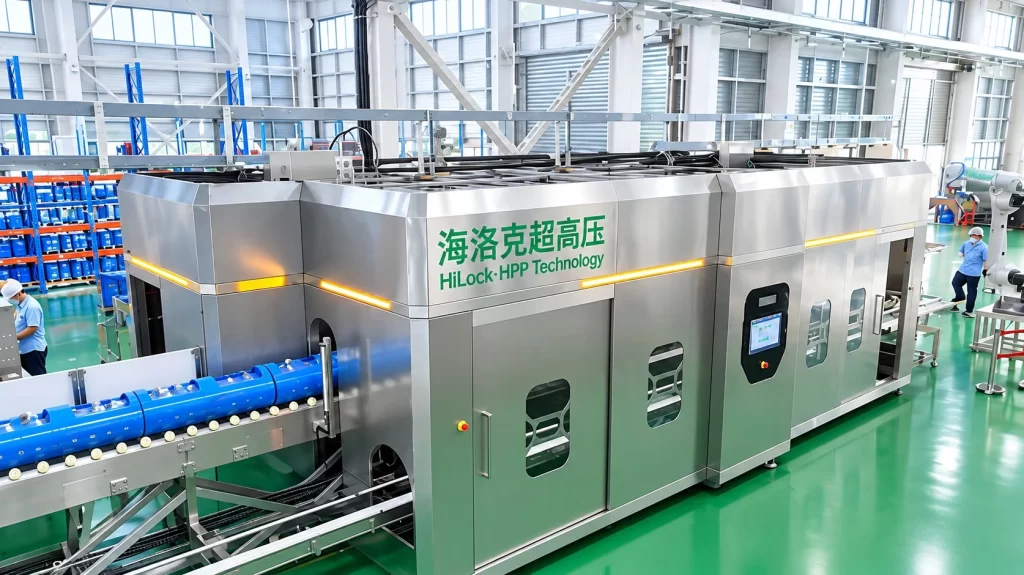
HiLock HPP machine operates based on Pascal’s Principle and Le Chatelier’s Principle, using water as the pressure-transmitting medium to apply ultra-high pressure of 300–600 MPa to sealed packaged products at ambient temperature (5–25°C). Pressure is transmitted instantaneously and uniformly throughout the product, regardless of its shape or size.
Its core mechanism can be summarized as cell membrane disruption → protein denaturation → enzyme inactivation → preservation of covalent bonds. By disrupting microbial cell membranes and inactivating proteins and enzymes, HPP achieves non-thermal microbial inactivation, with pathogen inactivation rates of ≥99% under validated processing conditions. Meanwhile, the covalent bonds of many nutritional and flavor compounds remain largely unaffected, helping preserve heat-sensitive nutrients and the product’s original flavor.
The equipment uses an ultra-high-pressure transducer to directly measure pressure inside the vessel and is equipped with a Siemens PLC control system and touchscreen interface. These systems enable precise control of pressure ramp-up, holding, and pressure compensation processes.
Five-Step Standard Operating Process:
- Pressure Generation by the Intensifier Pump – The intensifier pump generates ultra-high pressure of 400–600 MPa.
- Pressure Transmission Through Water – Water serves as the pressure-transmitting medium, uniformly transferring pressure to the products.
- Product Loading – Sealed packaged products are loaded into the high-pressure vessel.
- Pressurization and Holding – The intensifier pump increases the pressure inside the vessel and maintains the specified pressure for a predetermined period.
- Depressurization – After processing is complete, pressure is released in a controlled manner.
Supporting Reduced Reliance on Certain Preservatives
One of the most valuable advantages of high pressure processing for cleaner-label development is its ability to control many vegetative microorganisms without relying primarily on thermal treatment.
Depending on the food formulation and validated processing conditions, high pressure processing may allow manufacturers to reduce or eliminate the need for certain chemical preservatives.
This is particularly relevant to refrigerated products such as fresh juices, guacamole, salsa, dips, ready-to-eat meats, and selected seafood products.
However, high pressure processing does not automatically eliminate the need for preservatives in every formulation. The final decision depends on microbial validation, product characteristics, packaging, and the intended shelf life.
Preserving Fresh-Like Sensory and Nutritional Quality
Because high pressure processing uses relatively low processing temperatures compared with conventional thermal pasteurization, it can help preserve many heat-sensitive product attributes.
Potential benefits include:
- Better retention of natural flavors and aromas.
- Improved preservation of natural colors.
- Reduced thermal damage to certain heat-sensitive nutrients.
- Better retention of desirable texture in suitable applications.
- A fresh-like sensory profile.
The actual results vary depending on product composition, pressure, treatment duration, and storage conditions.
For food brands positioning products around freshness and natural quality, these characteristics can support stronger product differentiation.
Food and Beverage Applications: Where High Pressure Processing Makes a Difference
High pressure processing is transforming food preservation across a wide range of industries. As demand for fresh, safe, and cleaner-label products continues to grow, high-pressure processing solutions are becoming increasingly valuable for food and beverage manufacturers. By combining effective microbial control with the preservation of desirable product characteristics, HPP technology offers new opportunities for developing minimally processed products with extended refrigerated shelf life.
HPP technology is suitable for a growing range of food and beverage applications. Its ability to process packaged products makes it particularly attractive to manufacturers developing refrigerated, minimally processed products.
Fresh Juices and Functional Beverages
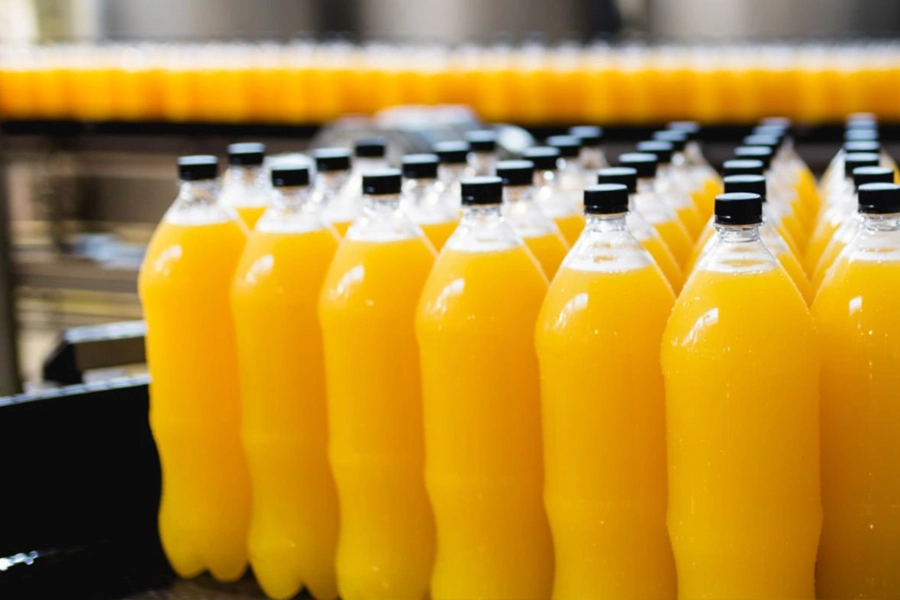
Fresh fruit and vegetable juices are among the most established HPP applications.
Traditional heat treatment can change the flavor profile and color of certain juice products. High pressure processing offers an alternative preservation approach that can help retain fresh-like characteristics while reducing relevant vegetative pathogens and spoilage microorganisms.
Potential applications include:
- Cold-pressed fruit juices.
- Vegetable juices and blends.
- Coconut water.
- Functional beverages.
- Fruit-based smoothies.
For beverage manufacturers, high pressure processing can support product development focused on recognizable ingredients, freshness, and reduced reliance on selected preservatives.
Ready-to-Eat Meals and Cooked Meats
Ready-to-eat meat products require strict microbial control because they are consumed without an additional cooking step.
HPP is widely used in selected cooked meat applications, including sliced ham, cooked chicken, deli meats, and other packaged protein products.
Post-packaging pressure treatment can help reduce certain foodborne pathogens, including Listeria monocytogenes, when appropriate process conditions are validated.
This makes HPP a valuable tool for manufacturers seeking to improve food safety while reducing reliance on certain chemical preservatives.
Sauces, Dips, and Guacamole
Sauces, dips, and fresh avocado products are particularly sensitive to changes in color, flavor, and texture.
Guacamole, salsa, hummus, and selected refrigerated sauces can benefit from HPP because the technology can control many vegetative microorganisms while maintaining desirable product characteristics.
For example, HPP-treated guacamole can retain more of its fresh green appearance compared with some conventional heat-treated alternatives, depending on the formulation and storage conditions.
Seafood and Shellfish
Seafood is highly perishable and presents specific food safety challenges.
HPP is used in applications involving oysters, lobster, crab, and other shellfish. In addition to microbial control in suitable applications, high pressure can help separate meat from shells, improving processing efficiency and product recovery.
For seafood processors, HPP can support product quality, operational efficiency, and the development of convenient ready-to-eat products.
Dairy and Plant-Based Products
Selected dairy and plant-based products may also benefit from high-pressure treatment.
Research and industrial applications have explored HPP for products such as milk, yogurt, cheese, and plant-based beverages.
The effects of pressure on dairy proteins, enzymes, texture, and functionality vary considerably. Therefore, product-specific testing is essential before commercial implementation.
For innovative food manufacturers, HPP provides opportunities to explore new formulations and processing strategies.
What Should Food Manufacturers Look for in an HPP Machine
Selecting the right hpp machine is an important step for food manufacturers planning to adopt high pressure processing for commercial production. Beyond maximum operating pressure, equipment performance should be evaluated based on processing capacity, pressure stability, automation, operational efficiency, and long-term reliability.
A suitable industrial HPP system should match the manufacturer’s product characteristics, packaging formats, daily production targets, and future expansion plans. For example, manufacturers processing fresh juices, ready-to-eat meats, seafood, or refrigerated sauces may require different equipment configurations depending on product dimensions, batch sizes, and processing requirements.
In addition, the quality of critical components, including pressure vessels, intensifiers, sealing systems, and high-pressure valves, directly influences equipment performance and maintenance requirements. Working with an experienced HPP equipment manufacturer can help businesses identify the right system configuration and reduce potential challenges during industrial implementation.
Is HPP the Future of Cleaner-Label Food Manufacturing?
The clean-label movement is reshaping how food manufacturers approach product formulation, processing, and preservation.
As consumers increasingly expect transparency, freshness, and recognizable ingredients, manufacturers need technologies that help balance these expectations with food safety and commercial shelf-life requirements.
High pressure processing offers a valuable alternative to conventional preservation approaches in suitable applications. Its ability to inactivate many vegetative microorganisms while maintaining desirable sensory and nutritional characteristics makes it particularly attractive for refrigerated, minimally processed foods.
However, successful implementation depends on more than the technology itself. Product-specific validation, suitable packaging, cold-chain management, equipment reliability, and appropriate process design all play essential roles.
For food manufacturers exploring the next generation of clean-label products, HPP represents an opportunity to develop differentiated products while strengthening food safety and production capabilities.
Conclusion: Build Better Food Products with Advanced HPP Technology
Cleaner-label food production is no longer simply a marketing trend. It is becoming an important consideration in food innovation and manufacturing strategy.
By integrating high pressure processing into suitable production applications, manufacturers can explore new ways to reduce reliance on certain preservatives, maintain fresh-like product quality, and meet evolving consumer expectations.
At HiLock, we provide advanced ultra-high-pressure equipment and integrated processing solutions to help customers turn product concepts into reliable industrial applications.
Whether you are developing a new beverage, improving the shelf life of ready-to-eat foods, or planning to expand industrial production, our team can support your journey from sample testing and process development to customized equipment and long-term technical services.