

Table of Contents
Cheese is one of the most diverse and widely consumed dairy products, with varieties ranging from fresh soft cheese to aged hard cheese, blue cheese, cream cheese, and processed cheese. However, behind this diversity lies a common challenge for manufacturers: how to maintain microbiological safety, extend refrigerated shelf life, and preserve the distinctive flavor, texture, and functionality that consumers expect.
Traditional preservation methods, including thermal treatment and chemical preservatives, can help control microbial contamination. Yet they may also introduce unwanted changes in product characteristics or limit opportunities for clean-label innovation.
This is where High-Pressure Processing (HPP) offers a promising alternative.
By applying extremely high hydrostatic pressure to packaged food products, HPP can reduce many pathogenic and spoilage microorganisms while minimizing the thermal impact associated with conventional heat treatment. For cheese manufacturers, this technology creates opportunities to improve food safety, extend product shelf life, optimize distribution, and explore new product formulations.
Let’s explore the technology, its practical applications, and its potential for the future of cheese processing.
Why Food Safety and Shelf Life Matter in Cheese Production
Although cheese is often considered relatively stable compared with fresh milk, its microbiological characteristics vary significantly depending on the type of cheese, moisture content, pH, salt concentration, production method, and storage conditions.
Fresh and soft cheeses generally contain more moisture and have a higher water activity than aged hard cheeses. These characteristics can create favorable conditions for certain microorganisms if contamination occurs during manufacturing, packaging, or distribution.
Microbial Contamination Risks
Several microorganisms are particularly relevant to cheese safety and quality:
- Listeria monocytogenes: A foodborne pathogen of particular concern in ready-to-eat dairy products. It can survive and, under suitable conditions, grow during refrigerated storage.
- Escherichia coli: Certain pathogenic strains can contaminate cheese through raw materials, processing environments, or inadequate hygiene controls.
- Salmonella spp.: May enter dairy processing systems through contaminated ingredients or poor handling practices.
- Yeasts and molds: Often contribute to spoilage, undesirable flavors, discoloration, and changes in product appearance.
- Spoilage bacteria: Can cause acidification, texture deterioration, off-flavors, and reduced commercial shelf life.
The risk profile is not identical across all cheese varieties. Fresh cheeses, soft cheeses, and high-moisture products often require particular attention to post-processing contamination and refrigerated microbial stability.
For manufacturers, controlling these risks is essential not only for regulatory compliance but also for maintaining brand reputation and consumer confidence.
Limitations of Conventional Preservation Methods
Traditional cheese preservation relies on several approaches, including pasteurization of milk, refrigeration, salting, acidification, starter cultures, and packaging technologies.
These methods remain fundamental to cheese manufacturing. However, they may not always provide sufficient control over microorganisms introduced after the initial heat treatment or during subsequent processing.
Additional thermal treatment may also affect the functional characteristics of certain finished cheese products. Meanwhile, excessive reliance on preservatives can conflict with growing consumer interest in simpler ingredient lists.
This creates demand for complementary preservation technologies that improve microbial stability without unnecessarily compromising product quality.
Cheese Recalls and Food Safety Incidents: Real-World Cases
In recent years, several cheese recalls and foodborne illness outbreaks have highlighted the ongoing food safety challenges facing the dairy industry. Contamination by pathogens such as Listeria monocytogenes and pathogenic E. coli can lead to product recalls, serious illnesses, and significant economic losses.
Some notable incidents in the United States include:
- February 2024 – Rizo-López Foods: Multiple cheese and dairy products, including Queso Fresco and Cotija cheese, were recalled due to Listeria contamination. The outbreak resulted in 26 infections, 23 hospitalizations, and 2 deaths across 11 states. [Source: FDA – Rizo-López Foods Outbreak Investigation]
- February 2024 – RAW FARM: Raw milk Cheddar cheese was linked to an E. coli O157 outbreak. The investigation identified 11 infections and 5 hospitalizations, prompting a voluntary product recall. [Source: FDA – RAW FARM Raw Cheddar Cheese Recall]
- September 2025 – Middlefield Original Cheese Co-Op: Multiple cheese varieties, including Gouda, Cheddar, Mozzarella, and Swiss cheese, were recalled after Listeria was detected in finished products and processing equipment. [Source: FDA – Middlefield Original Cheese Co-Op Recall]
- December 2025 – Ambriola Company: Several cheese products sold under brands including Ambriola, Locatelli, and Boar’s Head were recalled following the detection of Listeria monocytogenes. [Source: FDA – Ambriola Company Cheese Recall]
- December 2025 – Charlevoix Cheese Company: A batch of Mild Cheddar Cheese was recalled due to potential Listeria contamination, highlighting that even traditional hard cheeses are not entirely free from microbial risks. [Source: FDA – Charlevoix Cheese Recall]
- 2026 – Clover Hill Dairy: Requesón soft cheese was linked to a multistate Listeria outbreak. The investigation reported 15 infections, 14 hospitalizations, and 1 death. [Source: FDA – Clover Hill Dairy Listeria Outbreak Investigation]
These incidents demonstrate that microbial contamination can occur at different stages of cheese production, from raw material handling to processing, equipment contact, and packaging.
Against this backdrop, High-Pressure Processing (HPP) offers an additional non-thermal approach to microbial control. By applying high hydrostatic pressure to sealed products, HPP can reduce many foodborne pathogens and spoilage microorganisms while helping preserve important sensory characteristics.
For cheese manufacturers, integrating HPP into an established food safety management system can provide an additional processing barrier, support refrigerated shelf life extension, and create opportunities for cleaner-label product development.
How High-Pressure Processing Improves Cheese Food Safety
Food safety is one of the most important reasons for introducing HPP into cheese production.
Research has demonstrated that high-pressure treatments can reduce populations of several foodborne pathogens and spoilage microorganisms in different cheese varieties.
Controlling Listeria monocytogenes
Listeria monocytogenes is a major concern in ready-to-eat cheese products, particularly those with high moisture content and extended refrigerated storage periods.
Studies have investigated the effectiveness of HPP against Listeria in fresh cheese, blue cheese, and other dairy products.
For example, research published in Food Microbiology evaluated different Listeria strains in commercial fresh cheese under pressures ranging from 300 to 600 MPa at 6°C for five minutes. The results showed that higher pressure generally produced greater microbial inactivation, with the most effective treatments observed at 600 MPa.
The study also highlighted differences in pressure resistance between bacterial strains, emphasizing the importance of selecting appropriate challenge organisms when validating an HPP process.
For cheese manufacturers, this means that pressure treatment should be developed according to the specific product and target pathogen rather than relying on a universal processing setting.
Reducing Spoilage Microorganisms
In addition to foodborne pathogens, high-pressure processing can help reduce microorganisms responsible for cheese spoilage, including certain yeasts, molds, and vegetative bacteria.
By lowering the initial microbial population, high-pressure processing can help slow down microbial deterioration during refrigerated storage.
Potential benefits include:
- Reduced microbial loads after processing.
- Improved microbiological stability during distribution.
- Delayed development of spoilage-related odors and flavors.
- Better consistency in finished product quality.
- Reduced dependence on certain chemical preservation approaches.
However, high-pressure processing is not a universal sterilization process. Bacterial spores, including those associated with Bacillus and Clostridium, can be considerably more pressure-resistant than vegetative cells.
Therefore, manufacturers should integrate HPP into a validated food safety management system that includes hygienic production, appropriate packaging, temperature control, and microbiological monitoring.
Supporting Post-Packaging Food Safety
A particularly valuable feature of HPP is that it can be applied after the product has been packaged.
This allows manufacturers to treat the finished packaged cheese rather than relying exclusively on microbial control during earlier manufacturing stages.
Post-packaging treatment can help reduce the risk associated with contamination introduced during slicing, handling, and packaging, provided the product and packaging system are suitable for the process.
For ready-to-eat cheese manufacturers, this offers an additional layer of food safety protection.
Extending Cheese Shelf Life with HPP
Shelf life is another major consideration in the commercial cheese industry.
Short refrigerated shelf life can create challenges for manufacturers, distributors, retailers, and foodservice operators. Products may need to be delivered quickly, sold within a limited period, or discarded when microbial quality deteriorates.
High-pressure processing provides an opportunity to extend refrigerated shelf life by reducing the initial microbial population and slowing subsequent microbial growth.
Research Evidence: Fresh Cheese Shelf Life
A study published in the Journal of Food Engineering investigated the effects of high-pressure treatments on starter-free fresh cheese.
The researchers evaluated treatments at 300 and 400 MPa for five minutes at 6°C.
The results showed:
| Treatment | Reported shelf life at 4°C |
|---|---|
| Untreated control | 7 days |
| 300 MPa for 5 minutes | 14 days |
| 400 MPa for 5 minutes | 21 days |
These findings demonstrated that HPP could significantly extend the refrigerated shelf life of the tested fresh cheese.
However, the researchers also observed changes in texture and color, including increased firmness and a more yellow appearance.
This is an important consideration: extending shelf life is not the only objective. Manufacturers must also ensure that the treated product maintains the sensory characteristics expected by consumers.
[Source: Evert-Arriagada, K., et al. (2012). Effect of high pressure on fresh cheese shelf-life. Journal of Food Engineering, 110(2), 248–253.]
Improving Distribution and Supply Chain Efficiency
A longer refrigerated shelf life can create commercial advantages throughout the dairy supply chain.
Potential benefits include:
- More flexible distribution schedules.
- Greater opportunities for regional and international markets.
- Reduced pressure on rapid inventory turnover.
- Improved management of retail and foodservice inventory.
- Lower product losses associated with premature spoilage.
For manufacturers exporting premium cheese products, improved refrigerated stability can provide greater flexibility in transportation and market development.
Nevertheless, HPP-treated cheese generally remains a refrigerated product unless a separate, validated process establishes otherwise. Cold-chain management is still essential.
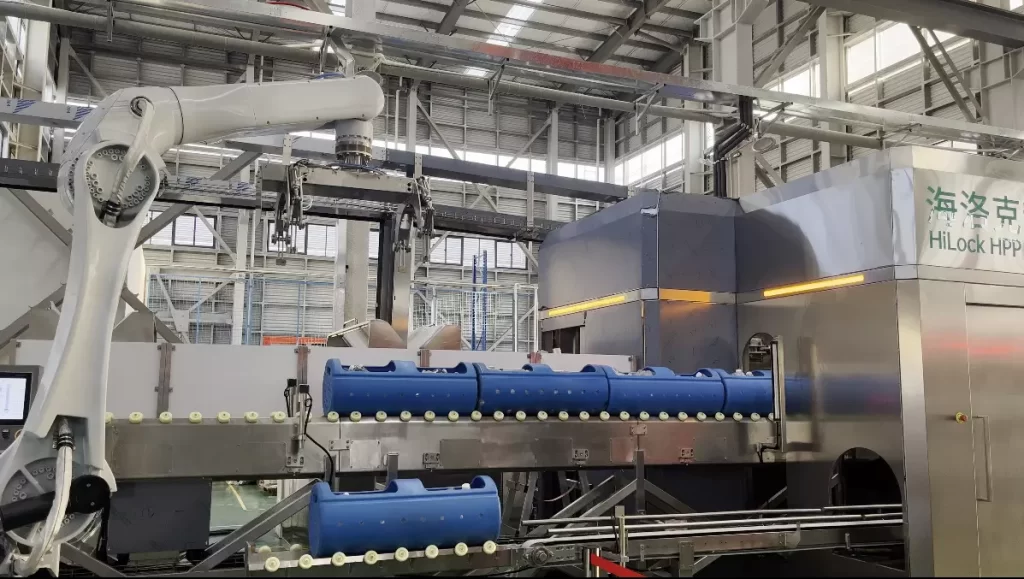
How HPP Affects Cheese Texture, Flavor, and Nutritional Quality
Cheese is a complex food matrix consisting primarily of casein proteins, whey proteins, milk fat, water, minerals, and other components.
These components determine the product’s characteristic texture, melting behavior, flavor development, and structural properties.
Although high-pressure processing can preserve many quality attributes, high pressure also influences the structure and functionality of dairy proteins.
Effects on Protein Structure
Casein micelles and whey proteins respond differently to high-pressure treatment.
Depending on the applied pressure and processing conditions, high-pressure processing may:
- Change the structure and interactions of casein micelles.
- Alter whey protein conformation.
- Influence protein aggregation.
- Modify water retention and moisture distribution.
- Affect cheese firmness and elasticity.
These changes can be beneficial or undesirable depending on the cheese variety.
For example, modifications in protein structure may create opportunities to develop fresh cheese with specific textural characteristics. However, they may also affect the crumbling, spreading, or melting properties required for certain products.
Effects on Flavor and Sensory Characteristics
Compared with conventional high-temperature processing, high-pressure processing can minimize heat-related changes in flavor and aroma.
This is particularly valuable for premium cheeses, where distinctive sensory characteristics are essential to product identity.
Nevertheless, high pressure can influence enzymatic activity, proteolysis, and lipolysis. These biochemical reactions play important roles in cheese ripening and flavor development.
Therefore, the final sensory profile depends on the type of cheese, its maturity, pressure intensity, and treatment timing.
Nutritional Quality
Because high-pressure processing does not rely primarily on high-temperature exposure, it offers potential advantages for retaining certain heat-sensitive nutritional components.
The effects on proteins, fats, vitamins, and minerals vary depending on the food matrix and processing conditions.
For cheese manufacturers, product-specific nutritional analysis is recommended before making claims about nutrient retention or nutritional improvements.
Which Types of Cheese Can Benefit from High-Pressure Processing?
The effectiveness of high-pressure processing varies considerably between cheese varieties. Differences in moisture, pH, salt concentration, fat content, ripening stage, and microbial composition can influence processing outcomes.
The following applications are particularly worth investigating.
Fresh Cheese
Examples include fresh cream cheese, cottage cheese, and other high-moisture cheese products.
Fresh cheeses generally have a shorter refrigerated shelf life and may be more vulnerable to microbial deterioration.
high-pressure processing can help reduce spoilage microorganisms and improve microbiological stability, making it an attractive preservation option.
However, manufacturers should evaluate whether the treatment changes softness, spreadability, or other important textural properties.
Soft Cheese
Soft cheeses have a relatively high moisture content and may support microbial growth under suitable conditions.
high-pressure processing offers potential for improving microbial safety and extending refrigerated shelf life.
For products such as Brie and Camembert, the interaction between pressure treatment, surface-ripening microorganisms, and cheese maturation must be carefully considered.
The treatment may affect the microbial communities responsible for characteristic flavor and texture development.
Blue Cheese
Blue cheeses, including Gorgonzola and Roquefort-style products, depend on specific microorganisms for their characteristic appearance, aroma, and flavor.
high-pressure processing has been investigated as a method for reducing Listeria contamination in blue cheese.
However, pressure treatment may also affect the microorganisms responsible for ripening. The timing of treatment and the desired sensory profile therefore require careful evaluation.
Semi-Hard and Hard Cheese
Semi-hard and hard cheeses generally have lower moisture content and different microbial environments compared with fresh cheeses.
High-pressure processing may provide additional microbial control and influence biochemical reactions during ripening.
Potential applications include improved microbiological stability and the development of differentiated maturation profiles.
However, the benefits must be evaluated against the effects on texture, flavor, and the natural ripening process.
Processed Cheese and Cheese-Based Products
Processed cheese slices, cheese spreads, cheese dips, and other ready-to-eat cheese-based products may also be potential candidates for high-pressure processing evaluation.
These products often contain multiple ingredients and may have different water activities, fat distributions, emulsifying salts, and packaging configurations.
Consequently, their response to pressure may differ from that of conventional natural cheese.
Product-specific trials are essential before industrial implementation.
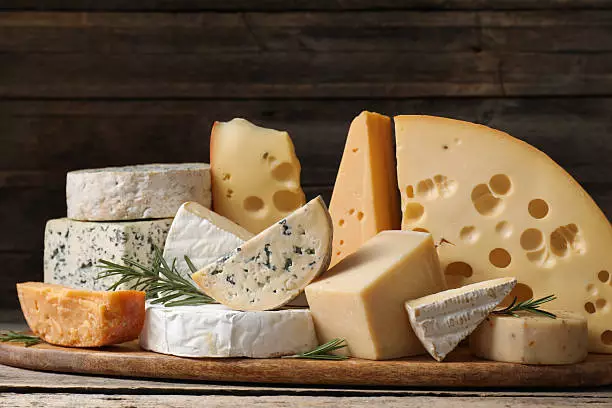
HPP and Cheese Innovation: Beyond Food Preservation
The potential of high-pressure processing extends beyond microbial control and shelf-life extension.
As consumer preferences shift toward convenient, minimally processed, and clean-label food products, HPP offers cheese manufacturers opportunities to explore new product concepts.
Developing Clean-Label Cheese Products
Clean-label trends have encouraged food manufacturers to reconsider the use of certain artificial preservatives and complex ingredient formulations.
High-pressure processing provides a physical preservation approach that can complement existing food safety and preservation strategies.
For suitable cheese products, this may help manufacturers reduce reliance on selected chemical preservatives while maintaining the required microbiological quality.
Importantly, high-pressure processing does not automatically make a product preservative-free. Formulation and food safety requirements must still be considered.
Creating New Textures and Functional Properties
High pressure can influence protein interactions, water retention, and the structural characteristics of cheese.
This creates opportunities for manufacturers to investigate new textures and product functionalities.
Potential research directions include:
- Creamier fresh cheese formulations.
- Improved spreadability in selected cheese products.
- Modified firmness and moisture retention.
- New cheese-based dips and sauces.
- Innovative ready-to-eat dairy products.
The objective is not simply to apply pressure to an existing product, but to use pressure as a controlled processing variable during product development.
Supporting Premium and Export-Oriented Cheese Markets
For cheese manufacturers targeting international markets, product consistency and refrigerated shelf life are important competitive factors.
High-pressure processing may help support longer distribution windows and improve the microbiological stability of selected products.
This can create opportunities for manufacturers to expand their market reach, develop premium product lines, and respond to evolving consumer expectations.
The Future of High-Pressure Processing in the Cheese Industry
The cheese industry continues to face evolving challenges involving food safety, product quality, supply chain efficiency, and consumer expectations.
High-pressure processing offers a promising approach to addressing several of these challenges.
By reducing selected pathogenic and spoilage microorganisms, extending refrigerated shelf life, and influencing dairy protein functionality, high-pressure processing creates opportunities for both established cheese manufacturers and emerging dairy product innovators.
However, successful implementation requires a clear understanding of the interaction between pressure and the cheese matrix. Different varieties respond differently, and processing conditions must be validated for each product.
As equipment engineering, food microbiology, and product development continue to advance, hpp machine is expected to play an increasingly important role in the development of innovative cheese products.
For manufacturers looking to improve product safety, optimize distribution, or explore new cheese formulations, investing in the right HPP technology and application expertise can be an important step toward future growth.