
Table of Contents
Food manufacturers face a growing challenge: ensuring microbial safety and extending product shelf life without compromising the fresh taste, texture, nutritional value, or clean-label appeal that consumers expect. Traditional thermal processing remains an essential preservation method, but prolonged or intensive heating can negatively affect heat-sensitive nutrients, flavor compounds, color, and texture in certain foods.
As the food industry moves toward fresher products, fewer additives, and more sustainable manufacturing practices, non-thermal sterilization technology has attracted increasing attention. These technologies use physical or other non-conventional processing mechanisms to reduce microorganisms while limiting the quality changes associated with conventional heat treatment.
Among these approaches, High Pressure Processing (HPP) has become an important solution for manufacturers of juices, ready-to-eat meals, meat products, seafood, dips, and other packaged foods. By applying high hydrostatic pressure rather than relying primarily on heat, HPP can improve microbial safety, extend refrigerated shelf life, and help preserve the original characteristics of many food products.
For food processors seeking to modernize their production lines, high-pressure processing offers a practical way to balance product quality, food safety, operational efficiency, and sustainability.
What Is Non-Thermal Sterilization Technology?
Non-thermal sterilization technology refers broadly to preservation approaches that use mechanisms other than conventional high-temperature treatment as their primary means of microbial control. Depending on the technology and application, these approaches may include high-pressure processing, pulsed electric fields, cold plasma, ultraviolet treatment, and other emerging preservation methods.
Although these technologies share the goal of reducing microbial contamination while limiting heat-related quality changes, their operating principles, application ranges, and effectiveness differ.
High Pressure Processing is a non-thermal food preservation technology that subjects packaged products to high hydrostatic pressure, commonly within the range of approximately 300–600 MPa for commercial food applications.
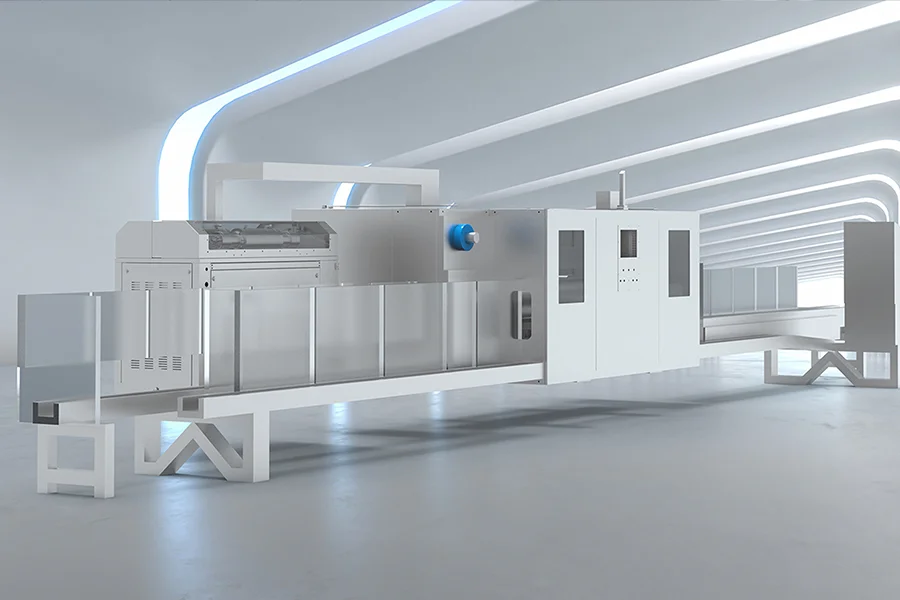
During processing, packaged food is loaded into a pressure vessel filled with water. The equipment increases the pressure and transmits it uniformly throughout the product, largely independently of its shape or size. Unlike conventional heat processing, which transfers energy from a heated surface toward the product center, high pressure acts throughout the pressure-transmitting medium and the packaged food.
HPP primarily affects non-covalent interactions in microorganisms, disrupting important cellular structures and functions. Under suitable processing conditions, this can inactivate many vegetative bacteria, yeasts, and molds.
Because pressure can be applied without relying on intensive heating, HPP helps preserve many sensory and nutritional characteristics that consumers associate with fresh food.
However, HPP should not automatically be equated with complete sterilization. Bacterial spores can be resistant to pressure at ordinary food-processing temperatures. Products requiring commercial sterility or ambient-temperature stability may need validated combined treatments, including pressure-assisted thermal processing or other appropriate preservation methods.
Understanding this distinction is essential when selecting a preservation technology and designing a safe production process.
How HPP Improves Processing Efficiency
Efficiency in food manufacturing involves more than processing speed. It also includes product consistency, production planning, yield, shelf-life management, and the ability to scale a validated process from development to commercial production.
Effective Microbial Inactivation
High-pressure processing can inactivate many relevant foodborne pathogens and spoilage microorganisms when the pressure, holding time, temperature, product formulation, and packaging conditions are properly selected.
Commercial HPP systems commonly operate at pressures of approximately 400–600 MPa, with holding times often measured in minutes. The appropriate process depends on the target microorganism, food composition, initial microbial load, and required safety outcome.
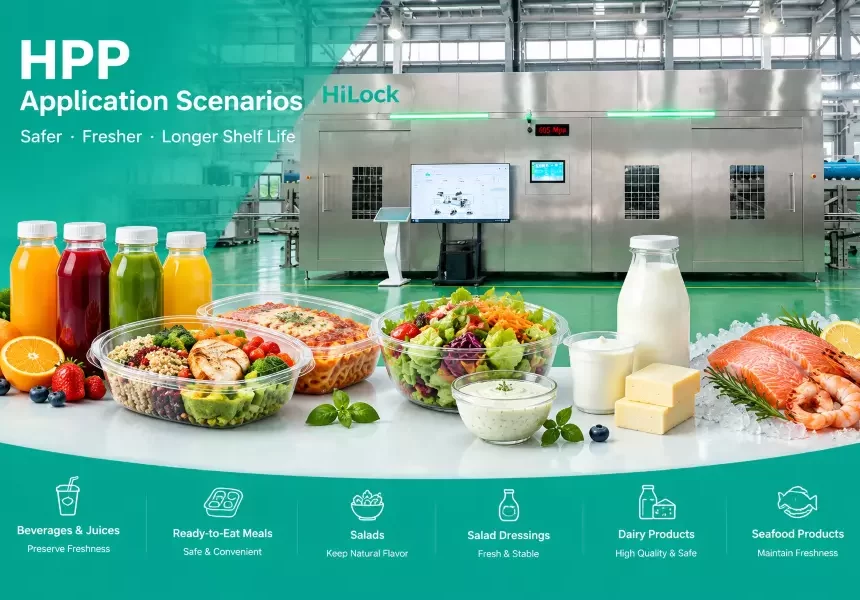
For example, HPP is widely used or investigated for pasteurized refrigerated juices, ready-to-eat meat products, seafood, dips, and prepared foods. In these applications, the technology can reduce microbial risks while helping retain product characteristics that may be altered by more intensive heat treatment.
Importantly, achieving the required microbial reduction requires product-specific validation. A pressure setting alone does not guarantee a particular level of pathogen inactivation.
Longer Refrigerated Shelf Life
One of the most commercially valuable benefits of high pressure processing is its potential to extend the refrigerated shelf life of packaged foods.
By reducing populations of relevant spoilage microorganisms, HPP can slow microbial deterioration and help manufacturers maintain acceptable product quality for longer periods. Depending on the product and validated process, this may create opportunities for improved distribution planning, wider market coverage, and reduced product returns.
Potential applications include:
- Cold-pressed juices and fruit beverages
- Ready-to-eat meat and poultry products
- Guacamole, hummus, and other refrigerated dips
- Seafood and selected ready-to-eat meals
- Certain dairy products and plant-based beverages
Shelf-life improvements vary considerably by formulation, packaging, storage temperature, and post-processing handling. Manufacturers should establish shelf life through microbiological, sensory, and quality testing rather than relying on a universal extension claim.
Supporting Consistent, Scalable Production
Modern HPP equipment can be integrated into industrial food-processing workflows to support repeatable pressure cycles and controlled processing conditions.
Depending on equipment configuration, manufacturers can select different vessel capacities, booster arrangements, automation systems, and monitoring functions to match their product mix and required throughput.
For growing food businesses, pilot-scale testing is particularly useful. It allows manufacturers to establish process parameters, evaluate packaging compatibility, assess microbial performance, and estimate production capacity before investing in a larger system.
With properly engineered high-pressure processing solutions, companies can align product development, process validation, equipment selection, and commercial production within a more structured manufacturing strategy.
How HPP Supports Food Safety
Food safety is a central consideration in every preservation process. A technology must do more than reduce microorganisms under laboratory conditions: it must deliver a validated and repeatable process within the actual manufacturing environment.
Reducing Foodborne Microbial Risks
High-pressure processing is effective against many vegetative microorganisms, including relevant foodborne pathogens, when suitable processing conditions are established.
Its effectiveness depends on several factors:
- Pressure and holding time: Higher pressure and appropriate exposure times can improve inactivation, although the relationship is microorganism- and product-dependent.
- Food composition: Acidity, water activity, fat content, and other formulation characteristics can influence microbial resistance.
- Processing temperature: Temperature affects pressure resistance and must be incorporated into process validation.
- Packaging integrity: Food must be packaged in suitable materials that can withstand compression and decompression without compromising the seal.
- Post-processing hygiene: Hygienic handling and cold-chain management remain necessary to prevent contamination or microbial growth after treatment.
HPP is therefore best understood as one component of a comprehensive food safety management system, rather than a substitute for sanitation, hazard analysis, or appropriate storage controls.
Preserving Fresh Characteristics
Because HPP does not depend primarily on intensive heating, it can help retain the flavor, color, texture, and heat-sensitive nutrients of many foods.
For juice manufacturers, this may support a fresh-tasting product with reduced reliance on conventional heat treatment. For refrigerated meat and seafood producers, it can help control selected microorganisms while maintaining many desirable product characteristics.
Nevertheless, pressure can affect certain food structures. Protein-rich products, for example, may experience changes in texture, appearance, or protein functionality depending on the formulation and process conditions.
Careful process development is therefore essential to ensure that microbial performance and product quality meet the same commercial requirements.
Supporting Clean-Label Product Development
Consumers increasingly look for products with recognizable ingredients and fewer unnecessary additives. HPP can support this objective by reducing microbial populations without requiring preservatives to be the primary means of extending shelf life.
For manufacturers of refrigerated juices, dips, sauces, and ready-to-eat foods, this provides an opportunity to develop products that combine food safety controls with a clean-label positioning.
However, HPP does not automatically eliminate the need for preservatives or other preservation measures. Formulation, microbial targets, packaging, and storage requirements determine whether additional controls remain necessary.
Why HPP Is a More Sustainable Food Processing Option
Sustainability in food manufacturing involves resource consumption, waste reduction, product distribution, and the overall environmental impact of production. HPP can contribute to these objectives, although its actual environmental performance depends on equipment design, energy sources, throughput, and operating practices.
Potentially Lower Dependence on Intensive Heating
Conventional thermal processing often requires energy to heat products, packaging, processing equipment, or heat-transfer media to specified temperatures.
HPP relies primarily on hydraulic compression to generate high pressure. Although compression produces some temperature rise and the equipment still consumes electricity, the process can reduce dependence on conventional high-temperature treatment for suitable products.
The extent of any energy savings must be evaluated for the specific product and compared against an equivalent validated preservation process.
Reducing Food Waste
Food waste creates environmental and economic costs throughout the supply chain. Products that spoil before reaching consumers represent lost raw materials, processing energy, packaging, transportation, and labor.
By extending refrigerated shelf life under suitable conditions, HPP may help reduce spoilage-related losses and improve inventory management.
For manufacturers supplying retailers, food-service operators, or geographically dispersed markets, longer validated shelf life can also create more flexibility in production scheduling and distribution.
The actual reduction in food waste depends on demand forecasting, storage conditions, logistics, and consumer handling, so it should be measured rather than assumed.
Supporting Packaging and Distribution Efficiency
HPP is commonly performed on food that has already been sealed in flexible, water-resistant packaging. This allows the product to receive treatment while reducing the risk of recontamination during a separate post-process packaging step.
Suitable packaging can include flexible plastic pouches, vacuum-sealed packs, and other validated formats. Packaging materials must tolerate the substantial compression experienced during processing and recover without losing their barrier or sealing performance.
By combining appropriate packaging with validated shelf-life extension, manufacturers may gain greater flexibility in refrigerated distribution and inventory planning.
HPP still requires water, electricity, equipment maintenance, and refrigerated storage for many applications. Its environmental advantages should therefore be assessed across the entire product life cycle rather than inferred solely from its non-thermal operating principle.
Key Applications of High Pressure Processing
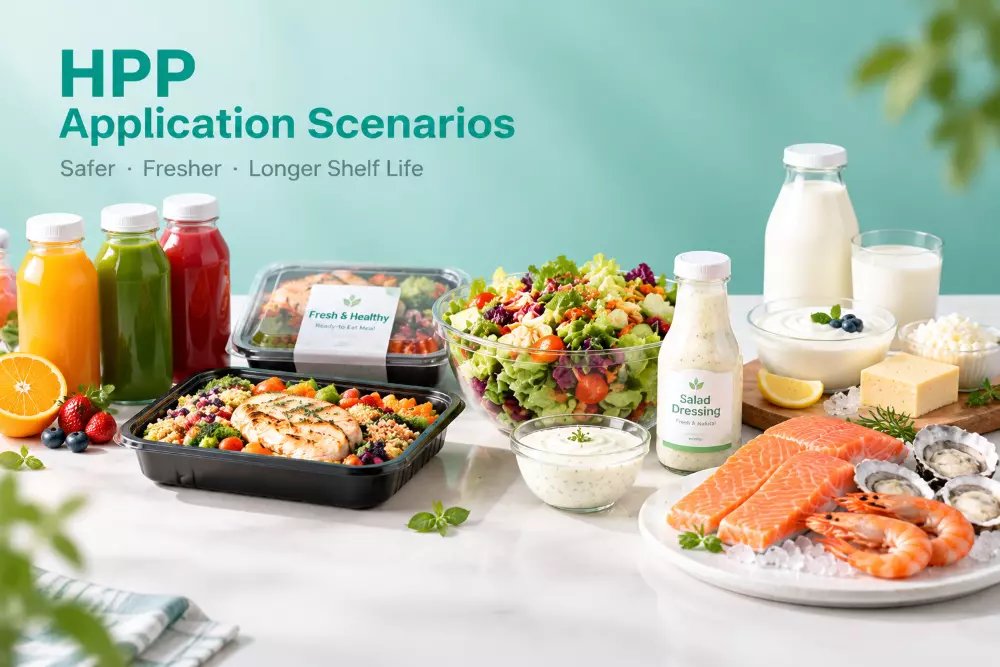
The versatility of high pressure processing makes it relevant to multiple food categories, although each application requires its own product and process validation.
Juices and Beverages
Cold-pressed juices and other refrigerated beverages are among the best-known applications of HPP. The technology can reduce relevant vegetative microorganisms while helping preserve fresh flavor, color, and selected heat-sensitive nutrients.
It is particularly attractive for manufacturers targeting premium refrigerated beverages, clean-label products, and consumers who value fresh sensory characteristics.
Meat and Ready-to-Eat Foods
HPP can be applied to selected cooked meat, deli meat, poultry, and ready-to-eat products to reduce relevant microbial hazards and spoilage organisms.
When implemented appropriately, it can support refrigerated shelf-life management and food safety programs. Product developers must also evaluate potential changes in meat color, texture, and oxidation, as well as any effects on packaging and storage stability.
Sauces, Dips, and Prepared Foods
Products such as guacamole, hummus, salsa, and certain refrigerated sauces can benefit from HPP when their formulations and packaging are compatible with the process.
These products often depend on fresh flavor, attractive color, and convenient packaging. HPP offers an alternative to preservation strategies that rely more heavily on intensive heating, subject to validation of the required microbial controls.
Seafood and Selected Dairy Products
HPP is also used in selected seafood applications, including shellfish processing and certain packaged seafood products. Depending on the species and process, it may assist with microbial control, meat extraction, or product handling.
In dairy processing, HPP may be suitable for selected products, but pressure sensitivity varies among milk proteins, enzymes, cultures, and other components. Manufacturers must carefully evaluate product functionality and microbiological requirements before commercial adoption.
Choosing the Right High-Pressure Processing Solutions
Selecting HPP equipment requires more than comparing maximum pressure ratings or vessel sizes. The best solution must match the manufacturer’s product characteristics, production targets, facility layout, and quality requirements.
Match Equipment Capacity to Production Needs
Production volume, batch size, loading patterns, cycle time, and the number of operating hours all influence practical throughput.
A laboratory system can support feasibility testing and process development. Pilot equipment can help establish operating parameters and evaluate scale-up requirements. Industrial systems are designed to meet larger production demands, with vessel capacity and booster configuration selected according to the intended application.
Manufacturers should evaluate expected daily throughput using realistic loading and unloading times, pressure cycles, maintenance requirements, and planned operating schedules.
Evaluate Pressure Vessel Engineering and Reliability
The pressure vessel is one of the most critical components of an HPP system. Its design, material properties, fatigue resistance, sealing arrangements, and inspection procedures influence equipment reliability and operational safety.
A qualified equipment supplier should provide relevant engineering documentation, inspection information, safety interlocks, and applicable conformity or certification details.
Routine maintenance and the replacement of wear components are also important for maintaining dependable production.
Consider Automation and Process Monitoring
Modern industrial high-pressure processing solutions may incorporate programmable controls, pressure monitoring, cycle records, alarms, and production data management.
These functions can help operators execute established recipes consistently, review processing records, and identify deviations that require investigation.
For manufacturers operating multiple shifts or supplying regulated markets, traceable process records can support quality assurance and audit preparation. Automation does not replace process validation, but it can help maintain consistent execution of a validated procedure.
Look Beyond the Equipment Purchase
Successful HPP implementation often requires application testing, packaging evaluation, installation planning, operator training, and ongoing technical support.
Working with an experienced equipment manufacturer can help connect these activities into a complete solution, from initial feasibility studies to commissioning and lifecycle maintenance.
Before purchasing a system, manufacturers should clarify the scope of technical support, spare-parts availability, maintenance requirements, process-development services, and plans for future capacity expansion.
Conclusion: Advancing Food Preservation with Non-Thermal Technology
Non-thermal sterilization technology is transforming food preservation by offering new ways to balance microbial safety, product quality, and production efficiency. As a well-established non-thermal processing method, High Pressure Processing (HPP) helps reduce many vegetative microorganisms, extend refrigerated shelf life, and preserve the fresh taste, color, and texture of suitable food products.
Beyond food safety and quality, high pressure processing can support clean-label product development and help reduce spoilage-related food waste. When combined with scientifically validated processing parameters, appropriate packaging, and effective cold-chain management, HPP provides a practical solution for manufacturers seeking more efficient and sustainable food preservation methods.
As the demand for high-quality, minimally processed foods continues to grow, non-thermal sterilization technology will remain an important area of innovation in the food processing industry, creating new opportunities to improve product quality, optimize manufacturing processes, and meet evolving consumer expectations.