
Table of Contents
Pomegranate juice is valued for its distinctive flavor, vibrant color, and naturally occurring beneficial compounds, including polyphenols and other antioxidants. However, conventional heat treatments can affect some of the sensory and nutritional characteristics that consumers associate with fresh, minimally processed juice.
High Pressure Processing (HPP) provides an alternative approach. By using extremely high hydrostatic pressure rather than relying primarily on heat, an HPP machine can reduce vegetative microorganisms while helping pomegranate juice retain its fresh characteristics.
For juice manufacturers, HPP is therefore more than a preservation technology. It can be part of a broader high-pressure processing solution designed to improve product safety, refrigerated shelf life, quality consistency, and clean-label positioning.
This article explains how HPP works for pomegranate juice, how it compares with thermal processing, and what manufacturers should consider when developing an HPP pomegranate juice production process
What Are the Differences Between High-Pressure Processing and Thermal Processing?
The popularity of pomegranate juice is easy to understand. Its vibrant color, antioxidant compounds, and bioactive components make it an ideal ingredient for developing functional beverages. However, these same characteristics can also make preserving pomegranate juice a challenge.
For juice processors, R&D teams, and entrepreneurs, the question is not simply how to extend shelf life, but how to do so without compromising the product’s inherent value.
Thermal processing methods such as pasteurization and sterilization are widely used because they help control spoilage microorganisms and enzymes. However, the drawback is that heat can also affect the color, flavor, texture, vitamins, and bioactive compounds of food. (Putnik et al., Comparing the effects of thermal and non-thermal technologies on pomegranate juice quality: A review, 2019)
For pomegranate juice, this trade-off is particularly important. Pomegranates and their derivatives have been associated with antioxidant, anti-inflammatory, and blood-pressure-lowering effects, while also showing potential effects on the gut microbiota and antimicrobial activity. Vitamin C and various antioxidants in pomegranate juice are sensitive to heat, meaning that thermal processing may reduce their nutritional value and certain functional properties. (Titin Nge et al., The Polyphenolics and Health Effects of Pomegranate, 2015)
| Factor | HPP | Thermal Processing |
|---|---|---|
| Main processing mechanism | Hydrostatic pressure | Heat |
| Primary medium | Water | Heat/steam/hot water |
| Product temperature | Relatively low compared with thermal processing | Elevated |
| Microbial control | Pressure-induced cellular damage | Heat-induced microbial inactivation |
| Sensory characteristics | Can help retain fresh-like characteristics | Greater potential for heat-related changes |
| Color | Can help maintain fresh appearance in suitable products | Heat may affect color |
| Flavor | Can better preserve fresh flavor in suitable applications | Heating can alter flavor |
| Nutritional quality | Can reduce heat exposure | Some heat-sensitive components may be affected |
| Packaging | Requires pressure-compatible packaging | Requires heat-compatible packaging |
| Typical positioning | Premium, fresh-like, clean-label products | Widely established conventional preservation |
How Does an HPP Machine Process Pomegranate Juice?
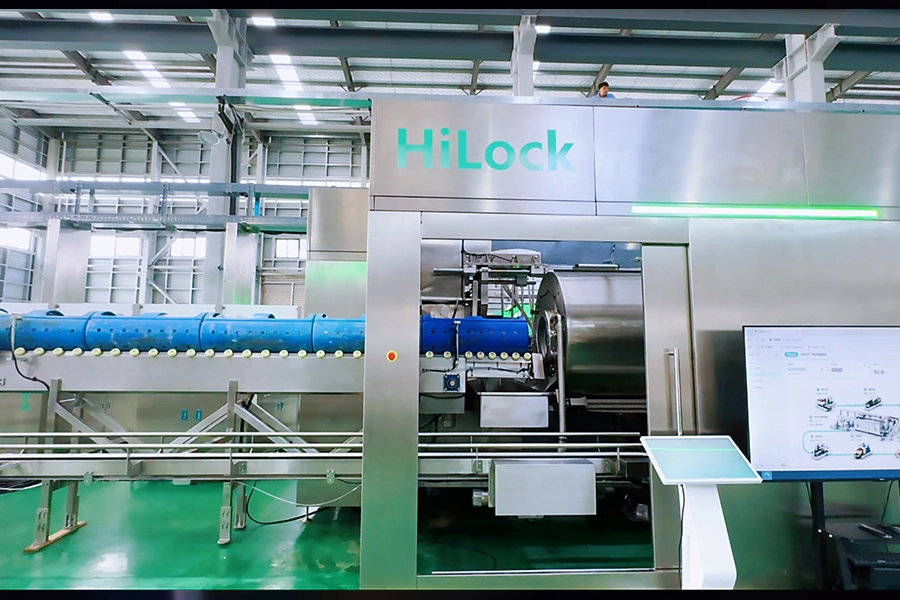
HPP, also known as High Pressure Processing, is a non-thermal food processing technology that uses water as the pressure-transmitting medium.
Unlike conventional thermal processing, which relies on high temperatures to control microorganisms, an HPP machine places sealed packages of pomegranate juice inside a high-pressure vessel and applies hydrostatic pressure. Depending on the product, equipment configuration, packaging format, and validated processing conditions, HPP pressures can typically reach approximately 300–600 MPa. The pressure is transmitted uniformly throughout the product through the surrounding water.
Once sufficient pressure is applied, microbial cells can undergo structural and functional damage, disrupting their normal cellular functions and helping reduce pressure-sensitive vegetative microorganisms.
Importantly, pressure is transmitted throughout the entire product rather than relying primarily on heat transfer from the product surface toward the center, as in conventional thermal processing.
As a result, compared with thermal processing, the size and shape of the package have a relatively limited impact on pressure transmission.
For pomegranate juice, this difference is particularly important because manufacturers need to balance microbial safety with desirable product characteristics such as fresh flavor, nutritional quality, and natural color.
Why Can HPP Help Preserve the Beneficial Components of Pomegranate Juice?
Pomegranate juice contains naturally occurring compounds that contribute to its nutritional and sensory value. These include polyphenolic compounds and other antioxidant-related components.
One of the important advantages of HPP is that it can process juice with limited heat exposure compared with conventional thermal processing.
This matters because temperature can influence various components of fruit juice. The degree of change depends on the specific compound, processing temperature, exposure time, oxygen conditions, formulation, and storage environment.
HPP does not mean that every nutrient or bioactive compound remains completely unchanged. Rather, the technology can provide a processing environment that reduces reliance on intense heat, potentially helping manufacturers maintain more of the characteristics associated with fresh juice.
For this reason, HPP is often considered when developing premium or minimally processed juice products.
Benefits of HPP Processing for Pomegranate Juice
1. Supports Fresh-Like Flavor
Pomegranate juice has a distinctive balance of acidity, sweetness, aroma, and astringency.
Because HPP does not rely primarily on intense heating, it can help manufacturers develop juice products with sensory characteristics closer to fresh juice.
This can be particularly valuable for premium refrigerated beverages.
2. Helps Maintain Natural Color
Color is an important quality attribute for pomegranate juice.
Thermal exposure can contribute to changes in color and other sensory characteristics depending on the processing conditions.
HPP provides an alternative preservation approach that can reduce reliance on high-temperature treatment.
3. Helps Protect Heat-Sensitive Components
Pomegranate juice contains various naturally occurring compounds that may be sensitive to processing conditions.
By minimizing exposure to high temperatures, HPP can help manufacturers retain desirable nutritional and bioactive characteristics.
However, retention should always be verified through analytical testing rather than assumed solely from the use of HPP.
4. Extends Refrigerated Shelf Life
One of the primary commercial reasons for using HPP is microbial control.
When an appropriate pressure-time-temperature combination is validated for the product, HPP can significantly improve the microbiological stability of refrigerated juice.
This can provide manufacturers with additional time for:
- Distribution
- Retail placement
- Inventory management
- Consumer consumption
The actual shelf life should be established through product-specific shelf-life studies.
5. Supports Clean-Label Product Development
HPP can help manufacturers develop juice products with fewer preservation interventions.
For brands targeting consumers who prefer recognizable ingredients and minimally processed foods, this can support a clean-label product strategy.
HPP itself does not automatically make a product “clean label”; the final claim depends on the complete formulation, processing method, regulatory requirements, and product labeling.
6. Enables Premium Juice Positioning
Fresh-like sensory characteristics combined with refrigerated distribution can support premium juice concepts.
Potential product categories include:
- Cold-pressed pomegranate juice
- Premium fruit juice
- Functional beverages
- Juice blends
- Organic juice products
- Premium refrigerated beverages
This makes HPP pomegranate juice an interesting option for manufacturers targeting higher-value beverage segments.
What Factors Affect HPP Pomegranate Juice Quality?
Installing an HPP machine is only one part of successful HPP juice production.
Several variables need to be evaluated during process development.
Pressure
Higher pressure does not automatically mean better product quality.
The selected pressure must balance microbial reduction, processing efficiency, product quality, and equipment requirements.
Holding Time
Pressure must be maintained for an appropriate period to achieve the intended microbial reduction.
Longer processing is not necessarily better; the process should be optimized through validation.
Temperature
HPP is often described as a non-thermal technology, but temperature still matters.
The product temperature can change during compression and decompression. Starting temperature, water temperature, compression heating, and processing conditions should therefore be monitored.
pH
Pomegranate juice is an acidic product, and pH is an important parameter in microbial safety and process validation.
Packaging
HPP packaging must accommodate the volume change associated with compression.
Rigid containers that cannot deform appropriately may not be suitable for HPP.
Initial Microbial Load
Raw material quality and hygienic processing have a direct influence on the required HPP process.
HPP should be considered as one component of a complete food safety system rather than a substitute for good manufacturing practices.
Choosing the Right HPP Machine for Pomegranate Juice Production
For commercial juice manufacturers, selecting an HPP machine should involve more than comparing maximum pressure ratings.
Important factors include:
Processing Capacity
Production capacity should correspond to the manufacturer’s expected daily or hourly throughput.
Laboratory, pilot, and industrial HPP systems serve different stages of product development.
Pressure Range
A machine should provide sufficient pressure and process control flexibility for the intended applications.
Industrial HPP systems commonly operate within a range of several hundred MPa, with 600 MPa being a common upper pressure level for commercial HPP equipment.
Vessel Configuration
Horizontal and vertical configurations can be selected according to factory layout, loading method, automation requirements, and production capacity.
Automation
Modern HPP systems may integrate:
- HMI control
- PLC systems
- Recipe management
- Pressure monitoring
- Temperature monitoring
- Production data recording
- Safety interlocks
- Automated loading and unloading
Pressure Vessel Reliability
The pressure vessel is one of the most critical components of an HPP system.
Material selection, vessel design, fatigue resistance, manufacturing precision, inspection, and quality control all influence long-term equipment performance.
After-Sales Service
For industrial applications, technical support is an important part of the overall solution.
Manufacturers should consider:
- Installation
- Commissioning
- Operator training
- Process development
- Spare parts
- Preventive maintenance
- Remote technical support
- Equipment lifecycle management
Conclusion
For pomegranate juice manufacturers, the central challenge is to achieve microbial safety and commercial shelf life while maintaining the characteristics consumers expect from a fresh, high-quality juice.
An HPP machine addresses this challenge by applying high hydrostatic pressure rather than relying primarily on intense heat. This approach can help reduce microorganisms while supporting the retention of fresh-like flavor, color, and desirable nutritional characteristics.
Compared with conventional thermal processing, HPP offers a different preservation mechanism and can be particularly relevant to refrigerated, premium, minimally processed juice products.
However, successful HPP pomegranate juice production requires more than selecting a pressure value. Pressure, holding time, temperature, formulation, packaging, microbial targets, and storage conditions should all be evaluated through systematic process development and validation.
For manufacturers looking beyond individual equipment toward complete high-pressure processing solutions, an integrated approach—from laboratory testing and process development to equipment customization, installation, commissioning, and lifecycle support—can provide a stronger foundation for commercial HPP juice production.