
Table of Contents
As consumers increasingly seek fresh-tasting, minimally processed beverages, juice manufacturers are exploring innovative processing technologies that balance product quality, food safety, and commercial scalability. HPP ultra-high-pressure cold sterilisation technology offers an alternative to conventional heat-based processing by applying high pressure to sealed products under validated conditions. For juice producers, this approach provides an opportunity to develop refrigerated beverages while evaluating how processing affects flavour, colour, nutritional quality, and shelf life.
What makes a great juice memorable is often the aroma released when the bottle is opened, the refreshing taste of the first sip, and the balanced sweetness and acidity that reflect the fruit itself.
However, turning fresh fruit into a retail-ready product means putting that experience through the challenges of processing, packaging, transportation, and storage. For beverage manufacturers, every step matters. They need to control microbiological risks, minimise processing-related changes in flavour, and maintain a reliable supply to meet market demand.
HPP ultra-high-pressure cold sterilisation technology offers an alternative processing approach. For manufacturers developing refrigerated fruit and vegetable beverages, HiLock focuses on matching the technology to each product and helping transform promising results in product development into reliable, commercially viable production.
What Is HPP Ultra-High-Pressure Cold Sterilisation Technology?
HPP stands for High Pressure Processing, commonly referred to as high-pressure processing or ultra-high-pressure cold processing.
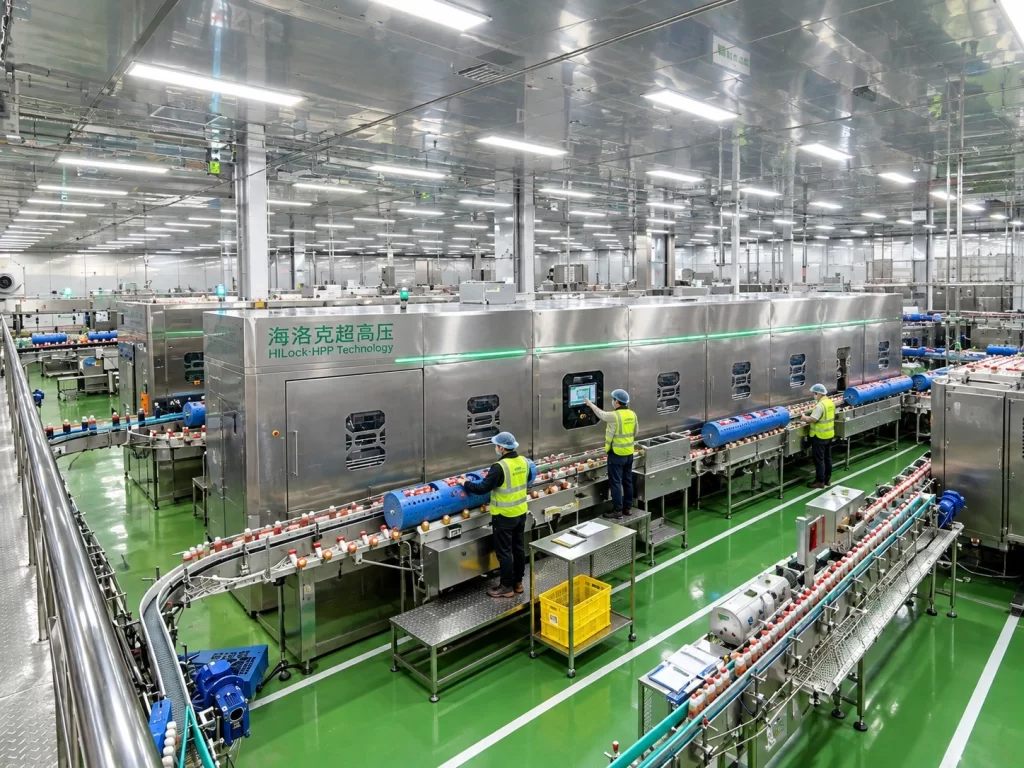
In typical post-packaging HPP processing, products are first sealed in compatible packaging and then placed inside a pressure vessel, where water transmits the applied pressure. Under validated pressure, time, and temperature conditions, the treatment can inactivate certain microorganisms, supporting food safety management and shelf-life extension. The packaging must also withstand the process and maintain its seal integrity.
This allows manufacturers to incorporate HPP into a broader product development strategy, designing the process alongside raw material selection, formulation, packaging, and refrigerated storage conditions. The result is more than just a beverage: it reflects the coordination of an entire processing system.
Can Great-Tasting Juice Developed in the Lab Maintain Its Quality Throughout Shelf Life?
For fruit and vegetable beverages, microbial control is only part of the challenge. Another key question is whether the product will retain its intended flavour profile after processing and storage.
The non-thermal nature of HPP makes it an option worth evaluating for products where minimising heat-related changes is a priority. Its effects on flavour, colour, and nutritional quality still depend on the specific ingredients and processing conditions. A single nutritional retention figure cannot accurately represent every beverage.
Developing HPP juice therefore requires evaluating the entire shelf-life period. Does the juice taste as intended immediately after processing? Does it develop browning, separation, or changes in mouthfeel during storage? Do its microbiological indicators continue to meet the required specifications?
Successful validation of one orange juice formulation does not mean the same processing parameters can be applied directly to another fruit or vegetable blend. Changes in formulation require the process to be reassessed and validated for the specific product.
HiLock: Integrating Product Development with Equipment Selection
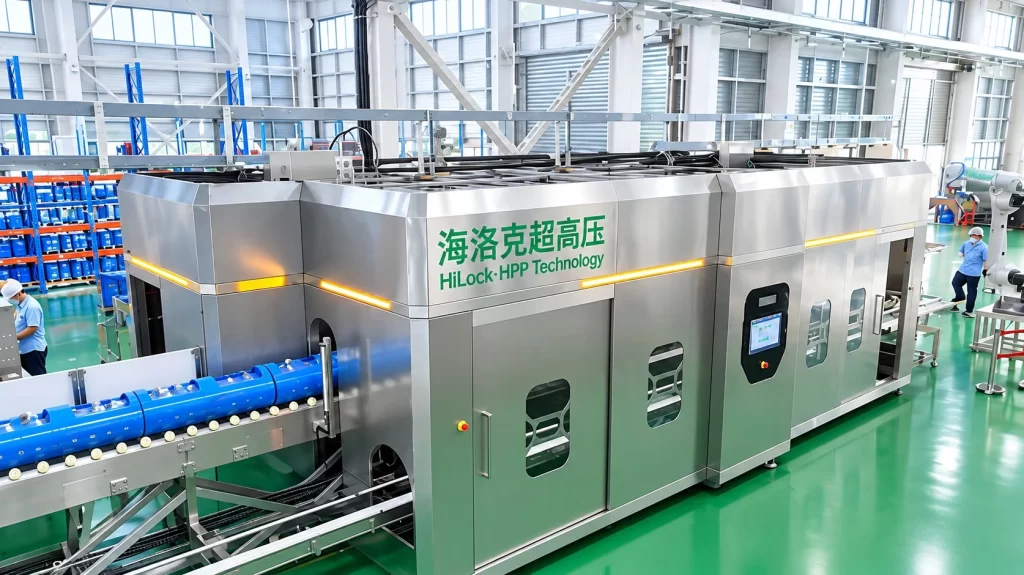
For food manufacturers, investing in an HPP machine is a significant capital commitment. Before selecting a model, defining clear product and production objectives is an essential first step toward successful implementation.
Four questions should guide the evaluation:
- What type of beverage will be produced?
- What packaging format will be used?
- Which sales channels and markets will the product target?
- What are the target shelf life and daily production capacity?
Answering these questions helps determine the right sample-testing strategy, equipment configuration, and production-line layout.
As the high-pressure equipment brand under Zhuhai CTT Technology Co., Ltd., HiLock provides more than standalone equipment. Its technical support covers the full project lifecycle, from process validation, equipment selection, and production-line planning to scale-up, installation and commissioning, operator training, and ongoing maintenance.
To support successful project implementation, we help manufacturers evaluate three key areas.
Product Suitability: Is HPP Right for the Product?
Small-batch trials help assess quality changes before and after treatment. The resulting data can support decisions on process suitability, microbiological targets, and shelf-life requirements.
Production Integration: Can the Process Fit the Production Line?
Packaging dimensions, loading configurations, and processing cycle times must be considered together. Evaluating the compatibility of the HPP system with upstream and downstream operations helps identify potential capacity bottlenecks before production begins.
Long-Term Operation: How Can Equipment Reliability Be Maintained?
Cleaning procedures, operator practices, spare-part availability, and after-sales response should all be considered early in the project. These factors help support reliable equipment operation during ongoing production.
Implementing HPP is never simply a matter of purchasing a machine. It requires a systematic approach that connects product formulation, processing equipment, and the broader production and supply chain.
For manufacturers planning refrigerated food and beverage production lines, HiLock offers an integrated solution that combines process expertise with equipment engineering.
Starting with process testing on a single product, we help customers evaluate the complete processing chain, from upstream preparation and HPP treatment to downstream cold-chain management. With practical engineering experience and integrated technical support, HiLock helps manufacturers work toward consistent product quality and reliable production delivery.