
Table of Contents
When it comes to baby food, safety, freshness, and nutritional quality are critical. As consumers increasingly seek minimally processed and clean-label products, HPP baby food is gaining attention as an alternative approach to food preservation. For manufacturers, the challenge is to achieve reliable microbial safety while maintaining the fresh characteristics and quality of baby food.
Why Food Safety Matters in Baby Food
Food safety is particularly important for infant and young-child foods because this population is more vulnerable to foodborne pathogens. Among the key concerns is Listeria monocytogenes, which can survive and grow under certain refrigerated conditions and therefore requires effective control throughout processing, packaging, storage, and the entire shelf life of ready-to-eat products.
In the European Union, Regulation (EC) No 2073/2005 sets a specific microbiological criterion for ready-to-eat foods intended for infants and ready-to-eat foods for special medical purposes: Listeria monocytogenes must be absent in 25 g of product throughout its shelf life. In the United States, the U.S. Food and Drug Administration (FDA) has also issued guidance on controlling L. monocytogenes in ready-to-eat foods, emphasizing preventive controls to minimize or prevent contamination. These requirements make effective microbial control a fundamental consideration in baby food production.
To meet these standards, these foods typically require heat treatment; however, this process significantly affects the product’s flavor, appearance, and nutritional quality. The high temperatures used during the sterilization of these formulated foods promote the formation of certain compounds that can cause color changes, reduce the bioavailability of amino acids, and may be harmful to human health.
The question is how manufacturers can achieve this level of safety while preserving freshness, quality, and clean-label positioning. High pressure processing (HPP) provides an important non-thermal processing approach to explore.
What Is High Pressure Processing?
High pressure processing (HPP) is a non-thermal food processing technology that uses high hydrostatic pressure to control microorganisms in packaged food.
Unlike conventional thermal processing, which relies primarily on elevated temperatures, HPP uses water as a pressure-transmitting medium. Packaged products are placed inside a high-pressure vessel and subjected to hundreds of megapascals (MPa) of pressure.
The pressure is transmitted uniformly throughout the product, allowing HPP to process packaged foods without relying on intensive heating as the primary preservation mechanism.
For baby food manufacturers, this technology is particularly interesting because it can combine microbial control with fresh-food positioning.
Why Is HPP Attractive for Baby Food?
Baby food manufacturers need to balance several competing requirements:
- High microbiological safety
- Consistent product quality
- Fresh taste and appearance
- Nutritional quality
- Clean-label positioning
- Reliable shelf life
- Packaging compatibility
- Efficient commercial production
Traditional thermal processing can provide effective microbial control, but elevated temperatures may also influence the sensory and nutritional characteristics of certain formulations.
HPP offers another approach.
By using pressure rather than intensive heat as the primary processing mechanism, high pressure processing can help manufacturers develop refrigerated baby food products that retain characteristics associated with fresh ingredients.
The actual performance, however, depends on the product formulation, target microorganisms, pressure, treatment time, temperature, packaging, pH, water activity, and other process variables. HPP should therefore be considered a validated product-specific process, rather than a universal preservation solution.
HPP and Listeria Control in Baby Food
For baby food manufacturers, controlling Listeria monocytogenes requires a comprehensive approach across the entire production chain, from raw material selection and formulation to processing, packaging, storage, distribution, and shelf-life management. Each stage can influence the microbiological safety and quality of the final product, making effective control measures essential throughout the entire process.
HPP can become an important part of this overall food-safety strategy when the process is appropriately designed and validated.
For example, HPP process development can evaluate the effectiveness of selected pressure and holding-time combinations against relevant microorganisms under actual product conditions.
This is particularly important because microbial resistance can vary according to:
- Product pH
- Water activity
- Fat content
- Sugar concentration
- Protein content
- Food structure
- Initial microbial load
- Processing temperature
- Target microorganism
Therefore, simply selecting a high pressure is not sufficient. Manufacturers need to establish a scientifically supported processing window for the specific baby food product.
HPP Baby Food Applications
HPP can be evaluated for a variety of baby food products, depending on formulation, packaging, regulatory requirements, and the intended distribution model.
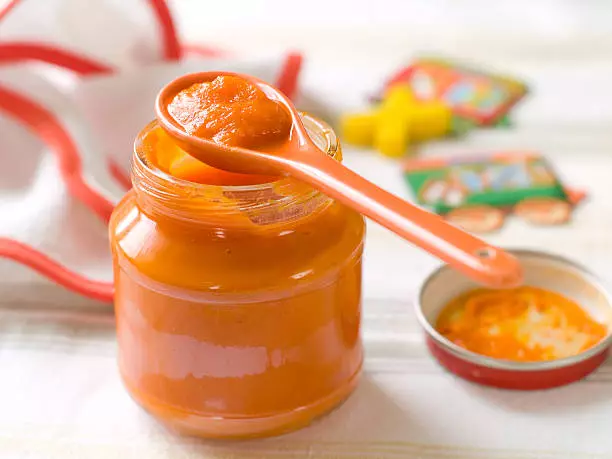
Fruit and Vegetable Purees
Fresh fruit and vegetable purees are promising candidates for HPP processing.
Potential applications include:
- Apple puree
- Pear puree
- Mango puree
- Peach puree
- Carrot puree
- Pumpkin puree
- Sweet potato puree
- Avocado-based products
HPP can help manufacturers explore preservation strategies that maintain fresh-product characteristics while addressing microbial safety requirements.
Baby Food Smoothies and Fruit Blends
Fruit and vegetable blends designed for infants and young children can also be evaluated using HPP.
These products may benefit from HPP when manufacturers want to maintain a fresh sensory profile while developing a commercially practical refrigerated product.
Ready-to-Eat Baby Meals
HPP may also be considered for selected ready-to-eat baby meals containing vegetables, grains, proteins, and other ingredients.
For these products, however, formulation and packaging compatibility are particularly important. Each formulation should undergo appropriate process validation before commercial production.
The Future of HPP Baby Food
The development of modern baby food is moving toward a combination of safety, freshness, nutrition, convenience, and clean-label positioning. At the same time, increasingly stringent food-safety expectations make reliable microbial control essential.
High pressure processing provides manufacturers with a non-thermal processing option that can be integrated into a broader food-safety and shelf-life strategy.
For HPP Baby Food, the objective is not simply to apply the highest possible pressure. The real goal is to develop a validated process that balances safety, freshness, quality, shelf life and production efficiency. With the right high pressure processing equipment, product-specific process development, appropriate packaging, and validated cold-chain management, manufacturers can explore new opportunities in premium refrigerated baby food.
For companies considering HPP for baby food, the best starting point is not necessarily selecting a production machine. It is testing the product, validating the process, and then scaling the equipment around the proven requirements.
HiLock supports this journey from HPP testing and process development to equipment customization, production-line integration, installation, and lifecycle technical support.